

By Ameh George and Theodora Obayojie
Nigeria’s creative economy, estimated by stakeholders to be worth about $60 billion, remains significantly underdeveloped despite the country’s expanding global footprint in music, film, fashion and digital content creation, raising renewed concerns over continued reliance on oil revenues.
Industry stakeholders say the sector is operating far below potential due to weak financing structures, fragmented policy coordination, and insufficient investment in production, distribution, and monetisation infrastructure.
The concerns come amid intensifying national debate on economic diversification and the need to expand non-oil revenue sources capable of supporting jobs and long-term growth.
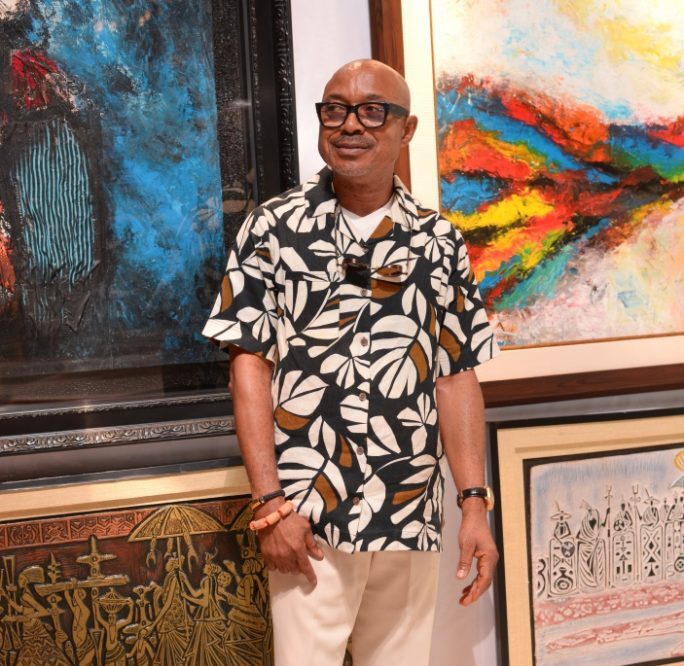
Leading the concerns, High Chief Kingsley Okafor, President of the Association of Professional Creative Artists and Designers in Nigeria (APCAD), said Nigeria is yet to fully harness one of its most valuable but underdeveloped economic sectors.
Okafor said the creative industry has demonstrated strong global competitiveness through music, film, fashion, and visual arts but continues to face structural constraints that limit its contribution to national revenue.
“The creative industry is almost a $60 billion industry. Yet it is only Nigeria that still depends heavily on oil when there is so much money to be gotten from the creative industry,” he said in an interview with the New National Star.
He added that many practitioners in the sector still depend largely on individual effort rather than structured systems of support capable of scaling the industry.
“Most Nigerians doing well in the creative industry are only supported by personal effort. They don’t get enough support from the government,” he said.
Okafor said APCAD represents more than 4,000 artists nationwide and has facilitated international exposure for over 100 creatives, with more than 50 now practising professionally outside the country.
He maintained that while Nigerian talent is globally competitive, domestic systems remain too weak to convert creative output into sustained economic value.
“There is a limit to what one individual can do,” he added.
However, responding to concerns about the sector, a senior official of the Federal Ministry of Art, Culture, Tourism and the Creative Economy said government has already positioned the creative industry as a core component of Nigeria’s economic diversification agenda.
The official said ongoing reforms are focused on improving access to financing, strengthening intellectual property protection, and expanding infrastructure to support creative production and distribution.
He noted that the sector has been identified as a major driver of youth employment and cultural exports under the administration’s broader economic strategy, adding that policy implementation is being strengthened to ensure more measurable impact.
While the government maintains that structured interventions are underway, industry stakeholders argue that gaps between policy formulation and execution continue to limit the sector’s growth potential.
Okafor’s concerns reflect wider industry sentiment that although Nigeria’s creative economy has gained global recognition, particularly through Afrobeats, Nollywood, and digital content, its domestic ecosystem remains underdeveloped.
Stakeholders insist that unlocking the estimated $60 billion potential will require coordinated investment across financing, training, infrastructure, and distribution systems.
As pressure mounts on policymakers to diversify the economy, industry players maintain that the creative sector must be repositioned from a cultural industry to a strategic economic asset capable of generating employment, exports, and sustainable national revenue.
For now, they warn that a substantial portion of the estimated $60 billion opportunity remains largely untapped.



