Joel Ajayi
The Nigerian Air Force (NAF) has reaffirmed its commitment to enhancing personnel fitness, strengthening inter-agency collaboration and promoting grassroots sports development as part of efforts to improve operational effectiveness and Nigeria’s performance at international sporting competitions.
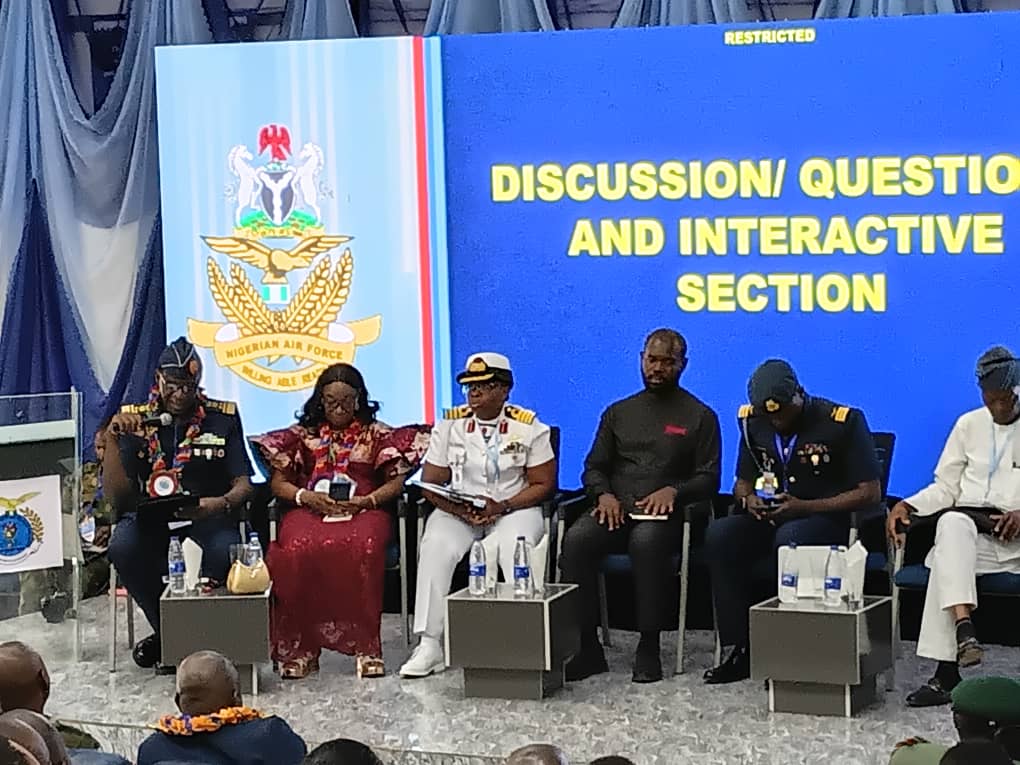
The commitment was reiterated at the 2026 Directorate of Sports and Physical Education Workshop, held from November 27 to 28 at the Nigerian Air Force Base, Abuja, with the theme: “Optimising Contemporary Physical Fitness Management Activities to Enhance Ongoing Transformation Initiatives in the NAF.”
Speaking at the workshop, the Director of Sports and Physical Education, Defence Headquarters, Air Vice Marshal John Ijudigal, described the annual engagement as an important platform for sensitising military personnel on the importance of physical fitness and sustaining sporting excellence across the Armed Forces.
He stressed that regular sporting activities and competitions were essential to maintaining the level of physical fitness required of military personnel in the discharge of their professional responsibilities.
Ijudigal explained that Defence Sports plays a coordinating role in harmonising sporting activities across the Armed Forces, noting that annual sporting programmes are developed and circulated to ensure effective planning, coordination and participation among the Services.
The Director, who recently assumed office, expressed his readiness to strengthen collaboration with sister Services and other relevant institutions, adding that closer engagement among Service sports directors would help harmonise programmes and establish a common strategy for advancing military sports.
Also speaking, the Director of Sports and Physical Education, Nigerian Air Force, Air Commodore Samuel Osoniyi, emphasised that physical fitness remains fundamental to military effectiveness, particularly in view of the demanding nature of military operations.
He said the workshop was designed to expose personnel to modern approaches to physical fitness management and ensure that Air Force personnel remain physically prepared through regular training, sporting activities and competitions.
Osoniyi also called for stronger collaboration among the Armed Forces, paramilitary organisations and civilian sports institutions, including the National Sports Commission (NSC), National Institute for Sports (NIS) and sports federations, to strengthen Nigeria’s sports development framework.
Addressing concerns over Nigeria’s declining performance in some international competitions, he identified the neglect of grassroots sports, particularly inter-school, intercollegiate and university competitions, as a major challenge to talent discovery and development.
He advocated the revitalisation of school and community-based sporting competitions, noting that several accomplished Nigerian athletes had emerged through such platforms.
The Air Force sports director also called for deliberate talent identification programmes in underserved communities, including Internally Displaced Persons (IDP) camps, stressing that untapped talents in these areas could produce athletes capable of winning medals at major international competitions.
On the Nigerian Air Force’s contribution to grassroots development, Osoniyi disclosed that the Service already runs sporting programmes across its primary and secondary schools through inter-house sports competitions and inter-secondary school games.
He described the initiatives as important platforms for identifying and nurturing young sporting talents from an early age.
Speaking on the outcome of the workshop, Osoniyi revealed that participants adopted 15 resolutions, which would be forwarded to the appropriate authorities for consideration and implementation.
He expressed optimism that the implementation of the recommendations would strengthen sports administration, improve personnel fitness and contribute to the broader development of sports in Nigeria.
In his remarks, the Assistant Deputy Director of Defence Sports, Group Captain Ademide Oluwafemi Adeyeye, commended the Chief of the Air Staff, Air Marshal kelvin Aneke , for his support for sports development and the provision of an enabling environment for sporting activities within the Nigerian Air Force.
He also acknowledged the support of the President and Commander-in-Chief of the Armed Forces, describing the workshop as an important opportunity for participants to acquire new knowledge, strengthen professional capacity and develop practical strategies for improving sports administration.
Adeyeye noted that while the Nigerian Air Force had provided institutional support, facilities and resources for sports development, sustained progress would depend on effective coordination, synergy and the implementation of agreed recommendations.
He further emphasised the need for efficient management of personnel and sporting facilities, improved communication and stronger cooperation among stakeholders.
The Assistant Deputy Director urged sports administrators and participants to sustain the momentum generated by the workshop, highlighting discipline, humility, teamwork and commitment as essential ingredients for achieving institutional objectives.
He expressed confidence that with sustained leadership support and effective implementation of the workshop’s recommendations, the Nigerian Air Force would record greater achievements in sports development.
The 2026 workshop underscores the Nigerian Air Force’s determination to adopt modern physical fitness management practices, strengthen collaboration across institutions and invest in grassroots sports as part of efforts to improve personnel readiness and contribute to Nigeria’s quest for greater success on the international sporting stage.