

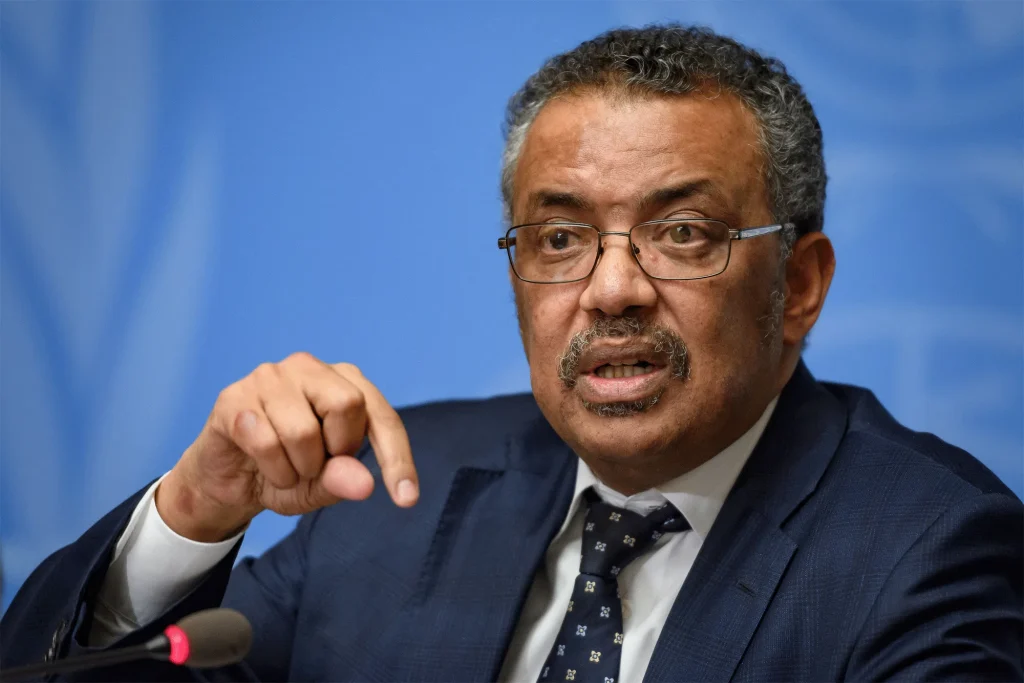
The Director-General of the World Health Organisation (WHO), Tedros Adhanom Ghebreyesus, has raised concerns over impending staff layoffs and scaled-down operations as a result of significant funding cuts, particularly from the United States.
In his opening address to member states on Tuesday, Ghebreyesus acknowledged that the abrupt decline in funding has created a massive salary shortfall, leaving the global health agency with little choice but to reduce both its workforce and the scope of its activities.
“The sudden drop in income has left us with a large salary gap and no choice but to reduce the scale of our work and workforce,” he stated.
The WHO is currently grappling with the anticipated full withdrawal of US funding by January 2026, a move that would strip the agency of support from what has traditionally been its largest contributor.
The administration of US President Donald Trump has also declined to pay the assessed contributions the mandatory membership dues for 2024 and 2025, further exacerbating the financial crisis. Additionally, Washington has frozen nearly all foreign aid, including significant funding earmarked for global health initiatives.
Ghebreyesus explained the implications of the funding shortfall:
“The refusal of the US to pay its assessed contributions for 2024 and 2025, combined with reductions in official development assistance by some other countries, means we are facing a salary gap for the 2026–27 biennium of between $560 and $650 million.”
While he clarified that this gap does not necessarily equate to a 25% cut in staffing, it does represent approximately 25% of current staff-related costs.
As part of the restructuring, Ghebreyesus announced a significant internal reorganization:
The number of senior leadership positions at WHO headquarters will be slashed from 12 to 7.
The total number of departments will be reduced by more than half—from 76 to 34.
These cost-cutting measures reflect the organisation’s attempt to streamline operations and maintain essential services despite looming financial constraints.
The funding crisis poses a serious challenge to the WHO’s capacity to respond to global health emergencies, provide technical guidance, and support health systems around the world—especially in developing nations that rely heavily on its programs.


