BY NGOZI A. NWANKWO
In a bid to provide comprehensive support and protection for flood-affected victims and communities, the Federal Government has commenced the development of a National Flood Insurance Policy and Implementation Framework (NFIP).
The Permanent Secretary, Federal Ministry of Environment, Mr. Mahmud Kambari, disclosed this at a Technical Committee Meeting on the NFIP held in Abuja.
Kambari said the meeting was timely, considering the unprecedented flooding in several states of the federation in recent times.
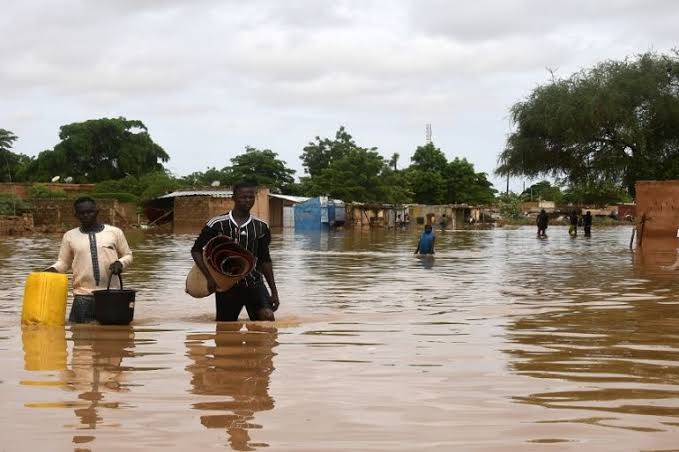
He noted that reports from the Ministry and the National Emergency Management Agency (NEMA) reveal that numerous states experienced severe flooding in 2024, resulting in significant loss of lives, property damage, and displacement, particularly in Borno, Kogi, Kwara, and Niger States.
Citing the recent Mokwa (Niger State) incident, Kambari said about 200 lives were lost, 3,000 people displaced, more than 265 houses destroyed, and 503 households affected.
He explained that the NFIP, outlined in Section C 2.4.3 (iv) of the National Erosion and Flood Control Policy (NEFCOP), aims to build financial resilience, reduce government expenditure, and institutionalize risk-sharing across the three tiers of government, the private sector, and floodplain developers.
He urged participants to focus on stakeholder engagement, comprehensive analysis, policy formulation, and implementation strategy to ensure that the NFIP is effective, inclusive, and resilient.
In his welcome address, the Director of Erosion, Flood, and Coastal Zone Management (EFCZM), Mr. Usman Bokani, emphasized the importance of a coordinated and sustainable approach to managing Nigeria’s escalating flood risks due to climate change, rapid urbanization, and land-use pressures.
He called on the Technical Committee to go beyond policy creation and develop implementation strategies tailored to Nigeria’s unique challenges.
Dr. Etim Amba, Co-Lead Resource Person, said mitigating flooding requires improved urban planning, flood-resilient infrastructure, efficient drainage systems, reforestation, and sustainable land use practices.
“Let us develop a strategy that prevents and protects, spreads the cost of damage, and ensures flood victims can recover with ease,” he said.
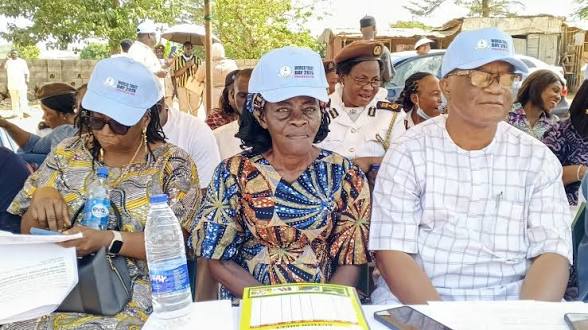
The committee brought together stakeholders from public and private sectors, development partners, and NGOs to design a resilient and sustainable flood insurance framework for Nigeria.