

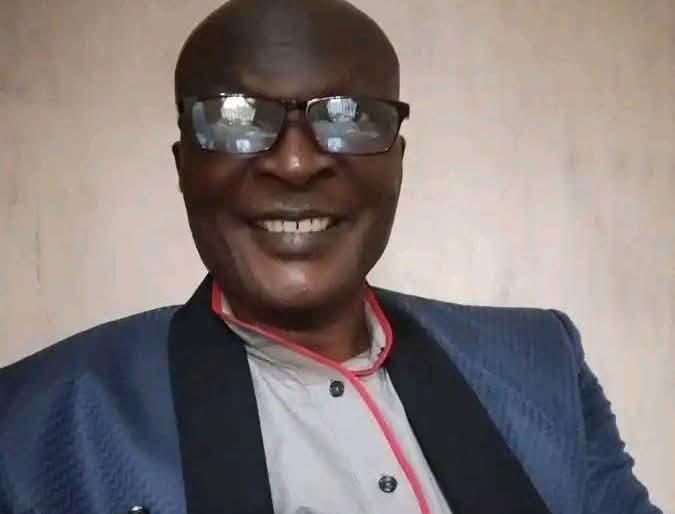
Nestór Chukwuorie Nzeribe, PhD
On Friday, October 31, 2025, US President Donald Trump put Nigeria on a list of “Country of Particular Concern,” a step that holds the country guilty over deadly persecution of Christians. Under the International Religious Freedom Act of 1998 (IRFA), it means Nigeria is now a country engaged in, or tolerating “particularly severe” violations of religious freedom.
Following the development, Riley McGowan Moore, born July 1, 1980, an American politician and member of the Republican Party, serving as the U.S. representative for West Virginia’s 2nd congressional district since 2025, was mandated by a presidential directive to investigate the cases of ongoing genocide/persecution of Christians in Nigeria and report back to the Whitehouse in Washington DC. On December 7, 2025, the US team arrived Nigeria to hold meetings with political, traditional and religious leaders from the parts of the country where the allegations of genocide have been made.
As part of its fact-finding efforts in Nigeria, the Rep Riley Moore group has conducted a series of meetings with various groups, including some survivors of attacks. The group has also visited several internally displaced persons (IDP) camps across Benue state in North Central Nigeria. However, in separate instances, several northern Islamic leaders and groups have responded to the visit and activities of the US investigative team with scathing comments. With remarks that reveal either their ignorance of the group’s true mission or their inherent bad faith, they have condemned the fact that the mission only visited and held meetings with Christians in the North Central region.
Of course, there are the incontestable factors that are meant to guide the mission’s itinerary while in Nigeria.
First, it is a widely acknowledged fact that Nigeria is currently grappling with pervasive challenges of insecurity. Second, it is also well-documented that Islamic jihadism, Fulani banditry, and land grabbing are the primary factors exacerbating the insecurity situation in Nigeria. Third, a notable truth is that killings occur in both northern Muslim areas of Nigeria and the areas where genocide allegations are being made in the North Central regions. However, a distinct pattern is discernible in the North Central region, which underpins the allegations of genocide. Lastly, the everyday situation on the ground attests to the fact that the Nigerian government has been responding to the crisis in an apparently overwhelming manner.
It is apparent that apart from the reality of the ever-worsening insecurity in Nigeria, the administration of President Donald Trump in the US was significantly concerned by the allegations of genocide, which prompted its swift decision to list Nigeria as “Country of Particular Concern” A peep into President Trump’s mind on the issue was provided the moment he threatened to intervene with a military strike on the terrorists in Nigeria, with “guns ablazing”.
In fairness to President Trump his intentions were as clear as the noonday from his first statements threatening an intervention, not an invasion. But a number of factors including the ever-present reflex of regime protection from the Nigerian government on the one hand, and the survival/perpetration of the Fulani Islamic domination of northern Nigeria on the other, got his words twisted out of both shape and meaning. Consequently, the creation of acceptable narratives became more important than, and replaced the sincere desire and efforts to combat a national scourge.
When Rep Riley Moore arrived Nigeria with his team, he did not come to conduct a holistic fact-finding survey of Nigeria’s security challenges, but to ascertain the veracity or otherwise, of the allegations of genocide. The group had and felt no need to visit the areas where killings and the pattern of attacks were not in dispute. If they had to enlarge their itinerary, to accommodate all the issues involved in Nigeria’s challenges of insecurity, it may require a whole year for a report to be ready for presentation to President Trump. With its terms of reference being clearly cut out, the team chose objectivity in focusing on the issue of Christian genocide.
With the scenarios elaborated above being the exact situation, the US group could meet only with the victims who alleged genocide, to know the extent of available substance backing up such claims. Additionally, If it is recalled that the allegation of genocide had curiously been strongly refuted by the Islamic leadership of northern Nigeria, as if the accusations were theirs to refute, and the government of Nigeria, you would easily know why the Americans needed proof by visiting the areas where genocide claims had come from.
It is worrisome and curious that the Islamic leadership of northern Nigeria panics openly at every step taken in the open effort to validate claims of genocide made against terrorists. The inexplicable solidarity with jihadists, bandits and terrorists being harboured by the Islamic leadership of northern Nigeria has not gone unnoticed. Discerning Nigerians and concerned members of the international community are refocusing their scrutiny on what is a growing suspicion of a hidden agenda where the religion of Islam and its leadership in Nigeria are the ultimate beneficiaries from the national havoc being visited on the country by the Fulani militias, Islamic terrorists and bandits.
We may just have to wait for time to reveal a lot more things about Nigeria.


