By Joy Onu
The Federal Government has intensified nationwide health security measures following renewed concerns over the Bundibugyo ebolavirus disease, BEBOV, reported in parts of East and Central Africa, strengthening surveillance at points of entry and reinforcing emergency preparedness across Nigeria’s public health system.
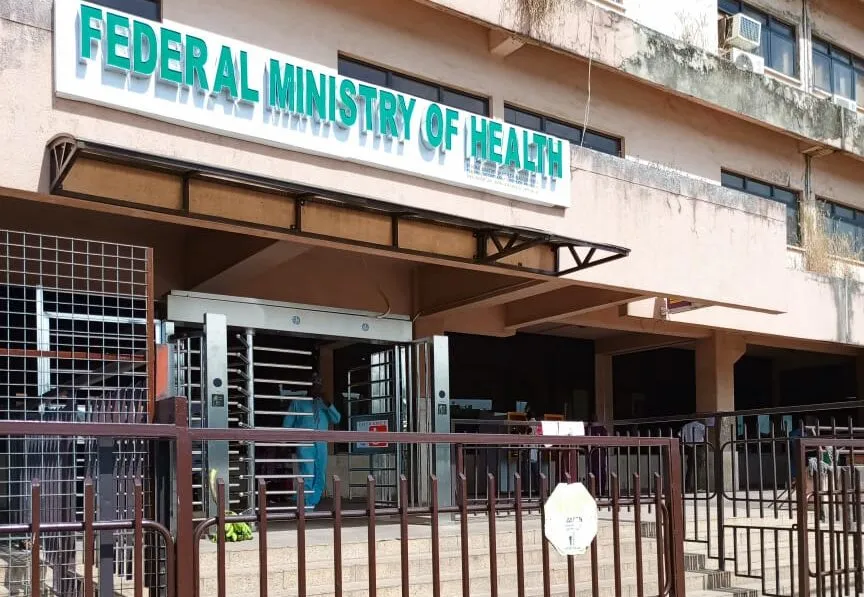
The Federal Ministry of Health and Social Welfare has confirmed that no case of Ebola Virus Disease has been recorded in Nigeria at present. However, authorities say proactive containment and preparedness measures have been activated to reduce the risk of importation and potential community transmission.
The Ministry explained that the current response forms part of a broader national health security strategy aimed at strengthening disease surveillance, enhancing rapid response capacity, and ensuring Nigeria remains fully prepared for any cross-border public health threat.
Officials noted that preparedness activities are being implemented across federal, state, and local health systems in collaboration with immigration services, port health authorities, laboratory networks, and emergency operations centres.
The Federal Ministry of Health and Social Welfare said the heightened surveillance is a precautionary measure triggered by regional epidemiological alerts and not a result of any confirmed domestic outbreak.
According to the Ministry, technical guidelines, preparedness protocols, and advisory documents have been made publicly available to support awareness, stakeholder engagement, and compliance across health institutions.
At points of entry, authorities have strengthened screening procedures for inbound travellers through airports, land borders, and seaports. Measures include universal temperature screening using infrared scanners and handheld thermometers, as well as mandatory completion of health declaration forms detailing travel history and contact information.
Travelers identified through initial screening undergo secondary assessment by health personnel. Those showing symptoms consistent with viral haemorrhagic fevers are isolated and referred to designated health facilities for further evaluation and laboratory testing.
Border health operations are being coordinated jointly by port health services, immigration authorities, aviation regulators, and maritime agencies to strengthen early detection and close potential surveillance gaps. Beyond entry points, surveillance systems have been reinforced nationwide under the Integrated Disease Surveillance and Response, IDSR, framework.
Healthcare workers have been placed on heightened alert to detect symptoms such as sudden fever, unexplained bleeding, severe weakness, and rapid clinical deterioration. Event-based surveillance mechanisms have also been activated to investigate rumours, media reports, and community alerts indicating unusual disease patterns.
These alerts are verified through rapid field investigations, while continuous epidemiological monitoring is conducted in collaboration with regional and international health partners to track disease trends and emerging threats.
Experts Task Female Lab Scientists on Evidence-Based Healthcare Solutions
Female medical laboratory scientists have been urged to translate scientific findings into practical healthcare solutions that improve patient outcomes.
Prof. Mary-Theresa Akpoveta-Niemogha of the College of Medicine, University of Lagos, gave the advice on Wednesday at the 9th Annual National Scientific Conference of the Association of Female Medical Laboratory Scientists of Nigeria, AFMLSN, in Lagos.
NAN reports that the conference has as its theme: “Inflammations: Transiting Scientific Findings into Practical Applications and Solutions.”
The professor described inflammation as a common feature of many infectious and non-communicable diseases, often manifesting as pain and swelling in joints and vascular tissues.
She said medical laboratory scientists occupy a strategic position in disease detection, monitoring, research, prevention and therapeutic guidance.
According to her, dietary habits are major contributors to inflammation, stressing the need for people to pay closer attention to what they consume.
She noted that processed foods and excessive carbohydrate intake could increase the risk of inflammation, while foods such as turmeric, ginger and onions possess anti-inflammatory properties.
“Laboratory scientists can develop improved diagnostic approaches that will support the treatment and management of inflammatory diseases.
“Diet is a major cause of inflammation. The consumption of processed and carbohydrate-rich foods may predispose individuals to inflammatory conditions.
“It is therefore important for people to be mindful of their diets by consuming more fibre-rich foods, fruits and vegetables,” she said.
Speaking, the National President of AFMLSN, Mrs Catherine Ikpeme, said the conference also celebrated the growing influence of women in healthcare leadership, research and innovation.
According to her, the gathering reflects the increasing contributions of female medical laboratory scientists to healthcare delivery, scientific research, disease prevention and evidence-based patient care in Nigeria and beyond.
Also speaking, the Chairman of the National Organising Committee, Dr Theresa Jeremiah, underscored the critical role of laboratory scientists in disease management and patient outcomes.
Jeremiah described inflammation as a major underlying factor in many diseases and stressed the need to translate laboratory findings into practical solutions that enhance patient care.
In her remarks, the South-West Zonal Coordinator of AFMLSN, Mrs Catherine Dikedi, urged women to adopt preventive measures against inflammation through healthy lifestyles and proper nutrition.