

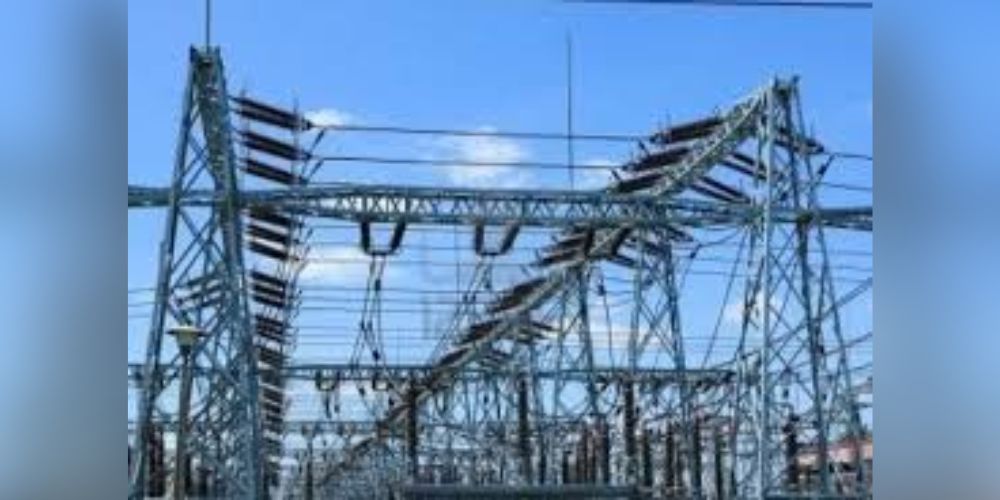
Nigeria’s electricity generation crisis may worsen as legacy debts owed to power generation companies (GenCos) have climbed to about N7trn. This is even as major Gas suppliers had reportedly rejected the Federal Government’s proposal for a 50 per cent debt write-off.
The federal government had earlier approved a N3.3 trillion financial settlement plan to clear legacy debts accumulated within the Nigerian Electricity Supply Industry (NESI) between 2015 and early 2025.
Under the arrangement, outstanding obligations to GenCos were to be settled through a combination of 10-year promissory notes and proceeds from a N501.02bn bond issued through the Nigerian Bulk Electricity Trading (NBET) Plc.
The bond issuance marked the first phase of efforts to reduce the huge market shortfalls that have constrained investments across the power sector.
However, disagreements over the reconciliation of claims between the government and GenCos have slowed implementation of the settlement framework, with industry operators insisting that the verified liabilities are significantly higher than the figures proposed by the government.
However, the Executive Secretary and Chief Executive Officer of the Association of Power Generation Companies (APGC), Dr Joy Ogaji, has warned that the mounting liabilities threaten the sustainability of electricity generation and the stability of the nation’s power sector.
Ogaji spoke virtually on Monday during the opening session of the three-day “Powering Nigeria’s Power Sector Leaders Training Series 2026 – Professional Track”.
She stated that after the FG’s verified claims of the N3.3tn, the debt later rose to N3.8tn before the appointment of the Special Adviser on Power, Mr Rilwan Lanre Babalola. According to her, the debts have now ballooned to nearly N7tn as unpaid invoices continue to accumulate.
She declared that power generation companies have yet to receive any fresh payment despite repeated assurances by the federal government.
Ogaji also disclosed that the Federal Government has not completed the disbursement of the N500 billion raised through the bond market in December to offset part of the outstanding obligations owed to GenCos.
She stressed that generation companies never agreed to forfeit half of the debt owed to them, adding that “To date, we have not received any payment. We have not accepted the N3.3tn settlement proposal”.
Ogaji said attempts to persuade gas suppliers to accept a 50% reduction in the debts failed.
“When we told the gas suppliers that the Federal Government had agreed to take 50% off the debts, the gas suppliers refused and told us that we are on our own,” she stated.
Ogaji, however, urged the newly appointed Minister of Power, Mr Joseph Tegbe, to demonstrate strong political will and declare a state of emergency in the power sector.
She also urged the minister to implement urgent reforms to halt the continuous accumulation of debts owed to generation companies.
According to her, the government must establish a sustainable payment framework that prevents fresh debts from piling up.
“His priority should be to stop the continuous growth of the debt profile while addressing the existing obligations,” she said.
End
FG Approves Payments to 1,240 Contractors to Ease Liquidity Pressure
The Federal Government has processed more than ₦700 billion in payments to local contractors in recent months, with over 1,240 verified claims approved for settlement as part of efforts to inject liquidity into the economy, support businesses and restore confidence in public financial management.
The Federal Ministry of Finance disclosed this on Monday in a statement announcing the approval of payments to contractors across various Ministries, Departments and Agencies (MDAs).
According to the ministry, the latest round of payments follows a comprehensive verification and reconciliation exercise aimed at ensuring that only legitimate and duly validated obligations qualify for settlement.
The statement noted that the approval was granted by the Minister of Finance and Coordinating Minister of the Economy, Mr. Taiwo Oyedele, as part of the government’s commitment to meeting its financial obligations while maintaining fiscal discipline.
The ministry explained that contractors with verified claims of ₦100 million or less were prioritised in the most recent batch of payments, a move designed to spread the economic benefits of the disbursements across a wider segment of businesses.
It stated that the release of funds would provide immediate relief to hundreds of indigenous businesses and small and medium-sized enterprises (SMEs), many of which have faced challenges arising from delayed payments for completed government contracts.
According to the ministry, the payments will enable contractors to return to project sites, pay workers’ salaries, settle outstanding obligations to suppliers, meet financial commitments and contribute to economic activity in their respective sectors.
The ministry revealed that approximately ₦436.6 billion in transactions were processed in May alone, underscoring what it described as a significant acceleration in the settlement of verified obligations owed by the government.
It added that the payment programme reflects the government’s determination to convert policy commitments into tangible outcomes by addressing inherited liabilities in a transparent and fiscally responsible manner.
Analysts have long argued that delayed payments to contractors often create liquidity constraints for businesses, particularly smaller firms that depend heavily on government projects for revenue. Such delays can disrupt project execution, increase borrowing costs and threaten jobs.
By settling outstanding obligations, the government expects to improve cash flow across various sectors of the economy, support business continuity and stimulate economic growth.
The Ministry emphasised that the strategy of prioritising a large number of smaller contractors, rather than concentrating payments among a handful of large beneficiaries, was intended to maximise the economic impact of the disbursements.
According to the statement, the approach is expected to support businesses across different sectors and regions of the country, helping to preserve jobs and strengthen economic activity at the grassroots level.
The Ministry also expressed optimism that the latest payments would boost confidence among contractors, suppliers and service providers working with government institutions by demonstrating a commitment to honouring verified contractual obligations.
For many beneficiaries, the ministry noted, the payments represent more than the settlement of outstanding invoices. They provide the certainty required to sustain operations, complete ongoing projects and make new investments.
The government maintained that efforts to clear outstanding liabilities would continue as part of broader reforms aimed at strengthening public financial management and improving service delivery.
The Ministry reaffirmed its commitment to maintaining fiscal discipline while ensuring that legitimate obligations are settled in a timely manner. It added that reducing outstanding liabilities over time would strengthen trust in government contracting processes and support the delivery of critical infrastructure and public services across the country.
The latest disbursements come amid ongoing efforts by the Federal Government to stimulate economic activity, support local businesses and improve the efficiency of public expenditure management.



