By Joel Ajayi
The 2026 FIFA World Cup has already delivered drama, intensity, and unforgettable moments after just eight days of action across the United States, Canada, and Mexico.
But beyond the goals and headlines, one storyline has captured global attention the rise of African football.
This year’s tournament is historic for many reasons. For the first time in FIFA World Cup history, 48 nations are competing for football’s biggest prize, expanding the competition and creating more opportunities for emerging football powers to shine.
Africa arrived at this historic edition with a record 10 representatives, showcasing the continent’s growing influence in global football.
The teams flying Africa’s flag are Morocco, Tunisia, Egypt, Algeria, Senegal, Ivory Coast, Ghana, Cape Verde, South Africa, and the Democratic Republic of the Congo.
Before the tournament began, many analysts predicted that several African teams would struggle against the traditional football giants from Europe and South America. There were concerns that the gap in quality, experience, and tactical sophistication would once again be exposed on football’s grandest stage.
So far, those predictions have been challenged. African teams are no longer at the World Cup simply to participate or gain experience. They are here to compete, challenge elite opponents and make history.
Across the opening round of matches, African representatives have produced courageous and highly competitive performances against some of the biggest footballing nations in the world. They have demonstrated tactical discipline, physical strength, mental resilience, and a growing belief that they belong among football’s elite.
One of the most impressive performances came from Morocco, who held five-time world champions Brazil to a 1-1 draw. It was a statement performance that reinforced Morocco’s continued rise following their historic semifinal run at the 2022 World Cup in Qatar.
The Atlas Lions played with maturity and confidence, refusing to be intimidated by Brazil’s star-studded lineup. Their performance sent a clear message — Morocco’s success in 2022 was no fluke.
Ivory Coast also delivered a standout result, defeating Ecuador 1-0 in a disciplined and impressive display. The Elephants combined defensive solidity with quick transitions, proving once again that they can go toe-to-toe with top-level opposition.
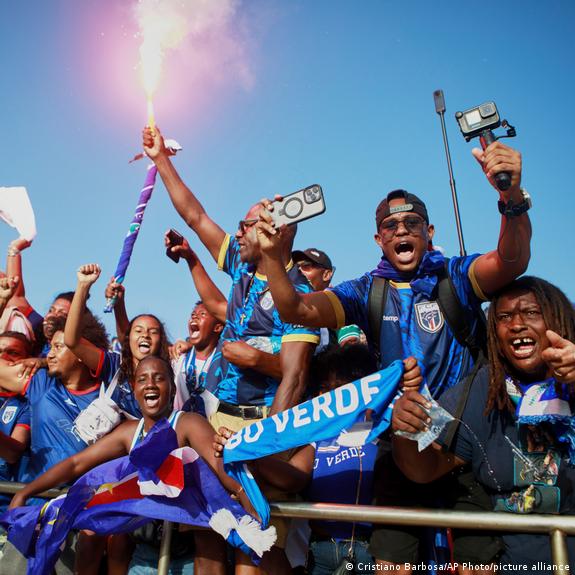
Tournament debutants Cape Verde produced one of the biggest surprises of the opening round by frustrating Spain in a hard-fought goalless draw. Against one of the world’s most technically gifted sides, Cape Verde remained compact, organised, and fearless.
Their result was more than just a point — it was a symbol of Africa’s growing tactical sophistication.
Egypt also showed immense resilience by holding Belgium to a 1-1 draw. The Pharaohs neutralised one of Europe’s most dangerous attacking units through disciplined defending and intelligent game management.
Meanwhile, Ghana on Wednesday night opened their campaign in dramatic fashion with a late 1-0 victory over Panama. A stoppage-time winner sparked wild celebrations and gave the Black Stars a crucial three points in their opening fixture.
Not every result went Africa’s way. Tunisia suffered the heaviest defeat among African sides, falling 5-1 to Sweden in a difficult outing. Senegal lost 3-1 to France, while South Africa were beaten 2-0 by hosts Mexico.
Algeria also suffered a disappointing 3-0 loss to reigning champions Argentina.
Yet even in defeat, some African teams showed flashes of promise. The scorelines did not always reflect the quality of performance, as several sides displayed moments of courage, structure, and competitiveness.
Overall, after the first round of matches, Africa recorded two wins, three draws, and five defeats — a mixed but highly encouraging start.
Perhaps the most emotional and historic story of the tournament so far belongs to the Democratic Republic of the Congo.
Their 1-1 draw against Portugal was about far more than earning a point.
When striker Yoane Wissa rose highest to head home in the first half, he did more than put DR Congo ahead. His goal ended a painful wait of 52 years and three days for the nation’s first-ever FIFA World Cup goal.
That moment carried enormous historical significance. DR Congo’s only previous World Cup appearance came in 1974, when the nation competed as Zaire. That campaign remains one of the most difficult in World Cup history, as they lost all three group matches — 2-0 to Scotland, 9-0 to Yugoslavia, and 3-0 to Brazil.
For decades, that painful memory overshadowed Congolese football. Then came Wissa’s header.
One powerful leap. One clean connection. One historic goal. That goal was not merely a statistic or a highlight for television reels. It symbolised resilience, progress, redemption, and the rebirth of a footballing nation determined to redefine its identity on the global stage.
More broadly, Africa’s performances at the 2026 World Cup reflect something far greater than points and standings.
They signal a major shift in mentality. The era of African teams arriving at the World Cup as underdogs hoping to cause occasional upsets is fading fast. Today’s African sides are better prepared, tactically sharper, physically stronger, and mentally tougher than ever before.
Many players now compete regularly in Europe’s biggest leagues and bring that elite-level experience into international football. Coaching structures have improved. Tactical systems are more sophisticated. Player development pathways are stronger.
Most importantly, belief has changed. African teams now step onto the pitch expecting to compete — not hoping to survive.
That psychological transformation may be the most significant development of all.
There is now a growing sense that African football is entering a new era — one where quarterfinal appearances, semifinal runs, and perhaps even a future World Cup final are realistic ambitions rather than distant dreams.
Attention now turns to the second round of group matches, where the pressure rises and qualification hopes hang in the balance. Every point matters. Every performance could define a nation’s World Cup journey.
For teams like South Africa, Tunisia, Senegal, and Algeria, redemption is still possible despite opening defeats. Their campaigns are far from over.
For the unbeaten sides — Morocco, Egypt, Ghana, Ivory Coast, Cape Verde, and DR Congo — the mission is clear: maintain momentum and keep believing.
The message from Africa has already been delivered loudly to the world.