

By Joy Onu
Nigeria’s dependence on out-of-pocket healthcare spending continues to leave many families vulnerable whenever a loved one requires intensive care, prompting the Federal Government to push for a more sustainable financing model to improve access to life-saving treatment.
According to a statement issued on Thursday by the Assistant Director, Information and Public Relations at the Federal Ministry of Health and Social Welfare, Ado Bako, the Minister of State for Health and Social Welfare, Dr. Iziaq Adekunle Salako, said the government is strengthening emergency and critical care services through expanded health insurance coverage, improved infrastructure, workforce development and stronger collaboration with public and private sector stakeholders.
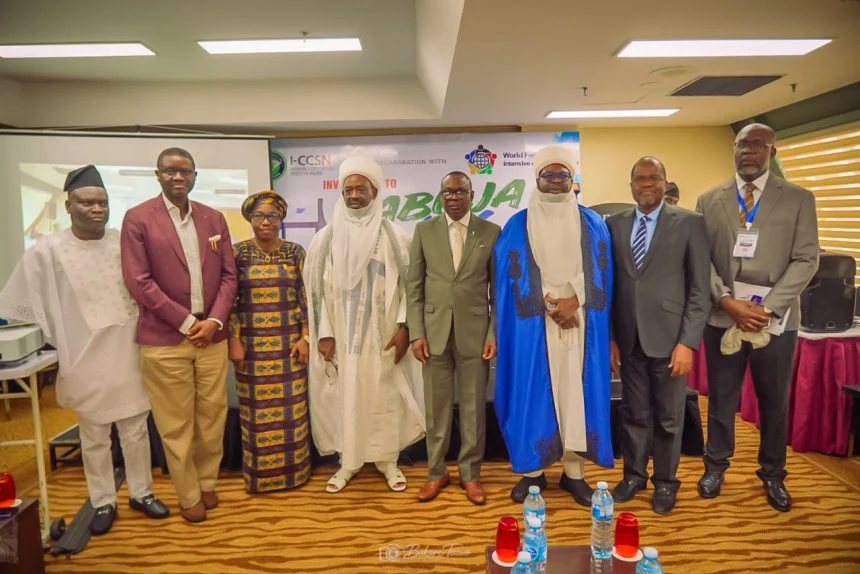
Salako made the remarks while declaring open the 11th Annual Scientific Conference and Annual General Meeting of the Intensive and Critical Care Society of Nigeria (I-CCSN) in Abuja. The conference was themed, “Sustainable Financing for Intensive Care in Public Hospitals in Nigeria.”
He said sustainable financing has become essential to building a resilient healthcare system capable of providing quality intensive care without exposing patients and their families to catastrophic financial hardship.
According to the minister, critical illnesses resulting from trauma, infectious diseases, maternal and newborn complications, surgical emergencies, cardiovascular and neurological disorders, respiratory failure, non-communicable diseases, epidemics and other public health emergencies require timely access to intensive care, which often determines whether patients survive.
Salako described emergency and critical care as vital pillars of Universal Health Coverage and national health security, stressing that intensive care services demand significant investments in specialised infrastructure, modern equipment, medical oxygen systems, uninterrupted electricity, diagnostic facilities, biomedical engineering support and highly trained multidisciplinary professionals.
He said one of the Federal Government’s flagship interventions, the National Emergency Medical Service and Ambulance System (NEMSAS), has expanded from its pilot phase in the Federal Capital Territory to 34 states, while efforts are ongoing to achieve nationwide coverage.
The minister added that the government is complementing the initiative with programmes aimed at strengthening maternal and newborn care, improving healthcare financing and integrating ambulance services, intensive care units, high dependency units, operating theatres, rehabilitation services, medical oxygen systems, diagnostic services and health insurance schemes into a more responsive emergency care network.
He reaffirmed the government’s commitment to strengthening medical oxygen systems, recalling lessons from the COVID-19 pandemic, and disclosed that Pressure Swing Adsorption (PSA) oxygen plants have already been installed in several health facilities across the country.
Salako also advocated stronger referral systems, regional critical care networks, digital health technologies, tele-critical care services and improved health information systems to reduce disparities in access to quality healthcare.
Calling for broader collaboration, he urged the Federal Government, state governments, healthcare institutions, professional bodies, academic and research institutions, development partners, civil society organisations and private healthcare providers to work together in building a sustainable critical care system.
He also emphasised the need to expand the country’s critical care workforce through increased training of intensive care physicians, nurses, physiotherapists, pharmacists, biomedical engineers, technicians and other specialists using fellowship programmes and continuous professional development.
The minister commended the Intensive and Critical Care Society of Nigeria for advancing critical care practice, research, policy development, patient safety, quality improvement and professional education, describing the society as an important partner in supporting government through technical expertise, policy advocacy and standard setting.
He challenged participants at the conference to develop practical recommendations on sustainable financing, financial risk protection for patients, workforce expansion, equipment maintenance, medical oxygen systems, referral networks and partnerships, assuring them that the Federal Ministry of Health and Social Welfare would consider implementing workable recommendations.
Earlier, Chairman of the Local Organising Committee, Dr. Harrison Nwogu, said the conference would examine the reasons behind chronic underfunding of intensive care units while exploring innovative financing options, including public-private partnerships, insurance integration and diaspora investments.
Chairman of the occasion and Chief Medical Director of Zenith Medical and Kidney Center, Dr. Olalekan Olutesi, said healthcare delivery should not be left solely to the government. He urged wealthy Nigerians to invest in the health sector and recommended tax incentives to encourage private investment.
Delivering the keynote address, Professor Daprim Samuel Tamuno-Ojuemi Ogaji said Nigeria must develop a sustainable financing model that guarantees access to intensive care irrespective of patients’ financial capacity. He identified inadequate infrastructure, limited equipment, shortage of consumables and unreliable electricity supply as major barriers to effective intensive care delivery.
Representing the Emir of Tula, His Royal Highness Dr. Abubakar Buba, the Emir of Wase, His Royal Highness Alhaji Dr. Muhammadu Sambo Haruna, commended the society for convening the conference, describing intensive care as an issue of humanity, equity and national development that affects every community across Nigeria.



