

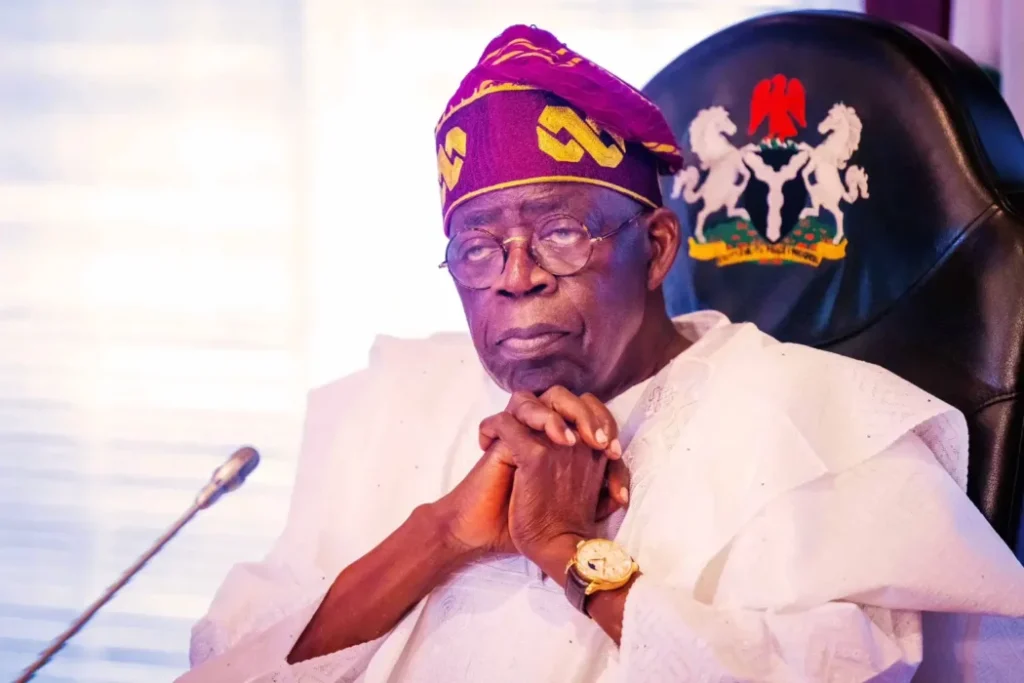
On Thursday, July 23, President Bola Tinubu approved the expansion of the Nigerian Army from 8 to 12 divisions, along with the recruitment of 28,000 additional personnel.
The new structure is to create four additional divisions in Makurdi, Ilorin, Jalingo and Benin City, with implementation scheduled to be completed in two phases before the end of 2026.
A statement issued on Thursday by the Special Adviser to the President on Information and Strategy, Bayo Onanuga, said the approval reflects Tinubu’s commitment to strengthening the Armed Forces and improving their ability to respond to security threats across the country.
The statement said the expansion follows the administration’s investments in military equipment, troop welfare, operational readiness and force modernisation.
Under the new structure, the Nigerian Army’s 12 divisions will be headquartered in Kaduna (covering Kaduna, Kano, Katsina and Jigawa states); Ibadan (Oyo, Osun, Ekiti and Ondo states), Jos (Plateau, Bauchi and Gombe states); Makurdi (Benue, Nasarawa and Kogi states); Port Harcourt (Rivers, Akwa Ibom and Cross River states), and Maiduguri (Borno and Yobe states).
Others are: Sokoto (Sokoto, Kebbi and Zamfara states); Ilorin (Kwara and Niger states); Jalingo (Taraba and Adamawa states); Lagos (Lagos and Ogun states); Enugu (Enugu, Anambra, Abia, Ebonyi and Imo states) and Benin City (Edo, Delta and Bayelsa states).
According to the presidency, the four new divisions will improve command and control, decentralise operational decision-making, strengthen border security, protect critical national infrastructure, improve counter-insurgency and internal security operations, and enable faster military responses to emerging threats.
Implementation will be carried out in two phases. The first phase, covering the establishment of the 5, 9 and 10 Divisions and the reorganisation of existing formations, is expected to be completed by September 2026.
The second phase, which includes the establishment of the 83 Division in Benin City and further reorganisation, is scheduled to be completed by December 2026.
President Tinubu also commended the Chief of Army Staff, Lieutenant General Waidi Ibrahim Shuaibu, and officers and soldiers of the Nigerian Army for what the Presidency described as their dedication and professionalism.
“The President reaffirmed his Administration’s determination to continue investing in the Armed Forces, ensuring they remain adequately equipped, highly motivated, and fully capable of protecting the nation and guaranteeing the safety and security of all Nigerians,” the statement said.
More troops will help secure porous borders and protect critical national infrastructure as the increased manpower aims to suppress banditry, kidnappings, and insurgencies more aggressively.
The creation of these four additional divisions consequently throws up fresh challenges and concerns such as funding and Welfare. Sustaining a larger force requires massive, continuous funding for equipment, logistics, and troop welfare; the government should ensure that there is a follow-up on these to ensure the sustainability and effectiveness of the troops in tackling the persistent incidents of insecurity so as to justify their establishment. Also, there is also the need to upgrade or improve the quality of training as rapid mass recruitment can strain existing training facilities, which are inadequate by the way, since this will directly impact the overall readiness of the force.
There is also the need for improved intelligence gathering to help in providing a non-kinetic approach to solving or even mitigating the prevailing situation of insecurity in the country. Experts have noted that numbers alone are not enough; operations must be intelligence-led to completely dismantle criminal networks.
Recent public concern over Nigerian soldiers’ welfare has centres on low pay, high inflation, and housing shortages. The main issues have centred around a recent salary increase to ₦100,000 which is quite commendable of President Tinubu. However, there have still been calls for a further increase to ₦250,000 minimum wage to reflect the current inflation rate in the country and to underscore the invaluable role that soldiers play in the fight against insecurity and the manner in which they put their lives on the stake, along with the severe deficits in their barracks accommodation.
Critics and retired officials, such as Major General John Enenche, argue that ₦100,000 is insufficient against severe inflation, proposing a baseline of at least ₦250,000 monthly salary.
Lawmakers have noted that Nigerian frontline troops earn significantly less than their counterparts in other African nations.
The military leadership has reported the recruitment new soldiers lack matching provisions or funding for proper housing and logistics.
We urge the federal government to see to it that the training and logistics capability of our troops attain the level of sophistication in modern technological warfare that will outwit those of the terrorists, bandits, insurgents and kidnappers that have killed, maimed and displaced so many communities across the length and breadth of the country.
While the recent bold move by President Bola Tinubu in approving the expansion of the army to 12 divisions and recruitment of 28,000 new personnel is quite commendable, experts warn that existing accommodation and welfare deficits, including inadequate equipment and poor training could undermine the overhaul.



