By Theodora Obayojie
Former Anambra State Governor and 2027 presidential candidate of the Nigeria Democratic Congress (NDC), Peter Obi, continues to enjoy goodwill among some members of the state’s Muslim community because of his sustained engagement with them outside election periods, according to Garba Haruna, leader of Muslims in Anambra State.
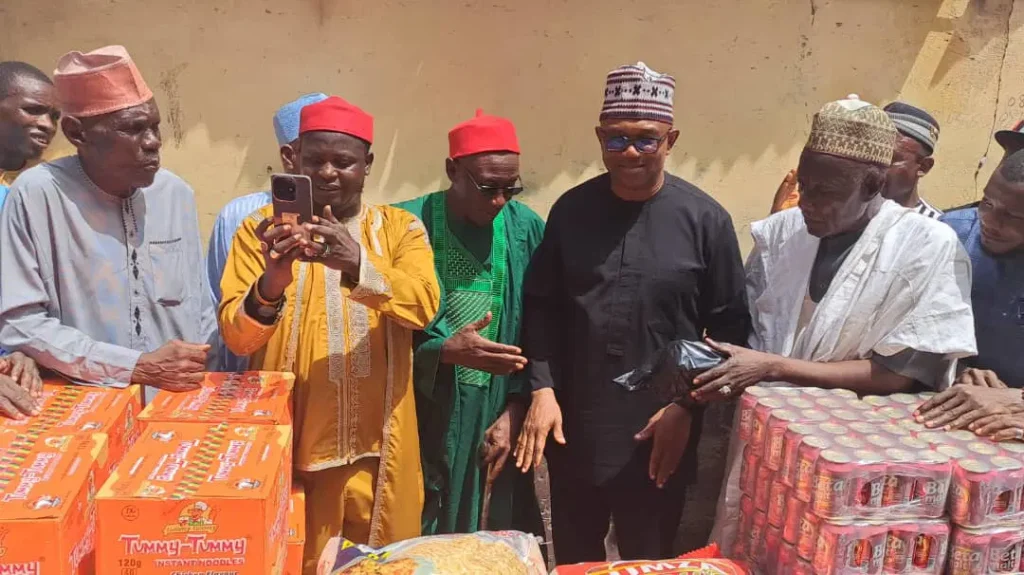
Haruna said Obi’s relationship with the Muslim community had not been limited to campaign seasons, pointing to his continued visits, assistance during Sallah celebrations, and support for efforts to rebuild mosques.
He made the remarks in a video posted by Advocacy for Good Governance while speaking about Obi’s relationship with Muslims in Anambra.
According to Haruna, Obi has consistently remembered members of the community and maintained contact with them even when there was no immediate political contest.
“He’s always helping us, either in Sallah or even when it is not Sallah. He’s also helping us to rebuild our mosques. Peter Obi always remembers us,” Haruna said.
He said Obi also visits members of the community, attends meetings, and engages with them at their homes and mosques.
“Peter Obi is calling us for a meeting, he’s coming to our houses, he’s coming to our mosques,” he said.
Haruna said the continued engagement was one of the factors that distinguished Obi in his experience, particularly because it extended beyond periods when politicians traditionally sought electoral support.
He also compared Obi’s approach with that of former Anambra State Governor Chris Ngige, saying Ngige had similarly maintained contact with members of the Muslim community outside campaign periods.
“One thing to tell you is that if I’m going to vote for somebody who follows the steps of Peter Obi, that’s Chris Ngige, that is the truth,” Haruna said.
He added that Ngige had visited members of the community and interacted with them at different times, just as he said Obi had done.
The comments come as political activities gather momentum ahead of the 2027 general election, with politicians increasingly seeking to consolidate relationships with grassroots, religious, and community groups.
Haruna’s remarks place sustained community engagement at the centre of his assessment of Obi, suggesting that regular interaction and support outside campaign periods can shape how individual community leaders view political figures.
However, his comments represent his personal assessment and should not be interpreted as evidence of the voting preference of the wider Muslim community in Anambra State.
The remarks were contained in a video posted by Advocacy for Good Governance.