

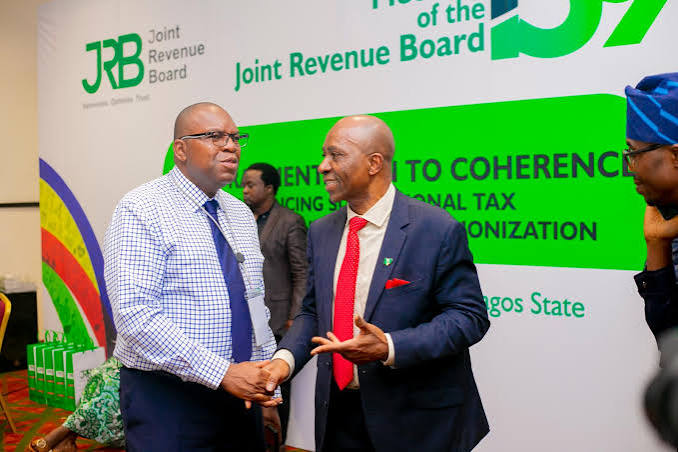
The Chief Executive Officer (CEO), Office of the Tax Ombud, Dr John Nwabueze, has called for stronger inter agency collaboration to improve revenue administration in Nigeria.
Nwabueze made the call at a stakeholders’ engagement organised by the Office of the Tax Ombud in Abuja on Thursday.
He said the engagement was aimed at strengthening relationships between taxpayers and institutions responsible for administering public revenue.
According to him, effective taxation requires a balance between the government’s revenue mobilisation objectives and protection of taxpayers’ rights.
Nwabueze said that Nigeria’s adoption of the tax ombud mechanism placed the country among nations strengthening institutional protection of taxpayers’ rights.
He said that the specialised concept of tax ombud emerged from efforts to provide taxpayers with an advocate within tax administration.
The CEO said that the country was the ninth globally and third in Africa to adopt the tax ombud mechanism.
He commended President Bola Tinubu for his commitment to reforms aimed at making the nation’s tax system fair, inclusive and sustainable.
Nwabueze also commended the Minister of Finance and Coordinating Minister of the Economy, Mr Taiwo Oyedele, for supporting the tax reform process.
He said that the existing mechanisms for resolving tax disputes did not adequately address some administrative and procedural difficulties experienced by taxpayers.
He said the tax ombud was established under Part VI of the Joint Revenue Board Establishment Act, 2025.
The CEO said that the office was mandated to receive, investigate and resolve complaints relating to taxes, levies, regulatory fees, customs duties and other related matters.
Nwabueze said that the office had inaugurated its website, contact centre and case management portal to improve taxpayers’ access to its services.
He said the platforms enabled taxpayers to submit complaints, obtain information, track cases and receive timely assistance.
The CEO said the office had also commenced public awareness and stakeholders’ sensitisation programmes to educate Nigerians about their rights.
He also disclosed that some Federal Government offices would commence operations within two to three weeks.
Nwabueze said the move would bring the office closer to taxpayers who might face difficulties accessing its services from Abuja.
He also announced plans to inaugurate a taxpayers’ charter outlining taxpayers’ rights, responsibilities and standards of fairness, transparency and accountability.
The CEO urged stakeholders to publicise the charter to ensure Nigerians understood their rights and available channels for seeking redress.
Nwabueze said that the objective was to build a responsive tax administration that protects taxpayers while strengthening institutional accountability.
The Corporate Affairs Commission (CAC) Registrar-General, Mr Hussaini Magaji, described the engagement as timely and critical to building confidence in revenue administration.
Magaji, represented by the Director of Finance CAC, Mr Emmanuel Inyang, said that sustainable revenue administration depended on taxpayers understanding their obligations and receiving fair treatment.
Magaji said that accessible redress mechanisms and transparent administration would promote voluntary compliance and reduce enforcement costs.
He said CAC recognised the integrity of business registration and corporate registry systems as important components of effective revenue administration.
According to him, the commission serves as a gateway to the formal economy through registration and regulation of businesses and corporate entities.
Magaji called for sustained collaboration among revenue, regulatory and law enforcement agencies to strengthen the country’s revenue administration architecture.
He said that such collaboration would respect institutional mandates, legal frameworks, data protection safeguards and responsible information-sharing mechanisms.
Magaji said that digitalisation offered opportunities to improve interoperability, reduce duplication and simplify interactions between citizens, businesses and government.
He urged the stakeholders to combine taxpayer education, simplified processes, digitalisation, incentives and proportionate enforcement to expand Nigeria’s formal economy.
He said that formalisation would enable businesses to access finance, markets and government programmes while expanding the country’s domestic revenue base.
The Director-General (D-G) of Voice of Nigeria (VON), Jibrin Ndace, called for fairness, transparency and trust in Nigeria’s tax revenue system.
Ndace, represented by Mr Mikail Abdulganiyi, said that a fair and transparent tax system was essential for building public confidence and strengthening voluntary compliance.
He said that an effective tax system would also contribute significantly to sustainable national development and improved relations between taxpayers and government institutions.
He said VON remains committed to using its platforms to promote informed dialogue, accountability and better understanding among government institutions, taxpayers and other stakeholders.
The D-G commended the office of the tax ombud for the timely initiative and urged participants to embrace constructive engagement and collaboration.
According to him, collective efforts are needed to build a tax system founded on fairness, transparency, trust and mutual responsibility



