

By Joy Onu
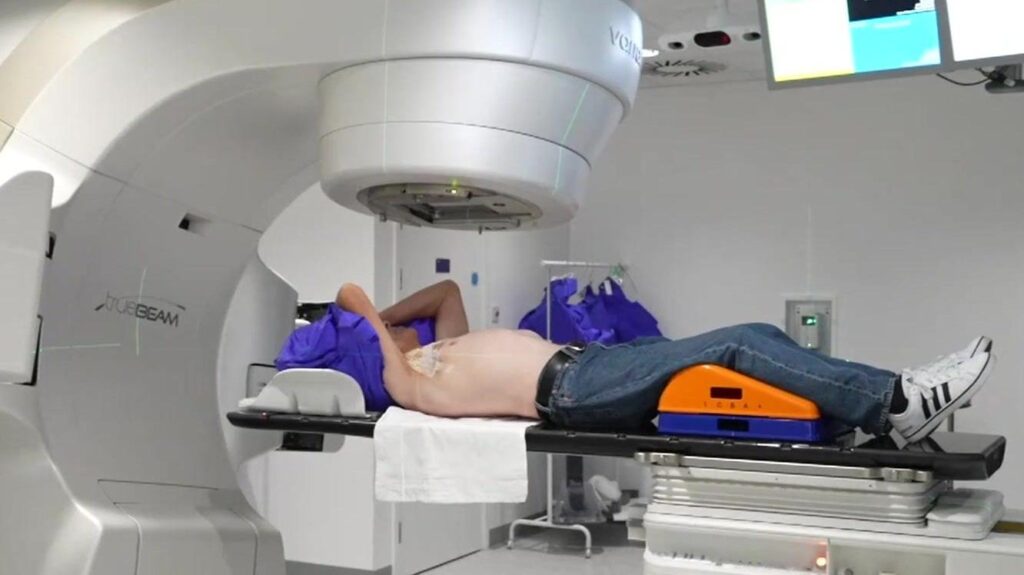
The Federal Government has announced plans to procure and install 35 additional linear accelerators between 2026 and 2028 as part of efforts to expand access to radiotherapy and improve cancer treatment in Nigeria.
In a statement issued on Saturday by the Assistant Director, Information and Public Relations, Ado Bako, the Minister of State for Health and Social Welfare, Dr Iziaq Adekunle Salako, made this known in Beijing, China, while delivering the opening address at the LINK Global Summit on Innovation and Practice in Oncology at the China National Convention Centre.
Salako said the move was part of a broader strategy to strengthen Nigeria’s cancer care system through international partnerships, technology transfer, research and the development of local technical capacity.
He said Nigeria was determined not only to follow developments in oncology but also to participate in shaping innovations and bringing suitable technologies and expertise into the country.
The Minister said cancer remained a national priority, with Nigeria recording an estimated 127,763 new cases and 79,542 deaths from the disease in 2022. He noted that breast, prostate and cervical cancers accounted for more than 40 per cent of cancer mortality.
According to him, Nigeria’s mortality-to-incidence ratio improved from 62.3 per cent in 2022 to 59.6 per cent in 2024, although significant work remained to be done to reduce the cancer burden.
Salako said the Federal Government had accelerated interventions since May 2023 under President Bola Ahmed Tinubu’s Renewed Hope Agenda, covering prevention, awareness, early detection, treatment, financing, infrastructure and research.
He cited the introduction of the Human Papillomavirus vaccine into routine immunisation in October 2023, saying more than 14 million girls aged between nine and 14 had been reached in what he described as the largest single round of HPV vaccination in Africa.
The Minister also pointed to the National Initiative for Cancer Early Detection, Screening and Coordinated Access to Network Care (NICE-SCAN), alongside programmes of the Task Force for the Elimination of Cervical Cancer, as efforts to bring screening, early detection and referrals closer to Nigerians.
On access to treatment, Salako listed the National Cancer Access Programme, Catastrophic Health Insurance Scheme, National Cancer Health Fund and Social Determinants of Cancer Care Fund as mechanisms designed to improve access to essential cancer medicines and reduce the financial pressure on patients and their families.
He said the National Institute for Cancer Research and Treatment (NICRAT) had also been strengthened, with about 140 early-career cancer scientists trained and 24 research grants supported.
According to him, six cancer centres of excellence are being developed across the country, with three already completed and commissioned in Katsina, Enugu and Benin.
The three commissioned centres, he said, have been equipped with modern linear accelerators, while work on the remaining three is progressing towards completion.
Salako said the planned installation of the additional 35 linear accelerators would further increase radiotherapy capacity.
“Earlier this year, Mr President approved the procurement and installation of thirty-five additional linear accelerators between 2026 and 2028 to further increase access to radiotherapy in the management of solid cancers,” he said.
He said the interventions were being implemented under the Nigeria National Cancer Control Plan 2026–2030, which focuses on prevention, decentralised diagnosis and treatment, financial protection, oncology workforce development, clinical trials and cancer registries.
The Minister also announced the inauguration of the Radiotherapy Working Group of the China-Africa Hospital Alliance and the LINK Global Oncology Alliance, with Nigeria serving as a founding African partner.
He said Nigeria had also signed a strategic cooperation agreement with LinaTech, a Chinese technology company specialising in advanced radiation therapy solutions.
Salako said the China partnership would provide opportunities for technical assistance in radiotherapy, joint research and development, academic exchanges and professional training.
He stressed that Nigeria’s objective was to go beyond importing equipment by building the expertise needed to install, operate and maintain cancer technologies and eventually manufacture some of them locally.
“Nigeria seeks key strategic outcomes in the months ahead: a joint work plan with named focal persons and quarterly milestones, so that this Memorandum lives beyond these signatures,” he said.
He called for the twinning of Nigerian cancer centres of excellence, NICRAT and tertiary hospitals, including the National Hospital, Abuja, with Chinese cancer hospitals.
The minister also proposed the establishment of a designated clinical training base in Nigeria that could become a West African hub for advanced radiotherapy training.
He said Nigerian radiation oncologists, medical physicists, radiotherapy technologists and biomedical engineers should also have access to fellowship opportunities in China.
Looking ahead to 2030, Salako said Nigeria would pursue technology transfer, local assembly and servicing of radiotherapy and imaging equipment, joint clinical trials, cancer registry-linked research, artificial intelligence-assisted treatment planning, adaptive radiotherapy and tele-oncology collaborations.
He added that government incentives for health manufacturing, including zero-duty and zero-VAT measures, had created an enabling environment for investment in local production and technology transfer.
Salako said the recent inauguration of the Blood Cancer Consortium was another step towards creating a coordinated national cancer-control system.
“Machines without people are monuments,” he said, stressing that every linear accelerator installed in the country must be supported by trained personnel, maintenance systems and sustainable technical support.
He urged participants at the summit to focus on ensuring that advances in oncology translate into better treatment for patients.
“Innovation in oncology is meaningful only where it reaches the patient. Let this summit be remembered not for what was displayed, but for what was delivered. Nigeria is ready, our plan is costly, our partners are welcome, and the patients are waiting,” he said.
The minister expressed confidence that the summit would deepen cooperation among governments, clinicians, researchers, industry players, development partners and patient advocates in developing solutions to improve cancer outcomes in Nigeria, Africa and beyond.



