By Joel Ajayi
For decades, actors and models have relied on their faces, voices, emotions and physical presence to tell stories, promote products and establish lasting connections with audiences. From the actor delivering an emotional performance on a film set to the model showcasing a fashion designer’s creation, human talent has remained central to the entertainment and fashion industries.
However, the rapid development of artificial intelligence (AI) is changing the landscape, raising concerns about employment, creativity and the future of thousands of professionals whose livelihoods depend on the creative economy.
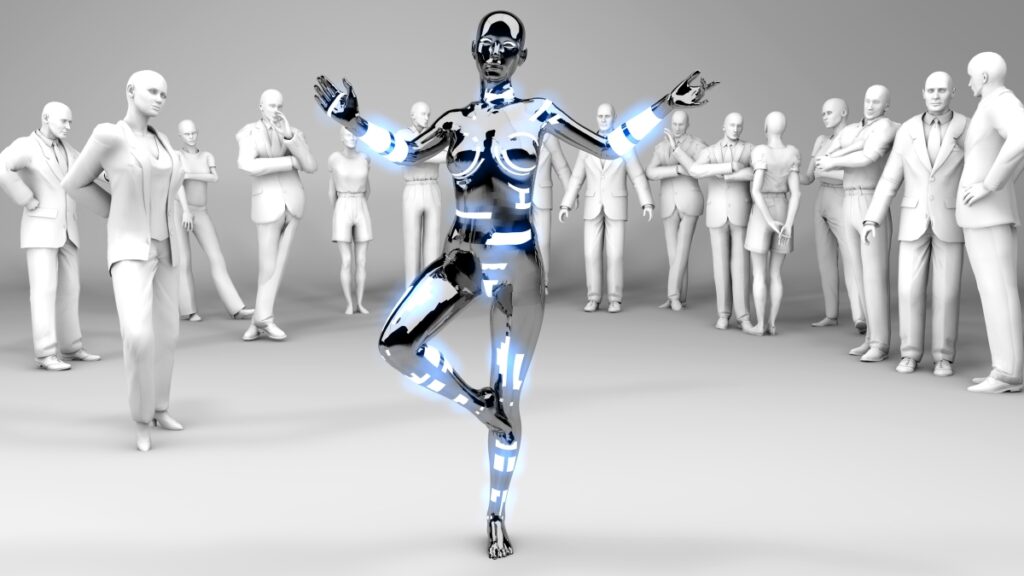
AI-generated characters, digital models, synthetic voices and computer-generated performances are increasingly offering businesses alternatives to traditional production methods. Tasks that previously required physical appearances, photography sessions and large production teams can now, in some cases, be completed using sophisticated digital tools.
For businesses seeking to reduce costs and produce content faster, the attraction is obvious. For actors, actresses, models and other creative professionals struggling to build sustainable careers, however, the development presents a more complicated reality.
While some see AI as an opportunity to expand creative possibilities, others fear that its growing adoption could reduce demand for human performers and make it more difficult for emerging talents to secure jobs.
One of the most visible areas of AI adoption is fashion and advertising, where digital models can be created to showcase clothing, accessories and other products without requiring conventional photography sessions.
Traditionally, a fashion campaign would involve models, photographers, makeup artists, stylists, lighting technicians and production managers. Depending on the scale of the assignment, the process could require substantial financial resources, travel arrangements and several hours of physical work.
AI can simplify some of these processes by generating digital personalities, placing them in different environments and producing multiple versions of an advertisement.
For companies operating under pressure to reduce production costs, such possibilities may be attractive. Digital models do not require transportation, accommodation or physical preparation, while their appearances and clothing can be modified using software.
However, the convenience comes with concerns about the future of human models, particularly newcomers who depend on catalogue photography, promotional campaigns and commercial assignments to establish their careers.
These relatively small assignments often provide young models with the experience, income and professional contacts needed to progress into larger opportunities.
If companies increasingly turn to synthetic models for certain types of work, emerging talents could find it more difficult to enter the industry.
The consequences may also extend to photographers, makeup artists, costume designers and other professionals whose services are required during conventional production.
Speaking with The New National Star Newspaper, the Founder and Artistic Director of Abuja-based Arojah Royal Theatre Om’Oba Jerry Adesewo, expressed concern about the growing influence of AI in Nigeria’s creative industry, warning that its increasing adoption could threaten opportunities for actors, models and other entertainment professionals.
Adesewo acknowledged the technological advantages of AI but stressed the need to establish a balance between innovation and the protection of human creativity.
He maintained that acting, modelling and entertainment depend on human emotions, originality, physical expression and cultural experiences, which technology should complement rather than completely replace.
According to him, the increasing use of AI-generated characters, digital models and computer-generated performances raise important questions about employment, professional development and the future of young people seeking opportunities in the industry.
“AI should be a tool to support human creativity, not a replacement for the actors, models and creative professionals whose talents give life to the entertainment industry.” For actors and actresses, the implications are equally significant.
AI-powered technologies can alter facial appearances, reproduce voices and create digital representations of performers. These capabilities can help filmmakers produce sophisticated scenes, modify characters’ appearances and reduce the need for certain physical production activities.
The technology can also be useful in post-production, animation, visual effects and the creation of digital environments.
Nevertheless, the growing ability to reproduce a performer’s likeness raises questions about ownership and consent.
Also Speaking, an Abuja-based veteran entertainment editor, George Emine, has also expressed concern about the growing influence of AI in Nigeria’s entertainment industry, warning that its increasing use could worsen the shortage of employment opportunities for actors, models and other creative professionals.
Emine observed that although AI has introduced new possibilities for content creation, digital modelling and film production, its application could undermine the livelihoods of people who depend on the industry for survival.
He stressed that the entertainment sector thrives on human creativity, emotional expression, originality and the ability of performers to connect with audiences, qualities he believes should not be sacrificed for technological convenience.
According to him, the increasing use of AI-generated characters, virtual models and computer-generated performances could make it more difficult for emerging talents to secure roles and gain the experience required to build successful careers.
Emine called on filmmakers, advertising agencies, theatre practitioners and other stakeholders to adopt responsible approaches to AI, ensuring that technological advancement does not come at the expense of human talent.
“The future of entertainment should not be built on technology at the expense of human talent and creativity,” Emine said.
The potential impact of AI extends beyond performers to the wider creative workforce.
A traditional film or advertising production may employ camera operators, editors, sound engineers, makeup artists, costume designers, lighting technicians, production assistants and several other professionals.
If AI reduces the need for physical shoots or changes how productions are organised, some of these workers could experience reduced demand for their services.
For Nigeria, where Nollywood, fashion, advertising, music videos and digital content provide opportunities for numerous young people, such changes deserve careful attention.
The creative industry serves not only as a source of entertainment but also as a pathway to employment, entrepreneurship and skills development.
Despite these concerns, AI should not be viewed entirely as an enemy of the creative industry.
When responsibly deployed, the technology can help filmmakers improve visual effects, generate backgrounds and reduce the costs of certain production processes.
Photographers and designers can use AI-assisted tools to test concepts before committing resources to physical shoots, while actors can explore digital tools for audition preparation, script analysis and language support.
For emerging filmmakers working with limited budgets, these technologies may make it possible to produce projects that would otherwise be too expensive.
The challenge, therefore, is not necessarily whether AI should be adopted, but how it can be used without undermining human creativity, employment and professional rights.
Government agencies, production companies, industry associations and performers must work together to establish appropriate standards for its use.
For Nigeria, this means encouraging digital innovation while investing in training, safeguarding intellectual property and promoting fair compensation. It also means ensuring that actors and models understand the rights they grant when signing contracts involving their images, voices or performances.
Adesewo and Emine’s concerns highlight the importance of placing human talent at the centre of discussions about the future of entertainment.
While digital models and AI-generated characters may become increasingly common, genuine human expression, personality and cultural identity will continue to matter in many forms of performance.
Nigeria’s entertainment industry must therefore prepare for technological change without losing sight of the people who sustain it.
AI may generate faces, imitate voices and produce digital performances, but the future of entertainment should not be measured by technological efficiency alone. It should also be measured by the industry’s ability to protect creativity, preserve livelihoods and ensure that emerging talents have a fair opportunity to succeed.
Ultimately, the goal should not be to choose between humans and machines, but to build an industry in which technology supports creative professionals rather than unnecessarily pushing them aside.