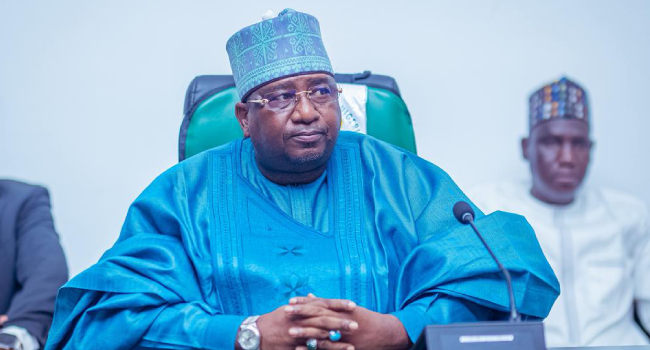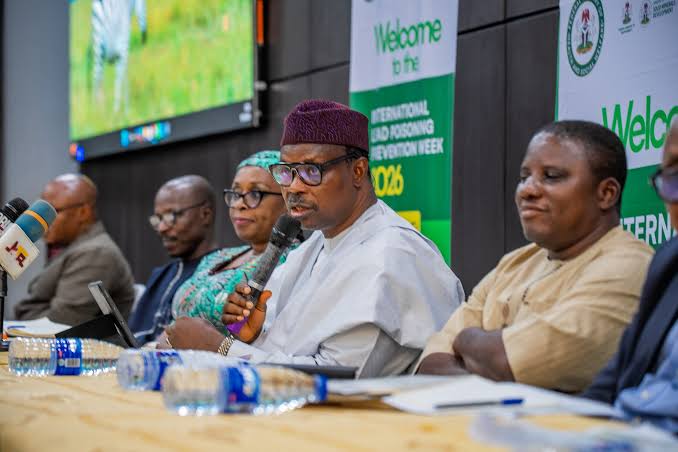
The Minister of State for Health and Social Welfare, Dr Iziaq Adekunle Salako, has called for a shift from detecting lead poisoning cases to preventing exposure at its sources as the Federal Government launched a five-year strategic plan to eliminate the public health threat in Nigeria.
In a statement issued by the ministry’s Assistant Director, Information and Public Relations, Ado Bako, Salako made the call on Wednesday in Abuja during the commemoration of the 2026 International Lead Poisoning Prevention Week, themed “From Detection to Prevention.”
He described lead poisoning as a major public health and environmental challenge, noting that children, pregnant women and women of childbearing age were particularly vulnerable to its harmful effects.
He said the new plan provides a national framework for coordinated, multisectoral action, including stronger environmental and occupational surveillance, improved laboratory and institutional capacity, more effective regulation and enforcement, and clearer referral pathways for people identified with elevated blood lead levels.
The Minister identified the establishment and operationalisation of the Inter-Agency Working Group on Lead Poisoning Prevention and Elimination as a key step towards strengthening collaboration among relevant ministries, departments and agencies, development partners and other stakeholders.
He also cited experiences in Lagos, Ogun, Sokoto and Zamfara states as evidence of the need for interventions tailored to local sources and pathways of exposure.
“At the subnational level, we have identified the development of state-specific lead prevention and control action plans for Lagos, Ogun, Zamfara and Sokoto States as an important next step,” Salako said.
He explained that the proposed plans would address the specific sources and pathways of exposure in each state while remaining aligned with the national framework.
He added that finalising the Lagos State action plan was particularly important because an assessment of blood lead levels and children’s environmental health had already been conducted in the state.
Salako also said a costly three-year national roadmap was being developed to translate the five-year plan’s priorities into measurable interventions with defined timelines.
He called on state governments, development partners, industries, civil society organisations, professional bodies, traditional and religious leaders, communities and the media to support the adoption and implementation of the plan.
“Communities are central to prevention and our efforts must extend beyond government institutions to all of society,” he said, emphasising the roles of community-based organisations, researchers and other stakeholders.
The Minister urged Nigerians to take practical steps to reduce exposure, including avoiding contaminated soil and dust, using lead-safe products and observing appropriate protective measures during battery recycling, painting and other high-risk activities.
He advised workers to keep work clothes and footwear away from living areas and recommended wet-cleaning floors and play areas to minimise the spread of potentially contaminated dust.
He also encouraged diets rich in calcium, iron and vitamin C as part of efforts to reduce the health risks associated with lead exposure.
Reaffirming the ministry’s commitment to the initiative, Salako said it would work with relevant stakeholders to ensure that scientific evidence informed policy and that policies translated into effective action.
He stressed the need for Nigeria to move from a largely reactive response to a comprehensive, preventive and sustainable approach to lead poisoning to protect children, safeguard communities and reduce the health consequences of exposure.