By Joy Onu
The Federal government has disbursed the sum of ₦249.6 billion to the Basic Health Care Provision Fund (BHCPF) in the last three years and plans to expand direct financing to at least 17,600 healthcare facilities, while extending health insurance coverage to about 90,000 inmates in correctional centres.
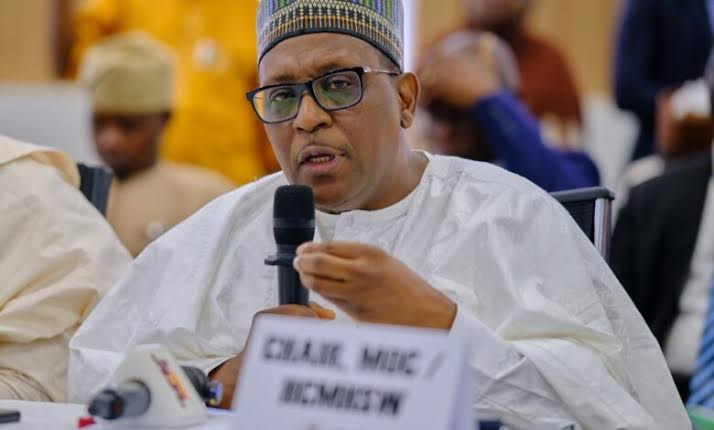
The Minister of State for Health and Social Welfare, Dr Iziaq Adekunle Salako, announced this on Wednesday in Abuja during a briefing on the fund’s implementation and reforms under President Bola Tinubu’s administration.
Salako, Alternate Chairman of the BHCPF Ministerial Oversight Committee (MOC), said the disbursement represented 77.1 per cent of the ₦323.6 billion released from the fund since its establishment in 2019, as the government seeks to improve primary healthcare and protect vulnerable Nigerians from unaffordable medical expenses.
He said total releases to the fund stood at ₦422.3 billion as of September 2026, with ₦323.6 billion disbursed. Following the MOC’s approval of an additional ₦40.76 billion at its 16th meeting on October 14, cumulative disbursements are expected to reach ₦364.3 billion, including ₦290.2 billion under the Tinubu administration.
Established under the National Health Act, 2014, the BHCPF provides funding to improve access to essential healthcare, particularly for poor and vulnerable populations.
It is also a key financing instrument for the Nigeria Health Sector Renewal Investment Initiative, launched by Tinubu in December 2023, alongside the Health Sector Renewal Compact and the adoption of a Sector-Wide Approach to improve coordination, financing and accountability.
According to Salako, the revised BHCPF Guidelines 2.0 introduced performance-linked disbursements, direct financing for health facilities, stronger accountability measures, expanded coverage and unique beneficiary identifiers to improve transparency and ensure that public spending produces measurable results.
On domestic health financing, he said the 2025 federal health budget increased by nearly 60 per cent, while the 2026 Appropriation Bill proposed ₦2.48 trillion for health investment, representing approximately six per cent of the budget, excluding liabilities.
The newly-approved ₦40.76 billion allocation for the third quarter of 2026 will be distributed among the fund’s four gateways: ₦19.87 billion to the National Health Insurance Authority (NHIA), ₦18.34 billion to the National Primary Health Care Development Agency (NPHCDA), ₦2.04 billion for Emergency Medical Treatment and ₦509.48 million to the Nigeria Centre for Disease Control and Prevention (NCDC).
The distribution follows the established formula of 48.75 per cent for the NHIA, 45 per cent for the NPHCDA, five per cent for emergency medical treatment and 1.25 per cent for the NCDC. The allocations are intended to support health insurance, primary healthcare, emergency services and disease surveillance.
Salako said national health insurance enrolment rose from approximately 16.2 million people in 2023 to 23.06 million by the third quarter of 2026. Of the beneficiaries supported by the BHCPF, 3,182,943 vulnerable Nigerians with National Identification Numbers were covered.
The Fund has also supported free vesicovaginal fistula (VVF) surgeries and rehabilitation, emergency caesarean sections and other comprehensive emergency obstetric and newborn care interventions for 96,068 women and babies.
The MOC has approved health insurance coverage for about 90,000 Nigerians in correctional facilities, with implementation expected to improve their access to essential medical services.
At the primary healthcare level, direct facility financing currently covers 8,309 centres across the 36 states and the Federal Capital Territory. An additional 5,212 facilities are expected to benefit, bringing the projected total to 13,521, while the broader reform target is at least 17,600 facilities.
The number of centres meeting Level 2 readiness standards rose from 1,748 in 2024 to 3,202 in the third quarter of 2026, the minister said.
Attendance at primary healthcare facilities also increased from 34.55 million in 2023 to 43.06 million by the second quarter of 2026. The fund has further contributed to increased deliveries attended by skilled birth attendants and improved uptake of the third dose of the pentavalent vaccine among eligible children.
On emergency medical services, Salako said operational and management structures for urban emergency services had been established in all 36 states and the FCT.
Under the Rural Emergency Service and Maternal Transport (RESMAT) arrangements, rural emergency transport services were available in 171 of the 172 local government areas covered by the Maternal and Newborn Mortality Reduction Innovation Initiative.
The government plans to extend coverage to 200 local government areas by December 2026.
The emergency response system has recorded 168,571 ambulance service episodes since 2023, covering obstetric emergencies, neonatal and under-five emergencies, road traffic injuries, snakebites, burns and other urgent medical conditions.
The Minister also highlighted the NCDC gateway’s role in disease surveillance and responses to public health threats. He cautioned that reported disease cases associated with response activities should not be taken to mean that their treatment was funded exclusively by the BHCPF.
On health workforce development, Salako said 78,054 frontline health workers had been trained towards the national target of 120,000, according to records presented at the June 2026 health sector review.
The MOC has also approved phased salary support for 13,800 community-based health workers and skilled birth attendants. Under the arrangement, the Federal Government, through the NPHCDA, will pay 100 per cent of eligible salary costs in the first year, 67 per cent in the second and 33 per cent in the third, before state governments assume full responsibility.
He said the arrangement would require staff verification, compliance with accountability measures and the gradual absorption of eligible workers into state employment.
In order to improve access to essential medicines and health commodities, the committee approved the operationalisation of MEDIPOOL, a pooled procurement mechanism for BHCPF commodities. Its implementation will be subject to quality assurance, price benchmarks, value-for-money safeguards and supply-chain monitoring.
Salako urged state governments to meet their counterpart financing obligations and ensure sustainable funding for primary healthcare. He commended Katsina State for releasing ₦240.79 million to its State Health Insurance Agency to expand coverage and called on other states and the FCT to fulfil their responsibilities under the fund.
He said the ministry would strengthen financial oversight through the revised guidelines and collaboration with the Independent Corrupt Practices and Other Related Offences Commission (ICPC).
He identified timely reporting, proper retirement of advances, transparent provider payments and verification of funds reaching health facilities as key measures for ensuring that allocations translate into services for patients.
The federal government is also working with the National Assembly to increase the BHCPF’s statutory allocation from one per cent to two per cent of the Consolidated Revenue Fund and expand its scope to include health research and promotion.
The proposed reforms are expected to improve efficiency, strengthen accountability and increase state-level commitments in line with the National Health Act.
Salako said the fund’s ultimate measure of success would be its impact on vulnerable households, pregnant women, children and communities with limited access to essential healthcare.
He added that sustained cooperation among federal and state governments, healthcare institutions and development partners was necessary to improve health outcomes, expand access to quality services and reduce the financial burden of medical care on Nigerians.