…Kogi, Ekiti, Adamawa, Kano, Others to benefit
… Governors, leaders of benefiting states express joy
…CSO’s express mixed reactions
By Joy Onu
The Federal Executive Council (FEC) has approved ₦631.3 billion for the construction, reconstruction, and rehabilitation of nine major road projects across Nigeria as part of the federal government’s efforts to improve transportation networks and stimulate economic growth.
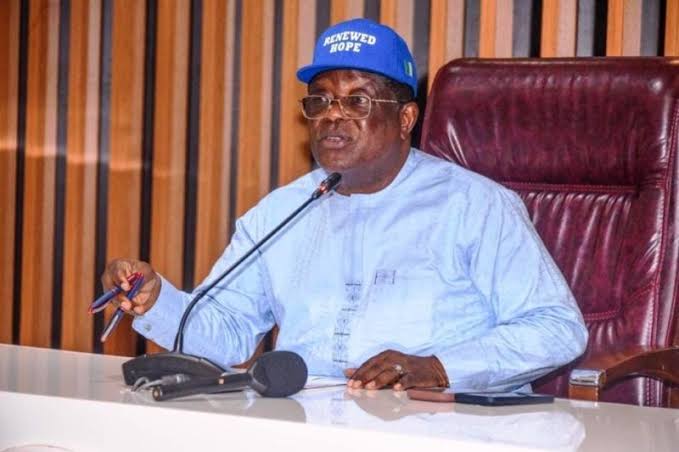
The Minister of Works, David Umahi, disclosed this while addressing the press after the FEC meeting presided over by President Bola Tinubu on Wednesday.
The minister stated that the FEC approved approximately ₦631.3 billion for nine road projects nationwide, and that the approved projects cover road construction, reconstruction and rehabilitation across several states, with the aim of improving transportation, connecting communities and supporting commercial activities.
Among the major approvals is ₦209 billion for the reconstruction of the 81.1-kilometre Ado–Ilawe–Ilumaba–Ikole road in Ekiti state, including a bridge.
The council also approved ₦167 billion for the 95-kilometre Etuke–Okene–Ankpa–Otopa Road in Kogi state and ₦89.2 billion for the construction of the 47-kilometre Bichi Ring Road in Kano state, which will feature a flyover.
Another ₦62 billion was approved for the Tungo–Karamti road linking Adamawa and Taraba states. The project will include five bridges to improve connectivity along the route.
The council also authorised ₦30 billion for remedial works on deteriorated sections of the east–west road, in River State while ₦28.218 billion was approved for the rehabilitation of a 17-kilometre section of the Sokoto–Illela road, route A1.
Other approvals include ₦20.257 billion for an 18-kilometre road connecting Asiago to the Port Harcourt–Enugu Expressway and ₦11.33 billion for a road project in Abia state previously handled under the Nigerian National Petroleum Company Limited’s tax-credit scheme.
The council further approved ₦14.486 billion for the construction of the Dikko–Maje link road connecting to the Suleja–Minna Road in Niger state.
Umahi explained that the Abia project had been affected by the discontinuation of its previous funding arrangement under the NNPC tax-credit scheme, leading to a review of the project to address the outstanding work.
The Minister also announced that the first 118-kilometre section of the Abuja–Kaduna–Zaria Road had been completed, with 81 kilometres constructed using reinforced concrete pavement.
He said the section was delivered within 30 months, while work on the second section, covering 164 kilometres, was nearing completion, with only 16 kilometres remaining.
Umahi added that the entire 375-kilometre Abuja–Kaduna–Zaria–Kano corridor would be fitted with solar-powered streetlights to improve visibility and enhance safety for motorists.
The road approvals form part of the Federal Government’s infrastructure programme aimed at improving national connectivity, easing the movement of goods and passengers, and supporting economic activity across the country.
On the Lagos-Abidjan coastal highway, the Minister of Works revealed that ministers from the countries along the corridor would meet on Friday to discuss funding arrangements.
Umahi stated that the Nigerian section covers 79 kilometres, while Togo accounts for 89 kilometres, Ghana 576 kilometres, Côte d’Ivoire 155 kilometres and Benin Republic 128 kilometres.
According to him, the proposed arrangement is for the African Development Bank to provide loans to participating countries to finance their respective sections of the regional highway.
The Lagos-Abidjan coastal highway project is to strengthen regional connectivity and facilitate trade among participating West African countries.
Meanwhile governors and leaders from benefiting states have expressed gratitude to the President on federal road interventions, citing their potential to improve accessibility, commerce and regional development for the citizenry.
Kano State Governor, Alhaji Abba Kabir Yusuf, applauded Tinubu for approving the massive review and upgrade of the Bichi Ring Road in the state, which will feature a flyover.
Yusuf described the approval by the Federal Executive Council as a historic breakthrough that will transform Kano’s road network and reposition the state as the commercial and logistics heartbeat of Northern Nigeria.
He said the redesigned project will span 132 kilometers and would be constructed as a three-lane concrete carriageway equipped with solar-powered street lights and modern CCTV surveillance systems.
Yusuf emphasised that the scale of investment demonstrates President Tinubu’s commitment to the development of Kano State and the wider North-West region.
“This project will open new economic frontiers for our farmers, traders, and transporters, while drastically reducing travel time and improving safety for road users,” the governor said.
Civil society organisations and other stakeholders have also expressed mixed reactions, with some welcoming the approvals as a necessary response to Nigeria’s infrastructure deficit and others emphasising accountability.
Chief Ezenwa Samson Nwagwu, a pro-democracy advocate and public affairs analyst, welcomed the approval, citing the country’s substantial infrastructure shortfall.
“Clearly, we’ve been talking about the infrastructure deficit across the country. The argument is not about whether we need roads. We do not only need roads, we are in deficit,” Nwagwu said.
He linked road development to regional integration, arguing that improved connections could facilitate the movement of goods across West Africa, including between Lagos, Accra and Dakar.
Nwagwu cautioned against allowing questions about timing to overshadow the need for better roads, particularly where journeys that should take minutes stretch into hours.
“If there’s an intervention to ameliorate that, then you’ll be asking ‘why now’? When should it then be?” he asked.
Describing the approval as an “absolute welcome development,” he urged residents to monitor projects and demand accountability.
Despite the applause, the approvals have raised questions about whether the projects will be completed before the current administration leaves office. With the 2027 general election approaching, opposition figures have also questioned the timing and priorities of the spending, raising concerns about possible political considerations.
Concerns over abandoned public projects have frequently been raised by opposition parties and civil society organisations as elections approach.
Political observers and opposition figures note that as the political calendar intensifies ahead of national polls, administrative focus often shifts from policy implementation to campaign alignment.
Reacting to this development, Mr. Amos Dunia, Special Adviser to Gov. Seyi Makinde, on public affairs, in a telephone interview with the New National Star, questioned why major road investments were being approved after years of complaints about deteriorating Infrastructure. He cited roads around Lokoja, including the Lokoja–Ajaokuta corridor.
Dunia suggested the approvals could be intended to improve the government’s standing ahead of the election. He questioned whether the projects would be completed before Tinubu leaves office on May 29, 2027, and challenged the planning, feasibility and cost of the Lagos–Calabar Coastal Highway.
Similarly, comrade Mark Adebayo Kowa, spokesperson to SDP presidential candidate, Prince Adewole Adebayo, alleged that political considerations rather than public interest were driving the government’s road spending.
Kowa claimed that some funds could be diverted from construction. He argued that deteriorating roads deserved greater attention and questioned the priority given to the Lagos–Calabar Coastal Highway while other routes remained in poor condition.
The Abuja–Kaduna–Zaria–Kano Expressway illustrates the gap between infrastructure promises and public expectations. The major passenger, commercial and regional trade corridor has experienced construction delays and difficult journeys.
Infrastructure concerns extend to the South-East. Chekwas Okorie, former national chairman of the All Progressives Grand Alliance and chairman criticised delays affecting the Enugu–Port Harcourt and Enugu–Onitsha expressways.
For commuters, traders and communities, the central question remains whether the allocations will deliver completed projects or more construction sites with repeatedly extended deadlines. Nigerians continue to endure deplorable roads despite successive administrations approving billions and even trillions of naira.