…Calls for a new national carrier
…Urges FG to renegotiate Nigeria-China BASA, seeks direct flights to China
By George Ameh
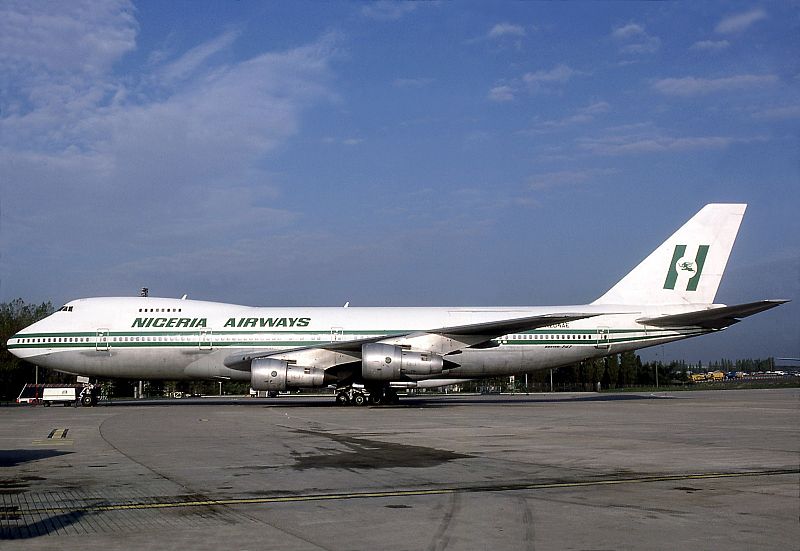
The Senate has rejected a proposal to revive the defunct Nigeria Airways and Air Nigeria and urged the Federal Government to pursue the establishment of a viable national carrier instead.
The Senate also called on the Federal Government to renegotiate and enforce Nigeria’s Bilateral Air Services agreement (BASA) with China in order to allow Nigerian airlines to operate direct flights to the Asian country.
The decision followed a motion by Sen. Ned Nwoko, who called for the revival of the defunct airline during plenary on Tuesday.
However, contributing to the debate, the President of the Senate, Sen. Godswill Akpabio, said that Nigeria needs a strong indigenous carrier to compete effectively in the international aviation market. “We can’t revive what is already dead,” he said with reference to the call to revive the Nigeria Airways. Instead, he called for the establishment of an entirely new, viable national carrier.
Akpabio expressed concern over the pressure on domestic airlines during peak travel periods, particularly in December when demand for air travel increases significantly.
He argued that a national carrier would improve connectivity, retain foreign exchange within the country and reduce the difficulties faced by air travellers.
The President of the Senate commended the Senate Chief Whip, Sen. Mohammed Tahir Monguno, for bringing the motion seeking the renegotiation of the BASA between Nigeria and China to guarantee reciprocal flight rights for indigenous airlines before the Senate.
Also contributing, Sen. Mustapha Khabeeb, representing Jigawa South-West, supported the call for a national carrier. He argued that a functional national airline would enable Nigeria to operate direct international routes, generate foreign exchange and strengthen its presence in the global aviation industry.
Similarly, Sen. Mohammed Ogoshi, representing Nasarawa South, supported the additional prayer on strict reciprocity, endorsing Ningi’s proposal that Nigerian airlines should enjoy the same flight privileges granted to Chinese carriers.
According to the Senate, there was the urgent need for a review of existing aviation arrangements to address the imbalance in flight operations between both countries and ensure that Nigerian carriers enjoy reciprocal access to China directly.
Monguno, who represents Borno North, recalled that Nigeria and China signed the BASA under former President Muhammadu Buhari to establish direct commercial air links and regulate flight operations between the two countries.
He, however, expressed concern that the agreement had not been effectively implemented to guarantee reciprocal benefits for Nigerian airlines.
Monguno said that bilateral trade between Nigeria and China reached $18 billion in the first half of 2025, representing a 25 per cent year-on-year increase, while total trade volume stood at $28 billion in 2024.
He also said that more than 100,000 Nigerians reside in China, while over 500,000 Chinese nationals live in Nigeria, stressing that the growing economic and population ties made direct air connectivity increasingly necessary.
According to him, effective implementation of the agreement will transform the Murtala Muhammed International Airport, Lagos, and the Nnamdi Azikiwe International Airport, Abuja, into major aviation gateways connecting West and Central Africa to East Asia.
He identified reduced travel time, improved supply chains, increased airline revenues, foreign exchange retention and expanded opportunities for small and medium-scale enterprises as some of the benefits of direct flights.
The Senate Chief Whip further argued that improved air connectivity would support non-oil exports, particularly agricultural products, while strengthening Nigeria’s position in international trade.
He called on the Federal Ministry of Aviation and Aerospace Development, the Nigerian Civil Aviation Authority, the Central Bank of Nigeria and the Nigeria Customs Service to collaborate towards effective implementation of the agreement.
Seconding the motion, Sen. Abdul Ahmed Ningi, representing Bauchi Central, described the proposal as patriotic and beneficial to the country. He lamented that Nigerians travelling to China often had to connect through countries such as Morocco, the United Arab Emirates, Ethiopia and the United Kingdom because of the absence of direct flights by Nigerian airlines.
He argued that domestic carriers should receive the necessary government support to operate direct international routes.
Ningi identified Air Peace, United Nigeria Airlines, Azman Air and Ibom Air as Nigerian carriers that could be encouraged to expand their operations to China, subject to the necessary regulatory and operational requirements.
He insisted that Nigeria should not continue granting Chinese airlines access to its aviation market without securing equivalent opportunities for Nigerian carriers.
The senator consequently called for a review of the BASA if China failed to guarantee reciprocal flight rights for Nigerian airlines.
Following deliberations, the Senate adopted the motion and urged the Federal Ministry of Aviation and Aerospace Development to renegotiate the commercial terms and operational schedules of the existing Nigeria-China Bilateral Air Service Agreement.
It also urged the Federal Ministry of Foreign Affairs to initiate diplomatic discussions with Chinese authorities on business visa facilitation for Nigerian traders and reciprocal allocation of flight slots to Nigerian airlines.
In adopting Ningi’s additional proposal, the lawmakers urged the Federal Government to enforce strict reciprocity by ensuring that Nigerian airlines enjoy direct flight opportunities to China on the same basis as Chinese carriers operating in Nigeria.
The Senate further warned that the agreement should be reviewed if the required reciprocal arrangements could not be secured.
To ensure compliance, it mandated its Committees on Aviation and Foreign Affairs to monitor the implementation of the resolutions and report back within four weeks.