

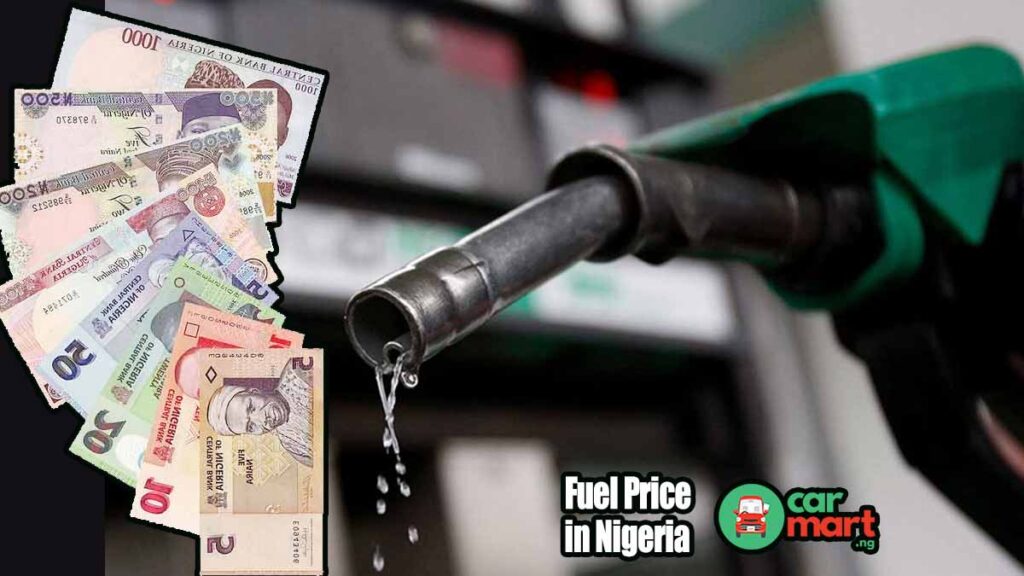
* Traders complain of FX shortage despite rate harmonisation
* PMS price may crash as independent marketers import fuel
Surge in the demand for foreign exchange by independent petroleum products marketers at the weekend pushed the rate of the local currency, the Naira to N1000 against one United States Dollar
The drop immediately raised concerns among economic insiders about the currency’s stability with many of them attributing it to what they called ” the mounting pressure” on the Naira in the autonomous market due to an increased number of independent petroleum marketers seeking dollars for fuel imports.
On 20th June this year, the federal government announced that it had granted license to six companies to import fuel into the country. The permission followed the complete deregulation of the industry including the removal of subsidy on fuel by president Bola Ahmed Tinubu on May 29, 2023
This was followed by the harmonisation of foreign exchange rates all of which created opportunities for fuel marketers aside the Nigerian National Petroleum company limited to import products into the country.
The result is the surge in demand for foreign exchange which has put additional strain on the already struggling local currency.
The Naira had closed at the parallel market at N858 to the U.S. dollar on Wednesday and Thursday last week, but traders on the Bureau de Change window said demand pressure mounted on few available dollars on the market, pushed the naira to a new low.
In the last one month, pressure has shifted from the official forex market to the autonomous market window, leading to concerns among traders and investors.
“The naira touched N1,000 briefly on the parallel market on Friday before strengthening back to Wednesday’s closing level of N858 to the greenback”, Alhaji Musbau Abdullahi, a Bureau de Change operator at Zone 4, Wuse, told New National Star correspondent on Sunday.
According to him, the initial demand pressure forced the depreciation but more dollar inflow led to a reversal to the mid-week rate
Another BDC operator Magaji Shehu said that “on Monday the parallel market closed at N825 to the dollar ,
“However, the Naira experienced a significant decline of 21.21 percent from mid-week to weekend”.
According to him, “the Naira also weakened against the dollar on the official window on Wednesday, as pressure on the local currency from importers of fuel and other end users mount”, he stated
At the I&E FX market, Naira depreciated as the dollar was quoted at N793.70 as against the previous closing rate of N742.93 the previous day, according to results from the FMDQ platform.
However, currency dealers pointed out that despite the abolishment of multiple exchange rates in the country, the availability of dollars to end users remains insufficient.
They alleged that many manufacturing firms and importers still heavily rely on the autonomous window to fulfill their foreign exchange requirements, underscoring the ongoing challenges in Nigeria’s forex market.
Meanwhile, three companies have started importing fuel into the country. They are’ A.Y.Ashafa, Prudent and Emadeb Petroleum companies respectively
With the arrival of the shipments, industry experts have expressed confidence that the pump price of fuel would soon come down in line with the demand and supply matrix.
The three companies are among the six granted approval in June by the federal government to import petroleum products into the country.
The Nigerian Midstream and Downstream Petroleum Regulatory Authority (NMDPRA) had earlier said three oil marketers will start importing petroleum products in July.
Briefing journalists after a meeting with President Bola Tinubu at the State House Abuja, Farouk Ahmed, the chief executive officer (CEO) of NMDPRA, said the number has increased to six.
He said apart from the six firms, a number of companies have applied for permits.
“There are several companies that applied for fuel importation permits. So, you can apply for importation to get access to the port. And by the way, we are open to all those who are interested in importing,” he said.
“We have guidelines which are not very stringent because we are trying to encourage importation.
“There are six companies who said they want to import fuel in July. Of course, all the others may import in December, in November, or anytime but those who expressed interest to bring in fuel in July there were six of them as of this morning.
“The beauty of it is that there are interests which means that they have been able to have access to foreign exchange in order to import.
“Now, as we go along, of course, we’ll be briefing you on the progress or the achievements so far, but the important thing is that NNPC has 30 days of fuel sufficiency, so we do not anticipate any gap in supply or in distribution.”



