

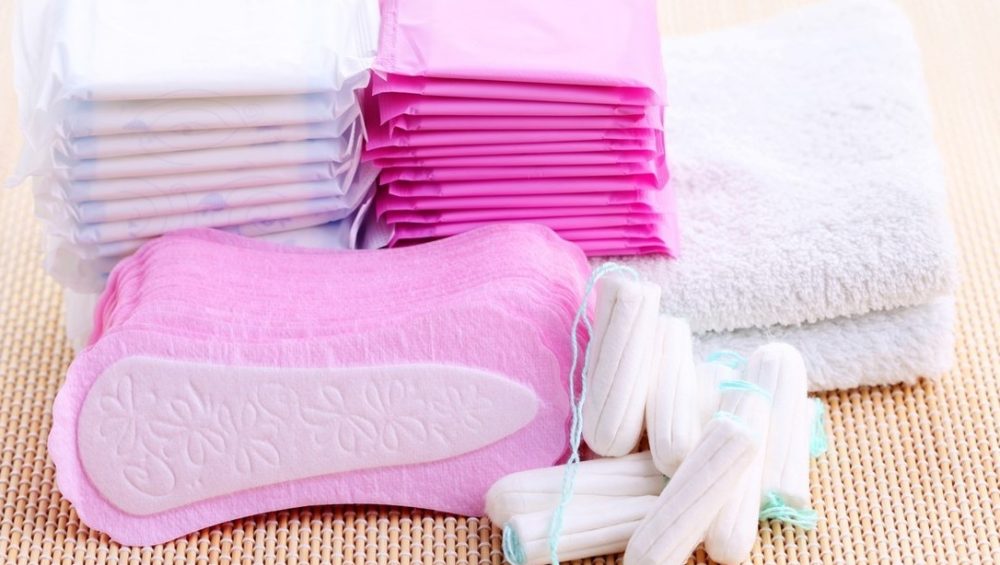
As she fervently describes her environmentally friendly sanitary towel—a product she hopes will empower women and young girls and put money in farmers’ pockets—”going green” seems to be Dr. Jacquline Kisato’s go-to slogan.
Kisato is a lecturer in fashion design and marketing at Kenyatta University (KU). She is now working on a project to create reasonably priced, environmentally friendly sanitary towels and figure out how to make sustainable packaging materials.
The original goal of Kisato’s business was to provide jobs for local people by commercializing banana stems, which farmers deemed worthless and would otherwise let decay on their properties.
Following the Kenyan government’s 2018 implementation of a plastic bag ban, it became necessary to identify.
Grocers and fast-food vendors needed plastic bags because they made it convenient for customers to carry their purchases home. But in spite of their benefit, they could no longer be ignored for their detrimental effects on the environment.
I approached this subject by considering how I could commercialize banana stem fibers from an entrepreneurial standpoint. Market merchants needed alternatives to serve their customers since the government had recently outlawed single-use plastic bags, Kisato told IPS.
Because sanitary towels are made of plastic, improper disposal of them contributes to the environmental issue, the speaker continued.
But Kisato claims that ever since she saw the difficulties, she has been compelled to use inexpensive sanitary towels to empower women and young girls.
One day, as I was strolling through the college hallways, a student approached me and asked if I might give her a package of sanitary pads. I was astonished by this incident since, up until recently, I thought that only high school students faced “period poverty,” Kisato stated.
After interviewing 400 high school girls from Gatundi, Kibera, and Kawangware, Kisato and her research team discovered that over half of the girls in these impoverished regions could barely afford sanitary pads, even while they were at home.
The don was not happy about this since she thought something ought to be done about it.
While looking into alternatives to plastic bags, she discovered that she could address two issues at once.
Kisato, therefore, filed for the National Research Fund (NRF) in 2018 with the intention of creating sanitary towels and plastic bags that are less harmful to the environment. Her dream came true in 2020 when Kenyatta University was awarded Ksh.9 million (about US $61,623) by the NRF, with her serving as the project’s primary investigator.
Each member of her team, who consists of academics from various departments and institutions as well as Ph.D. and master’s students, has contributed significantly to the project’s completion.
“I am in charge of an engineering team at the Kenya Industrial Research and Development Institute (KIRDI), and our goal is to reverse engineer devices that can harvest fiber from banana stems and utilize it to make sanitary towels and packaging that is environmentally friendly,” the woman said. “I also have researchers from Moi University who worked on creating usable soft materials out of the extracted fiber.”
Kisato wanted to make high-quality, environmentally friendly sanitary towels that could rival those already on the market. To that end, she turned to Jomo Kenyatta University of Agriculture and Technology (JKUAT) chemistry lecturer Edwin Madivoli for his knowledge.
Kisato claims that the market’s towels are made using a substance called hydrogel, which helps them hold onto liquids for an extended period of time. They are also sealed with plastic sheets to stop leaks. Instead of using regular plastic, we want to duplicate the same thing using bioplastic materials, which can break down.
Kisato’s research also revealed that African women and girls were more likely to have bacterial infections since they often wore sanitary towels longer than women and girls in wealthy nations. This resulted from Africa’s restricted affordability and accessibility.
In order to reduce the danger of infection, a sanitary pad should be changed at least three times a day for the specified three-hour period of use. However, because of poverty, many girls in Africa do not live like this. IPS was informed by Kisato.
“We believed that by incorporating anti-microbial qualities into our product, it would become on par with or even superior to what was already available in the market,” stated Kisato.
The study team also discovered that young girls had many misconceptions about menstrual flow, which contributed to stigmatization and made it challenging for them to learn how to use sanitary towels correctly.
Girls exchanged some noteworthy theories regarding menstrual flow among themselves, such as the following:
- It is a curse from God
- Girls who had periods were considered dirty and impure
- Their faces would become pale from losing blood
“These are beliefs that need to be done away with by encouraging parents and the government to speak about monthly periods with young girls openly,” stated Kisato.
Madivoli’s knowledge in chemistry proved useful for the project’s second phase, and the Research Scholarship and Innovation Fund (RSIF) was pleased to provide Kisato with an additional Ksh.9 million (about USD 59,000) to carry out her initial work.
“My responsibility is to guarantee that our sanitary pads meet market standards for quality while upholding the project’s primary objective of being environmentally friendly,” Madivoli told IPS.
“My responsibilities include creating hydrogels, making bioplastics, and figuring out how to add anti-microbial qualities to our products so that users are shielded from potential infections,” he stated.
The Kenya National Innovation Agency (KENIA) awarded JKUAT funding of Ksh. 800,000 (about US $5477) to assist Madivoli in her research.
“Banana stems when left to dry on the farms, are known to produce large amounts of methane, which is a harmful greenhouse gas that contributes to the problems we are trying to address with climate change,” Madivoli continued. “Therefore, the greenhouse effect in the atmosphere is limited by having an alternate use for the stems.”
According to Madivoli, the majority of banana farmers typically don’t know what to do with the stems after harvesting is complete. This project, however, offers them a means of generating more revenue because they anticipate being paid Ksh. 35 per stem for the stems.
“This project will not only be beneficial to the environment, but it will also generate employment for those who go harvest farm stems and find uses for biomass that the farmers deemed worthless,” he said in closing.
After it is operational, they anticipate sourcing banana stems from counties in western Kenya as well as Kisii, Muranga, Embu, and Meru.
One of Kisato’s textile-focused students, Stephany Musombi, is tasked with creating high-quality packing materials for the project.
“In addition to banana fiber, I’m experimenting with other biomass, like seaweed and pineapple,” Musombi said to IPS. The project will create a market if I can figure out how to make this happen.
The timing of Kisato’s idea is perfect, as there is a global drive for environmentally friendly ways to slow down climate change. Additionally, Kenya hosted the climate summit on September 4, 2023, which drew leaders from all over Africa.
William Ruto, the president of Kenya, drove himself to the Kenyatta International Convention Centre (KICC) in a tiny electric car. There, he issued a challenge to African innovators and leaders to find sustainable ways to carry out their daily tasks that will lower their carbon footprint both domestically and internationally.
Africa can use renewable resources to meet all of its energy needs. With the use of renewable energy sources including hydropower, geothermal, wind, sun, and sustainable biomass, the continent has the capacity to become totally self-sufficient.
At the meeting, Ruto stated, “Africa can be a green industrial hub that helps other regions achieve their net zero strategies by 2050.”
Later this year, Kisato anticipates her product will be available on the market, where she intends to lower the price point for everyone. Her goal is to collaborate with nascent or well-established toiletry firms.
The least expensive sanitary package available on the market is Ksh. 140. Kisato, we anticipate ours to drop as low as Ksh. 100.
Paul Wainaina, vice chancellor of Kenyatta University, praised the project and said it will allow the nation to meet its economic demands while protecting the environment.



