

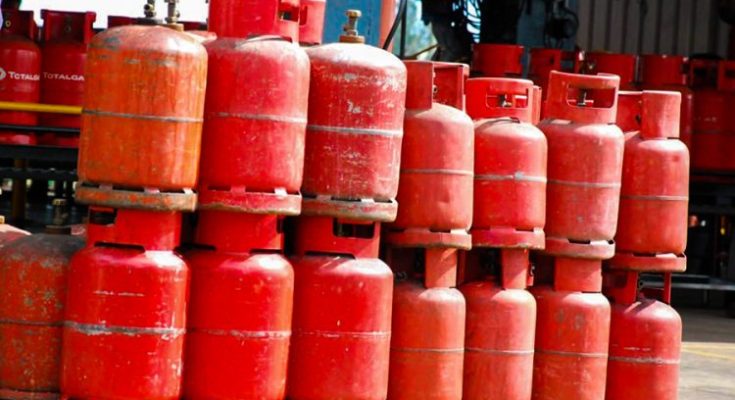
Some residents of Bauchi have cried out over the rising increase in the price of liquefied petroleum gas (LPG) commonly known as cooking gas.
The Bauchi residents further lamented that even as the price of the commodity is hitting the rooftops, the commodity still remains unavailable to users.
A check by the News Agency of Nigeria (NAN) in Bauchi at the weekend, showed that prices of LPG went up by over 40 per cent in the last five months.
The situation was compounded by scarcity of the product as most of the sale outlets had run out of stock.
A kilogramme of the product was sold at N1,700, as against its old price of N1,200.
Mr Nnemeka Chidi, a cashier at a gas station in Yelwa area of Bauchi, said prices had increased significantly compared to five months ago.
He said the hike in prices affected sales, as many customers could no longer afford to buy gas in large quantities.
“Most customers now buy between one and five kilogrammes,” he said.
Miss Faith Dano, a student of the Federal Polytechnic, Bauchi, said the hike in prices affected her negatively,
Dano said that she could no longer afford to buy more than two kg of gas, and now relied mainly on electric cookers.
Mr Mohammad Yusuf, a businessman, who came to refill his gas cylinder, noted that although the price had increased, he still preferred gas to charcoal and firewood because it made cooking faster and more convenient.
Mrs Maimuna Isah, a housewife, said the increase in gas prices had forced her to resort to charcoal for cooking in spite of its cumbersome process.
“Presently, I only use gas to boil water for the children before they leave for school in the morning,” she said.
Isa called for proactive measures to ensure availability and regulate prices to ease the burden on the low-income households.
FG Engages Banks On Digital Revenue Optimisation
The federal government has engaged the banking community in the federal capital territory (FCT) in order to deepen their understanding of the Revenue Optimisation Assurance Platform (RevOp).
RevOp is a digital platform designed to improve revenue generation, reduce leakages, and enhance public sector accountability.
Minister of finance and coordinating minister of the economy, Mr Taiwo Oyedele, stated RevOp is a centralised digital revenue collection and monitoring system designed to modernise Nigeria’s public finance operations.
Oyedele, who spoke through the Permanent Secretary, Special Duties, Mr Mohammed Danjuma, explained that the platform provides a real-time, automated framework for all federal agencies to raise, collect, and report revenues, replacing fragmented manual processes that have plagued revenue collection for decades.
He reiterated the FG’s commitment to improving revenue generation, enhancing transparency, strengthening accountability, and leveraging technology to drive efficiency across public financial management processes.
His words: “RevOp serves as a critical tool in the government’s drive to improve revenue administration, reduce leakages, and enhance public sector accountability”.
The Minister noted that although there were some initial challenges, a lot had been achieved since the inception and implementation of the platform.
He identified one of the challenges as limited awareness among some banking channels and frontline officers.
According to him, some banking channels were unfamiliar with RevOp, its purpose, or the procedural requirements to support transaction processes through the platform.
“These challenges, though operational in nature, have significant impacts on the overall customer experience and effectiveness of the initiative. This is precisely why we are here today,” he said.
The Minister noted that the success of RevOp would not be achieved by the government alone, adding that it requires strong collaboration among all stakeholders, particularly banking institutions, which serve as critical collection and service channels.
Oyedele further stated that the banking institutions’ role extends beyond merely collecting or processing payments to ensuring that government revenue collection processes were efficient and user-friendly.
According to the Minister, the sensitisation session was put in place to deepen understanding of the platform, clarify operational processes, address concerns, and establish stronger communication channels between the project team and participating financial institutions.
“We expect that the knowledge shared here will cascade throughout your respective organisations, especially to branch operations, customer service personnel, and tellers who interact directly with customers on a daily basis,” he said.
Oyedele said the ministry remained committed to working closely with all stakeholders to address identified challenges and continuously improve the platform.
In his remarks, the Accountant General of the Federation, Dr Shamseldeen Ogunjimi, said the revenue optimisation portal had been adopted as a strategic platform for improving revenue collection, reconciliation, monitoring, and reporting.
Ogunjimi, represented by his Chief of Staff, Mr Felix Ogundairo, explained that the platform was designed to provide greater visibility into government revenue, eliminate leakages, improve compliance, and support informed decision-making through real-time data and analytics.
“This engagement, therefore, provides an opportunity for us to discuss implementation challenges, align expectations, clarify operational issues, and strengthen the partnership necessary for the success of the application,” he said.
The RevOp Product Manager, Mr Idris Dosunmu, said the platform unifies billing, payment, and settlement under one platform, adding that every transaction passes through secure connections, ensuring complete transparency from bill creation to treasury receipt.
“This will ensure that every penny due to the federal government goes into the coffers of the government,” Dosunmu said.



