By Joy Onu
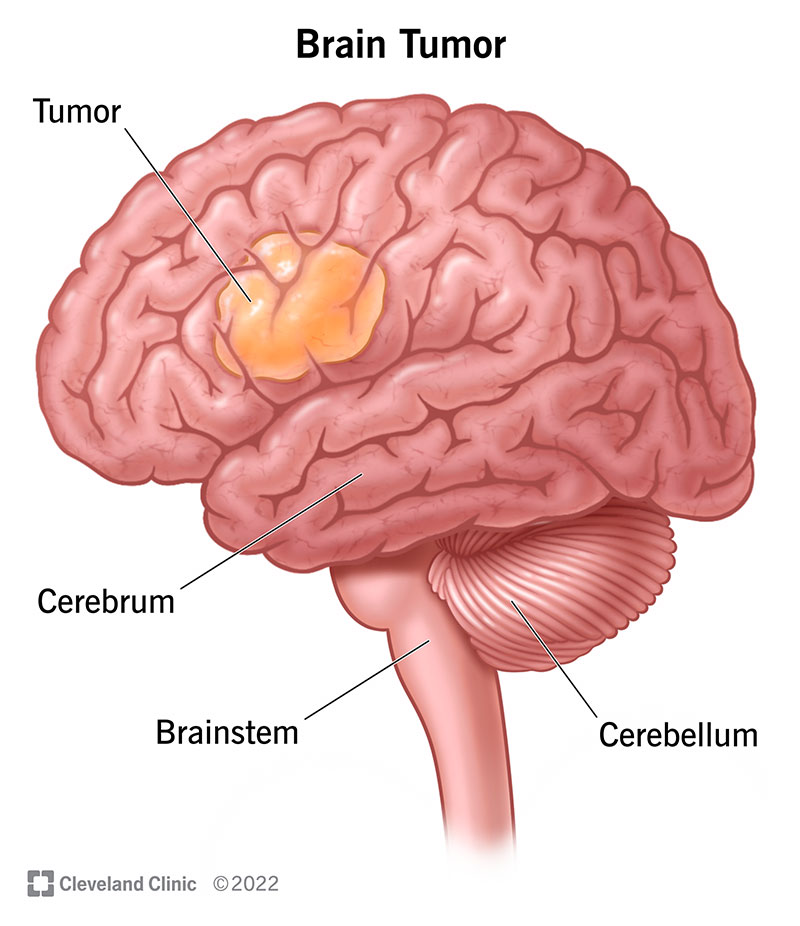
For many Nigerian families, the words “brain tumour” immediately trigger fear. The diagnosis is often associated with death, spiritual attack, permanent disability or an inevitable operation. Yet medical reality is more complex. Brain tumours are abnormal growths of cells in or around the brain. Some are benign and slow-growing, while others are malignant, aggressive or secondary cancers that have spread from another part of the body.
Not every brain tumour is cancer, and not every patient requires surgery. However, because the skull has limited space, even a benign tumour can become dangerous when it compresses vital parts of the brain.The first challenge therefore, is often getting patients to hospital early enough.
A recent Nigerian systematic review of hospital-based studies reported a pooled prevalence of 3.22 per cent, but the researchers cautioned that the figure should not be treated as Nigeria’s true population prevalence because access to diagnosis and reporting varies widely. They called for stronger diagnostic infrastructure and a national registry.
The symptoms can be deceptively ordinary. A persistent or progressively worsening headache, particularly when accompanied by repeated vomiting, requires medical assessment. Other warning signs include a first seizure, new weakness or numbness on one side of the body, difficulty speaking or understanding speech, visual problems, poor balance, memory loss, confusion, personality changes and unusual behaviour.
In children, increasing head size, seizures, persistent vomiting, developmental delay, visual problems or a noticeable decline in school performance should also prompt medical review.
Ekeinyi Adedayo, a senior oncology nurse at the National Hospital, Abuja, has urged Nigerians to pay attention to persistent headaches, vision changes and seizures. “Regular check-ups and early medical attention can make all the difference. Brain health must be prioritised,” she said.
But awareness can be defeated by beliefs surrounding the disease. For some families, the first explanation for seizures or behavioural changes is spiritual attack. Others blame malaria, sinus disease, eye problems or stress. Some patients first visit patent-medicine shops, traditional healers or prayer centres.
A 2025 report on Nigerian children with cancer recounted the experience of Osisanya Olusola, whose son developed a brain tumour. “We thought it was a spiritual attack,” he said, describing how his son eventually lost his vision.
Such beliefs should not be viewed simply as ignorance. Poverty, transport costs, fear of surgery, hospital charges and previous experiences with the health system can reinforce cultural and religious explanations. The danger is that seizures, confusion or paralysis may be interpreted as possession, witchcraft or a curse instead of neurological symptoms requiring urgent assessment.
Brain tumours are not caused by witchcraft, curses, moral failure or contact with another person. They are not contagious, and there is no reliable evidence that herbal mixtures can dissolve them. Unproven remedies can delay diagnosis, interact with medicines or cause other harm.
Diagnosis normally begins with a medical history and neurological examination before imaging. CT scans are often faster and more accessible, while MRI generally provides greater detail of brain tissue, tumour boundaries and critical structures. Tissue obtained through biopsy or surgery may then be examined to establish the tumour type and grade, with molecular testing increasingly important for some tumours.
Yet access remains unequal. In one Nigerian tertiary-hospital study, 60 per cent of patients underwent CT alone, 24 per cent had MRI alone and only 16 per cent had both. Researchers linked the heavy reliance on CT partly to the cost and limited availability of MRI.
For a poor family, the diagnostic bill can become the first major barrier. Prices vary between hospitals and private diagnostic centres, while consultation, contrast, laboratory tests, transport and accommodation can add to the cost. Memfys Hospital in Enugu has published charges listing CT brain at ₦40,000 and MRI/MRA of the brain or head at ₦80,000, although patients should confirm current charges directly with the facility.
Treatment depends on the tumour’s type, location, size, grade and the patient’s general condition. Options may include monitoring, surgery, radiotherapy, chemotherapy, targeted treatment, anti-seizure medicines, rehabilitation and palliative care. Some benign tumours can be successfully treated, while aggressive or deeply located tumours may remain difficult even with advanced care.
Nigeria has referral centres capable of managing complex neurological and cancer cases, including the National Hospital Abuja, University College Hospital Ibadan, Lagos University Teaching Hospital, University of Nigeria Teaching Hospital Enugu, Ahmadu Bello University Teaching Hospital Zaria and University of Benin Teaching Hospital. Specialist facilities such as Memfys Hospital in Enugu also provide neurosurgical services.
But the medical workforce remains stretched. Brain-tumour care requires neurosurgeons, neurologists, radiologists, pathologists, oncologists, nurses, medical physicists and rehabilitation professionals. Shortages and uneven distribution leave specialist expertise concentrated in major cities.
Chika Okwuolisa, Executive Director of Brain and Spine Foundation Africa, recently warned that Nigeria’s neurological workforce is dangerously inadequate and that patients can arrive at hospitals where the necessary specialists or diagnostic equipment are unavailable. She said the shortage of healthcare professionals has been worsened by migration.
Radiotherapy is another major weakness, with equipment breakdowns, unreliable electricity, maintenance problems and shortages of trained personnel limiting access to treatment.
These constraints help explain why Nigerians with financial resources sometimes travel to India, the United Kingdom, the United States, Turkey, South Africa and other countries. They may seek faster imaging, advanced neurosurgery, molecular pathology, specialised radiotherapy, intensive care or more predictable equipment availability.
For poorer and underserved patients, the choices are far harsher. Some borrow money, sell property or depend on relatives, churches, mosques, community fundraising and charitable organisations. Others interrupt treatment when funds run out. Some receive medicines to control seizures, swelling, pain and vomiting while definitive surgery or radiotherapy remains out of reach.
Government has begun strengthening the broader cancer response. The Federal Ministry of Health and Social Welfare’s National Cancer Control Plan 2026–2030 covers prevention, early detection, diagnosis, treatment, palliative care, survivorship, research, workforce development and patient navigation.
In June 2026, the Ministry launched a Social Determinants of Health Fund with an initial ₦50 million commitment for vulnerable cancer patients. Minister of State for Health and Social Welfare Iziaq Salako said the fund was designed to help patients overcome barriers including transportation, accommodation, feeding and inadequate social support.
But brain tumours require specific attention within the wider cancer agenda. Nigeria needs affordable CT and MRI services, reliable electricity and equipment maintenance, more neurosurgeons and neuroradiologists, stronger pathology and molecular-testing capacity, functional radiotherapy centres, rehabilitation services and a national brain-tumour registry.
Partners also have an important role. Professional associations, hospitals, cancer organisations, philanthropists, development agencies, faith organisations and community groups can support patient navigation, transport, diagnostic subsidies, medicines, rehabilitation and public education. Faith and traditional leaders can become part of the solution by recognising seizures and progressive neurological symptoms and encouraging prompt hospital referral.
The message to families is simple: do not wait for paralysis, loss of consciousness or repeated seizures before seeking help. A new or worsening neurological symptom deserves medical assessment.
Prayer, emotional support and community assistance can help families cope, but they should accompany, not replace clinical examination, brain imaging, pathology and specialist treatment.
The real battle against brain tumours in Nigeria is therefore not only against the disease. It is also against misinformation, late presentation, poverty, inadequate diagnostic capacity and unequal access to treatment.
Early recognition can open more treatment options. Building the capacity to diagnose and treat patients close to home can determine whether those options remain available to rich and poor alike