By Joy Onu
For decades, Nigeria’s healthcare system has struggled with inadequate infrastructure, shortages of health workers, weak financing and unequal access to quality medical care. While successive governments have introduced reforms aimed at addressing these problems, implementation has often been fragmented, leaving millions of Nigerians without reliable healthcare
The Federal Government believes the answer now lies in building a health system that is not only better funded but also digitally connected, technology-driven and coordinated across all levels of care.
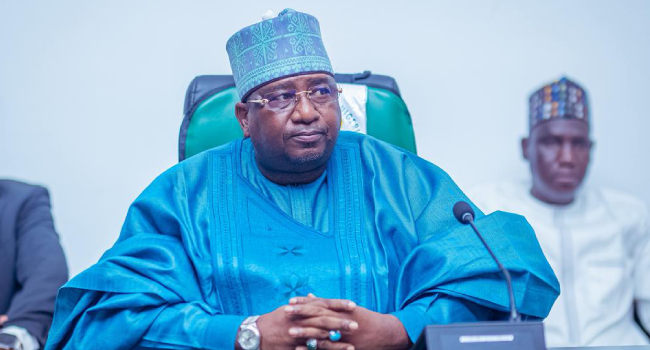
That vision took centre stage in Abuja on Wednesday as the Minister of State for Health and Social Welfare, Dr. Iziaq Adekunle Salako, outlined what the government described as a comprehensive transformation agenda designed to strengthen healthcare delivery and move Nigeria closer to Universal Health Coverage (UHC).
Speaking at the Insights Learning Forum (ILF) 2026 at the Abuja Continental Hotel, Salako said the administration of President Bola Ahmed Tinubu is shifting the country’s health sector away from isolated interventions toward an integrated system capable of delivering measurable improvements in access, quality and efficiency.
The forum, themed “Strengthening National Health Systems Through Inclusive Policy, Innovation and Service Delivery,” brought together policymakers, development partners, healthcare professionals, technology experts and other stakeholders to examine practical solutions for strengthening Nigeria’s health sector.
According to the minister, the theme reflects the direction of the Nigeria Health Sector Renewal Investment Initiative (NHSRII) launched by President Tinubu in December 2023.
He said the initiative provides a coordinated framework for tackling long-standing weaknesses through strategic investments, policy reforms, innovation and stronger collaboration among stakeholders.
A key pillar of the reform agenda, Salako said, is the National Digital Health Architecture, which has been endorsed by all 36 states and the Federal Capital Territory. He said the nationwide endorsement reflects growing consensus on the need for an integrated digital health system that can support efficient service delivery across Nigeria.
“The National Digital Health Architecture, endorsed by all states and the Federal Capital Territory, is creating an interoperable digital health ecosystem anchored on the principle of ‘One Patient, One Health Record’,” the minister said.
He said that the framework is designed to ensure that patients’ medical information can be securely accessed across different health facilities, improving continuity of care, reducing duplication and enhancing efficiency in service delivery.
Salako added that digital technologies, including telemedicine, are already expanding access to healthcare services, particularly for residents of remote and underserved communities where specialist medical care is often unavailable.
Beyond technology, the minister said the government’s Eight-Point Health Agenda and the Health Sector Strategic Blueprint are driving reforms aimed at addressing workforce shortages, infrastructure deficits, financing gaps and fragmented service delivery through coordinated implementation, strong partnerships and evidence-based policies.
He argued that strengthening healthcare should not be viewed solely as a social responsibility but also as an economic investment capable of improving national productivity.
According to him, the ongoing reforms have the potential to generate annual economic returns of about ₦4.8 trillion by reducing preventable diseases and improving population health. He added that Nigeria could also retain an estimated ₦850 billion currently lost every year to outbound medical tourism if confidence in domestic healthcare services continues to improve.
The Minister further projected that ongoing interventions could reduce preventable maternal and child deaths by as much as 50 per cent, significantly improving health outcomes across the country.
Salako pointed to several achievements already recorded under the reform programme, including the development of more than 21 strategic health policies, expansion of health insurance coverage, construction of over 500 high-impact health infrastructure projects, establishment of 17 new federal tertiary health institutions, creation of six Centres of Excellence for Cancer Care, revitalisation of primary healthcare facilities and efforts to strengthen Nigeria’s health research system.
Healthcare financing, long regarded as one of the sector’s biggest constraints, also featured prominently in the minister’s address.
He reaffirmed the Federal Government’s support for ongoing legislative efforts to increase the Basic Health Care Provision Fund (BHCPF) from one per cent to two per cent of the Consolidated Revenue Fund.
According to Salako, about ₦235 billion of the cumulative ₦339 billion allocated to the fund since its inception has been released and disbursed under the current administration.
He said that the latest ₦32.9 billion released during the second quarter of 2026 is supporting more than 8,300 Primary Healthcare Centres across the country through a performance-based financing model tied to clearly defined Disbursement Linked Indicators.
The minister also highlighted efforts aimed at addressing one of the sector’s most persistent challenges, the shortage and migration of healthcare professionals.
He said the government has expanded recruitment and retention initiatives, implemented the Health Workforce Migration Policy, strengthened engagement with Nigerian health professionals in the diaspora and revitalised more than 3,000 primary healthcare facilities nationwide.
According to him, improvements have also been recorded in emergency medical ambulance services as well as interventions targeted at reducing maternal and newborn deaths.
Despite the progress, Salako acknowledged that achieving a resilient healthcare system will require sustained collaboration across all levels of government and the private sector.
While acknowledging that considerable work remains, Salako urged state governments, development partners, private investors and health technology innovators to align their programmes with the Nigeria Health Sector Renewal Compact and the National Digital Health Architecture to eliminate fragmented interventions and strengthen implementation under the government’s Sector-Wide Approach.
“We must move beyond isolated interventions and ensure that all investments contribute to one coherent national strategy capable of delivering measurable results for Nigerians,” he said.
The Minister also commended eHealth Africa for supporting several government initiatives aimed at improving healthcare delivery across the country.
He noted that the organisation has helped solarise 238 public health facilities across 12 states under the National Power for Health Initiative, strengthened health data systems and supported the establishment of Public Health Emergency Operations Centres in several states.
According to Salako, the interventions demonstrate how collaboration between government and development partners can accelerate ongoing health sector reforms.
As policymakers and health experts continue to debate the future of healthcare in Nigeria, the government’s message at the forum was clear: meaningful reform will depend not only on increased funding but also on stronger institutions, better use of technology, coordinated implementation and sustained partnerships capable of delivering lasting improvements in the lives of Nigerians.
Ultimately, the success of the reforms will be judged not by the number of policies introduced or funds released, but by whether Nigerians experience shorter waiting times, better-equipped hospitals, more skilled health workers and improved access to affordable, quality healthcare.