

By Joy Onu
As Nigeria continues to battle one of the world’s highest malaria burdens, health authorities, international partners and researchers insist that defeating the disease will require far more than treating patients after they fall ill.
According to the Federal Ministry of Health and Social Welfare, the country’s renewed fight against malaria is now anchored on the National Malaria Strategic Plan (2026–2030), a roadmap designed to reduce malaria parasite prevalence and malaria-related deaths by 50 per cent from 2025 levels by 2030.
Unlike previous approaches that largely applied the same interventions across the country, the new strategy adopts what health experts describe as a subnational approach, allowing malaria interventions to be tailored to the realities of individual states and communities based on transmission patterns, environmental conditions and local health challenges.
Health officials believe this targeted approach will ensure that scarce resources are directed to areas with the greatest need while improving the effectiveness of malaria prevention and treatment programmes.
As part of the strategy, the Federal Government says it has continued the nationwide distribution and replacement of long-lasting insecticide-treated mosquito nets, noting that more than 500 million nets have been distributed since 2015.
The Federal Government is also expanding Seasonal Malaria Chemoprevention (SMC) across the 21 eligible northern states, with about 29 million children under the age of five expected to receive monthly preventive medicines during the peak malaria transmission season.
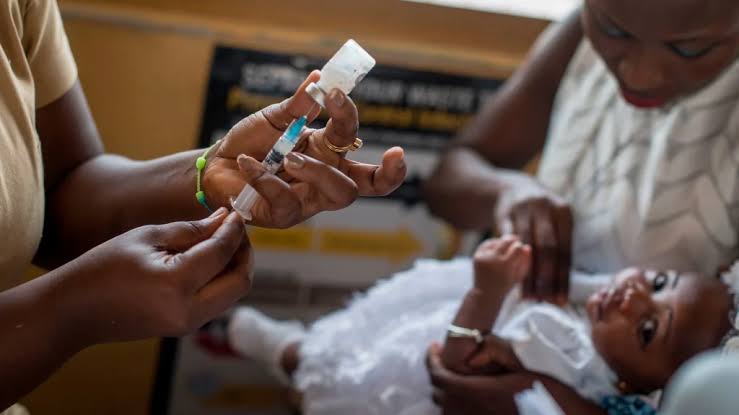
Another key intervention is the gradual rollout of the malaria vaccine for children aged five to 23 months in eligible locations, alongside pilot larval source management programmes in selected states aimed at destroying mosquito breeding sites before they mature into adult vectors.
The Ministry has also pledged to strengthen disease surveillance, improve access to rapid diagnostic testing and ensure wider availability of quality-assured antimalarial medicines in public health facilities.
Nigeria’s efforts are receiving technical backing from the World Health Organization (WHO) through its Global Malaria Programme, which supports countries with evidence-based policies on prevention, diagnosis, treatment, surveillance and malaria elimination.
WHO recommends an integrated malaria-control package comprising long-lasting insecticide-treated mosquito nets, Indoor Residual Spraying (IRS), prompt diagnosis through rapid testing, effective treatment using recommended medicines, seasonal chemoprevention, malaria vaccination in eligible settings and continuous surveillance to guide interventions.
The organisation has repeatedly stressed that malaria transmission varies according to rainfall, mosquito behaviour, ecology and healthcare access, making locally tailored interventions more effective than uniform nationwide campaigns.
WHO Country Representative in Nigeria, Dr. Walter Kazadi Mulombo, has maintained that malaria elimination remains achievable if countries sustain political commitment, scientific innovation, adequate funding and strong community participation.
According to him, progress recorded over the years demonstrates that malaria can be controlled, but maintaining those gains requires consistent investment and coordinated action by governments, health workers and communities.
Medical experts, however, warn that one of the greatest mistakes is assuming government interventions alone can eliminate malaria.
They argue that while the distribution of mosquito nets, vaccines and medicines has expanded significantly, environmental conditions in many Nigerian communities continue to favour mosquito breeding.
Every rainy season, blocked drainage channels, refuse dumps, abandoned tyres, plastic containers and stagnant pools of water become breeding grounds for mosquitoes, allowing malaria transmission to continue despite existing interventions.
To reduce mosquito populations, some state governments have introduced seasonal fumigation exercises.
States such as Adamawa and Kebbi have carried out fumigation campaigns targeting residential neighbourhoods, drainage systems, refuse dumps and other mosquito breeding locations alongside environmental sanitation exercises.
Public health specialists say such interventions can temporarily reduce adult mosquito populations and lower immediate transmission risks.
However, they caution that fumigation alone cannot solve Nigeria’s malaria problem.
According to malaria experts, mosquitoes will quickly return if drains remain blocked, refuse continues to accumulate and stagnant water is allowed to collect around homes and public spaces. For that reason, they recommend that fumigation should always be combined with environmental sanitation, efficient waste management, regular drainage maintenance and active community participation.
Experts also distinguish between routine fumigation and Indoor Residual Spraying (IRS), which they describe as one of WHO’s most effective malaria-control tools.
Unlike fogging, which kills only mosquitoes present during spraying, IRS leaves insecticide on indoor walls where mosquitoes rest after feeding, allowing the chemical to remain effective for weeks or even months depending on the insecticide used and the wall surface.
Researchers say IRS offers longer protection than conventional fumigation but still requires proper implementation, monitoring and community acceptance. Environmental sanitation, they add, remains one of the cheapest and most sustainable malaria-control measures available.
Residents are encouraged to clear blocked gutters, remove discarded containers capable of collecting rainwater, trim overgrown vegetation and dispose of household refuse properly.
Experts note that poor waste collection across many Nigerian cities creates ideal breeding conditions for mosquitoes because discarded plastics, cans and tyres retain rainwater throughout the rainy season.
Public health specialists are also advocating stronger Water, Sanitation and Hygiene (WASH) committees at community level to coordinate sanitation campaigns, monitor drainage systems, mobilise residents and promote healthier environmental practices.
Evidence from several community-led sanitation projects across Nigeria shows that sustained environmental cleanliness significantly reduces mosquito breeding while improving overall public health.
Another growing concern identified by researchers is insecticide resistance, which threatens one of malaria control’s strongest weapons.
Studies conducted across Nigeria between 2007 and 2025 have found increasing resistance among mosquito populations to pyrethroids, the class of insecticides most widely used in long-lasting insecticide-treated mosquito nets.
Scientists say mosquitoes are gradually developing biological mechanisms that enable them to survive insecticide exposure.
These include metabolic resistance, where mosquitoes detoxify insecticides before the chemicals become effective, and knockdown resistance (kdr) mutations, which alter the insects’ nervous systems, making insecticides less effective.
The implication, experts warn, is that mosquitoes may increasingly survive contact with treated mosquito nets and sprayed walls, allowing malaria transmission to continue despite widespread intervention coverage.
Researchers are therefore calling for continuous resistance surveillance, insecticide rotation and the deployment of next-generation vector-control technologies to preserve the gains already achieved.
Drug resistance also remains a major global concern. Health experts warn that widespread self-medication, poor adherence to prescribed treatment, incomplete dosing, and the circulation of counterfeit or substandard antimalarial medicines expose malaria parasites to inadequate drug concentrations, increasing the risk that standard treatments could gradually lose their effectiveness.
They say this underscores the importance of testing every suspected malaria case before treatment begins and ensuring that patients obtain only quality-assured medicines from authorised health facilities and licensed pharmacies.
Public health physician, Dr. Lazarus Nduka, said Nigeria’s malaria challenge extends far beyond the healthcare sector, noting that poverty, poor housing, weak urban planning, inadequate drainage infrastructure, climate variability, poor sanitation and limited access to healthcare continue to sustain malaria transmission despite significant scientific and medical progress.
He therefore argued that malaria should be approached not merely as a medical condition but as a development issue requiring coordinated action across the health, environment, education, housing and local government sectors.
Dr. Grace Abiodun, a medical doctor at a private hospital in Lagos, said sustained behavioural change remains one of the strongest weapons against malaria, noting that government interventions alone cannot eliminate the disease without public cooperation. “Sleeping under insecticide-treated mosquito nets every night, seeking prompt diagnosis whenever fever develops, completing prescribed treatment, eliminating stagnant water around homes, and supporting community sanitation efforts remain among the most effective actions individuals can take to prevent malaria,” she said.
According to Dr. Abiodun, development partners, researchers, civil society organisations, traditional institutions, religious leaders and the media also have critical roles in sustaining public awareness and encouraging healthier behaviours.
At its core, experts say malaria persists not because effective solutions are unavailable but because implementation gaps, environmental neglect, weak health systems, counterfeit medicines, poverty and inconsistent public compliance continue to undermine decades of investment.
As another rainy season gathers momentum, Nigeria once again faces a defining public health challenge.
Whether the country succeeds in breaking malaria’s deadly cycle will depend not only on government policies and international support but also on the commitment of communities and individual households to embrace prevention as a daily responsibility.
For millions of Nigerians, the battle against malaria is no longer simply about surviving another rainy season. It is about ensuring that future generations inherit a country where a mosquito bite no longer determines whether a child lives or dies



