BY NGOZI A NWANKWO
Environmental stakeholders have raised alarm over ongoing carbon offset projects in Nigeria, calling them a dangerous form of modern exploitation that undermines local communities and ecosystems.
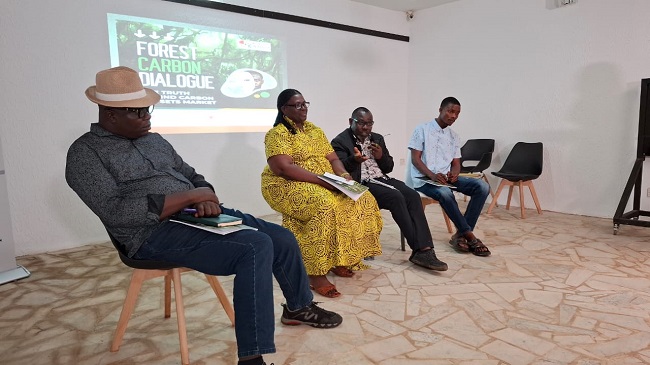
The stakeholders, comprising advocates and forest community leaders, voiced their concerns in Benin during a dialogue organised by the Health of Mother Earth Foundation (HOMEF).
The carbon offsetting refers to compensatory actions taken by companies or countries responsible for greenhouse gas emissions.
These actions include paying for activities such as tree planting or forest conservation in other locations to “offset” or neutralise their carbon footprint.
While these carbon credits are traded in global markets, critics argue that the system is flawed, vulnerable to manipulation, and offers no real solution to the climate crisis.
In his opening remarks, Dr Nnimmo Bassey, Executive Director of HOMEF, said the carbon trading model was a ‘false solution’ that benefits foreign corporations while dispossessing local communities.
“Our people have always managed forests sustainably. When communities steward forests, they thrive. But once governments or corporations take over in the name of carbon protection, those forests become vulnerable,” he said.
Bassey disclosed that Nigeria had already lost over 90 per cent of its forest cover, with many so-called protected areas facing threats from illegal logging and mining.
He cited massive land grabs in Niger, Delta, and Cross River States, some as large as a million hectares, signed off under the guise of carbon offset projects.
“These deals don’t benefit our communities. In Mozambique, families were paid just $100 for seven years to watch over trees. For the next 99 years, they were barred from farming or accessing forest resources. That is carbon slavery,” he said.
Bassey also criticised the alleged deceptive nature of long-term carbon contracts.
“A tree may live a thousand years, but it will still die. These contracts run for 20 years or more, claiming the carbon value, after which the trees can be felled, and the communities are left with nothing,” he added.