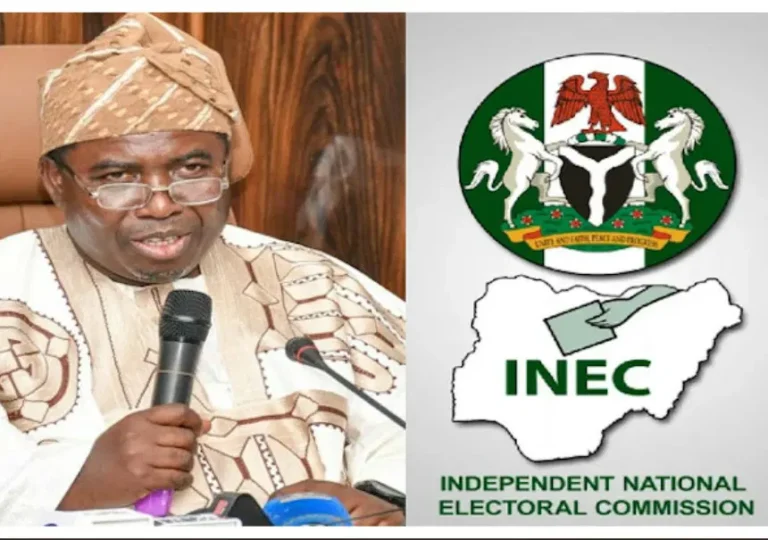
A party leader, Mr. Kola Ajayi, has urged the Federal Government to ensure that improvements in the nation’s macroeconomic indicators translate into better conditions for ordinary Nigerians.
According to him, though the government has stabilised the economy, the efforts should be reflected in citizens’ standard of living.
Ajayi, a former State Chairman, Alliance for Democracy (AD) Inter-Party Advisory Council (IPAC), Lagos State Chapter, made the plea in an interview with journalists in Lagos, on Monday.
He said that the ultimate test of government policies should be their impact on households, businesses and workers across the country.
He added that Nigerians needed to see clearer connections between economic growth and their daily lives, particularly in the areas of food affordability, transportation, housing, education, healthcare and employment.
“The economy may be showing signs of recovery, but the government must ensure that recovery is also visible in the homes and businesses of ordinary Nigerians,” he said.
Ajayi acknowledged that the administration had taken difficult decisions to address some longstanding structural weaknesses in the economy.
He added that such reforms could provide a stronger foundation for sustainable development if properly implemented.
Ajayi urged the government to strengthen measures that would cushion the effects of economic adjustments and accelerate the translation of economic gains to the wider population.
According to him, increased production should become a major focus of the next phase of the reforms, particularly in agriculture, manufacturing, energy and small and medium-scale enterprises.
“We need an economy where increased production leads to more affordable goods, stronger businesses and better-paying jobs. That is where Nigerians will begin to feel the difference,” Ajayi said.
He called for greater investment in infrastructure, especially electricity, transportation and logistics, noting that high production and distribution costs continued to affect the prices of goods and services.
Ajayi said improving the operating environment for businesses would enable more entrepreneurs to expand, employ additional workers and contribute more effectively to economic growth.
“The private sector needs an environment where businesses can plan, produce and employ with confidence. Supporting businesses is also a direct way of supporting Nigerian families,” he said.
The IPAC member urged the federal government to complement its economic reforms with stronger social protection and targeted interventions for vulnerable citizens, particularly low-income families, young people and small business owners.
He said the government should also strengthen accountability in implementing its economic programmes to ensure that increased public revenue translates into visible improvements in infrastructure and essential services.
Ajayi commended the administration for pursuing reforms aimed at strengthening the country’s economic fundamentals, but urged it to remain responsive to areas where citizens were still experiencing significant pressure.
“What Nigerians are asking for is not the abandonment of reforms but better results from them. The government should continue the positive steps while urgently improving the areas where the impact remains limited,” he said.
He expressed optimism that sustained reforms, greater investment in productive sectors and stronger attention to household welfare could help Nigeria move from economic stabilisation to broad-based prosperity.
Ajayi urged the government to make the next phase of its economic agenda more people-centred, saying the measure of success should ultimately be the ability of Nigerians to live, work and do business with greater confidence and dignity.