

By Simeon Ogoegbulam
The federal government is expanding cooperative-based financing and digital identity systems so as to widen access to housing for Nigerians outside conventional mortgage structures.
Speaking at the 2026 Cooperative Housing Summit Africa in Abuja on recently, the Minister of State for Agriculture and Food Security, Aliyu Sabi Abdullahi, said current mortgage systems remain inadequate for low and middle-income earners amid rising construction costs and weak housing finance.
Nigeria’s housing deficit is estimated at over 17 million units, with annual delivery put at 20,000–50,000 units against a demand of about 500,000 units yearly, according to figures cited Abdullahi said the government plans to establish a Cooperative Bank of Nigeria to finance housing, infrastructure, and mortgage schemes under the Renewed Hope Cooperative Reform and Revamp Programme (2025–2030) which proposal was presented at the 8th National Council on Cooperative Affairs in March 2026.
The bank will operate with 65 per cent cooperative ownership, 30 per cent private investors and development finance institutions, and five per cent staff equity. Share capital mobilization began on May 11, 2026.
Abdullahi noted that the institution will target informal sector workers and others with limited access to formal finance, describing the cooperative sector as “a sleeping giant” capable of expanding financial inclusion and housing access.
The government is also digitizing cooperative operations, introducing Cooperative Verification Numbers and Cooperative Members Identification Numbers linked to the National Identity Number database to strengthen verification, reduce fraud and improve investor confidence.
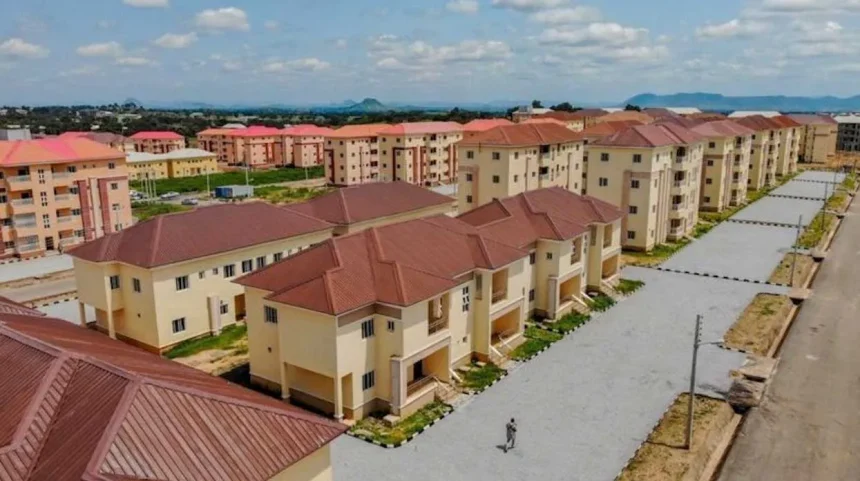
The system will also support mortgage repayment tracking, project monitoring, and membership validation. It further includes the Abuja Cooperative City in Jibi along the Kubwa Expressway, a 700-hectare development projected to deliver about 10,000 housing units under the Renewed Hope Affordable Housing Agenda which will include residential units from one-bedroom bungalows to five-bedroom detached houses, alongside schools, markets, health centres, and transport infrastructure.



