BY NGOZI NWANKWO
The Federal Government has announced its readiness to support youth-led environmental projects, green entrepreneurship, and climate innovation.
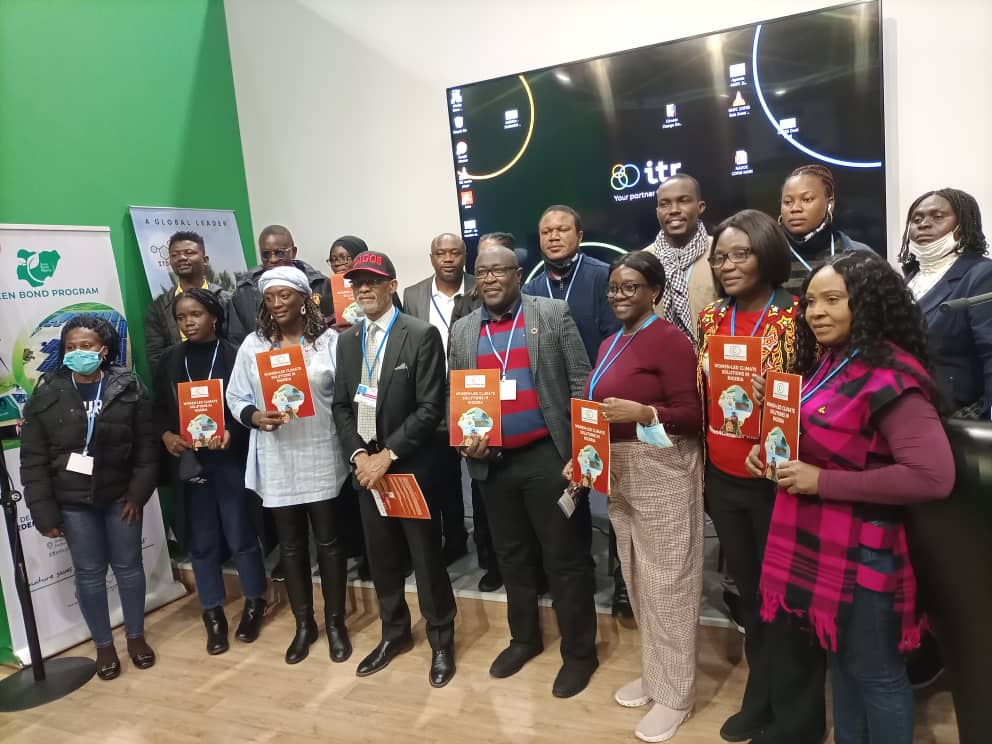
Dr. Iniobong Abiola-Awe, Director of the Department of Climate Change, Federal Ministry of Environment, stated this at a climate change knowledge exchange workshop and art exhibition, describing climate change as one of the most pressing challenges of the present time.
Represented by Mrs. Asmau Jubril, Head of the Mitigation Division, Abiola-Awe emphasized, “Young people are essential partners in climate policy design and implementation. Whether you work in afforestation, waste recycling, sustainable farming, or education, your contributions are critical.”
She added that government efforts are focused on implementing policies that reduce emissions, promote clean energy, and restore ecosystems through collaborative action. “True environmental transformation demands shared responsibility and strong partnerships,” she said.
During the exhibition, Victor Gamalion, a senior secondary student of Command Day Secondary School, Lungi Barracks, presented a climate-themed artwork. “My piece shows the impact of climate change on human life. One side is yellow and polluted, representing carbon emissions and factory pollution, while the green side reflects clean air, healthy trees, and sustainability,” he explained.
Speaking at the workshop, the Connecting Communities and Heritages against Climate Change: Act for Action (CCHCC) project also reaffirmed its commitment to grassroots capacity building and empowerment in the fight against climate change.
The Project Lead in Nigeria, Dr. Deborah Ayodele-Olajire, explained that the CCHCC project uses “artivism,” a fusion of art and activism, to create space for dialogue between creators and audiences in promoting social change.
“As part of our core mission, we are working with diverse partners to shape policy and practice in response to climate change. It is important to ask whose voices are heard in shaping these strategies,” she said.
She explained that the project employs multilingual, multidisciplinary, multigenerational, and multimodal participatory approaches to ensure inclusivity. “The initiative engages children and young people from Nigeria, Kenya, and Scotland, giving them opportunities to become climate ambassadors through creative expression and advocacy,” she noted.