By Joy Onu
Minister of State for Health and Social Welfare, Dr Iziaq Adekunle Salako, has called for stronger implementation of Nigeria’s healthy food policies and increased collaboration among stakeholders to tackle malnutrition, micronutrient deficiencies and the rising burden of diet-related non-communicable diseases (NCDs).
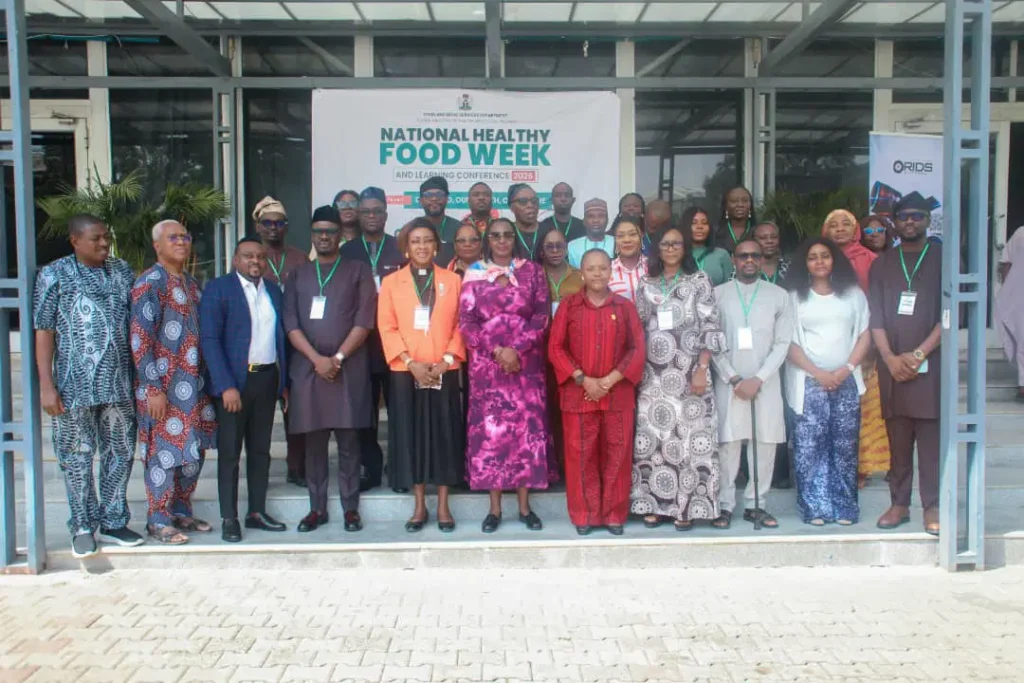
According to a statement issued by the Assistant Director, Information and Public Relations, Ado Bako, Salako made the call at the maiden National Healthy Food Week and Learning Conference in Abuja, stressing that promoting healthy diets requires collective responsibility beyond government.
Represented by the ministry’s Permanent Secretary, Daju Kachollom S., the minister said food choices and the nutritional quality of food available in homes, schools, hospitals, workplaces and markets have far-reaching implications for public health, productivity, child development and national prosperity.
The conference, themed “Our Food, Our Health, Our Future,” brought together government agencies, health professionals, researchers, development partners, food manufacturers and other stakeholders to advance healthier food systems.
Salako said Nigeria had made progress in developing policies and regulatory frameworks to improve food safety and nutrition but stressed that priority must now shift to effective implementation, monitoring and accountability.
He cited the Revised National Policy on Food Safety and Quality and its Implementation Plan 2023, which promotes food safety, food fortification, sodium reduction, elimination of industrially produced trans fats and healthier public food procurement.
He also highlighted the National Guidelines for Sodium Reduction, the National Agency for Food and Drug Administration and Control (NAFDAC) Read the Label Campaign and efforts to introduce front-of-pack nutrition labelling to help consumers make informed choices and encourage manufacturers to improve the nutritional quality of their products.
On public procurement, Salako said government institutions provide millions of meals annually in schools, hospitals, correctional centres, emergency shelters and National Youth Service Corps (NYSC) camps, making public food procurement an important tool for improving the country’s food environment.
He called for effective implementation of the Bureau of Public Procurement’s National Guidelines for Public Procurement of Food and Related Services, supported by monitoring, accountability and capacity building.
The Minister also identified the sugar-sweetened beverage tax as a fiscal measure for discouraging excessive consumption of sugary drinks and generating revenue for public health interventions. He advocated transparent allocation of part of the proceeds to nutrition education, healthier food environments and disease prevention.
On micronutrient deficiencies, he emphasised large-scale food fortification, noting that its success depended on regulatory standards, industry compliance, quality assurance, laboratory capacity and market surveillance.
He encouraged Nigerians to consume more locally available nutritious foods, including legumes, fruits, vegetables, nuts, whole grains and traditional nutrient-rich foods.
Salako warned that unhealthy food environments could worsen hypertension, diabetes, obesity, cardiovascular diseases, stroke and kidney disease, with serious consequences for healthcare costs and national productivity.
He urged state and local governments, primary healthcare facilities, community organisations, traditional and religious institutions, women’s groups, youth networks and the media to support the implementation of healthy food policies.
Declaring the conference open, the minister called for the gathering to become an enduring national platform for accountability, partnership, innovation and continuous improvement of Nigeria’s food systems, ensuring access to safe, nutritious, affordable and health-promoting food for all.
In a goodwill message, the Interim Country Director of Resolve to Save Lives (RTSL), Dr Jenom Danjuma, reaffirmed the organisation’s commitment to supporting government efforts to promote healthy diets and strengthen policies to reduce NCDs.
Danjuma identified excessive sodium, industrially produced trans fats and added sugars, particularly from sugar-sweetened beverages, as major dietary risk factors for hypertension, cardiovascular diseases and type 2 diabetes, which contribute significantly to premature deaths in Nigeria.
He stressed the need for evidence-based policies and sustained collaboration to make healthier food choices more accessible. He added that the four-day conference would enable stakeholders to assess policy implementation, share experiences, identify challenges and develop practical strategies to accelerate action.
Similarly, the Executive Director of the Network for Health Equity and Development (NHED), Dr Jerome Mafeni, said access to safe, nutritious and affordable food should be treated as a public health priority rather than an individual responsibility.
He noted that food choices were influenced by availability, production standards, affordability and access to reliable consumer information, arguing that people could not make healthy choices when nutritious food was unavailable, unaffordable or inadequately regulated.
Mafeni said the success of healthy food policies should be measured by their influence on what was produced, marketed and made accessible to consumers, rather than policy adoption alone.
He urged participants to move beyond discussions and agree on practical commitments, stronger institutional coordination and sustained accountability.
The World Health Organisation (WHO) Representative, Dr Pavel Ursu, represented by Pindar Wakawa, also called for stronger action to promote healthy diets and address the growing burden of diet-related diseases.
Ursu described the conference as a timely platform for advancing healthy food policies and raising awareness of the links between nutrition, health and sustainable development.
He said healthy diets were among the most effective investments countries could make to prevent diseases, improve productivity, strengthen human capital and accelerate socioeconomic development.
Expressing concern over Nigeria’s burden of diet-related NCDs, Ursu said they accounted for approximately 27 per cent of deaths in the country.
He identified cardiovascular diseases, hypertension, diabetes and chronic respiratory diseases as major public health concerns, partly driven by excessive consumption of salt, sugar and unhealthy fats.
He added that nearly one in three Nigerian adults lives with hypertension, a major risk factor for heart disease, stroke and kidney failure.
The speakers commended the Federal Ministry of Health and Social Welfare for convening the conference and called for sustained collaboration among government institutions, development partners, civil society, the private sector and other stakeholders to make healthy food accessible, affordable and available to all Nigerians.