

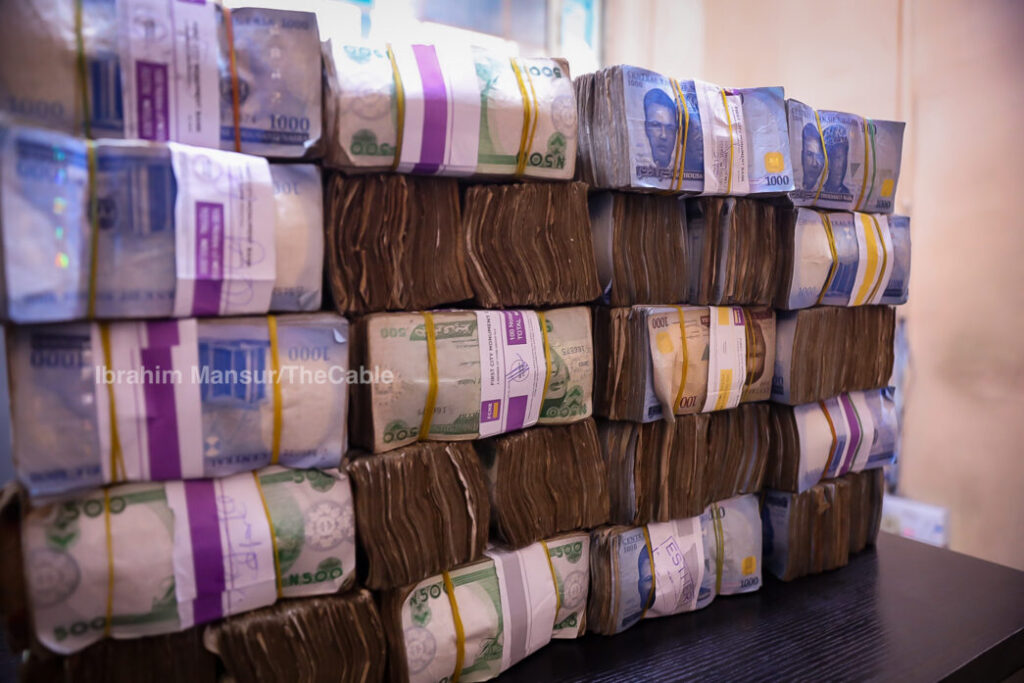
The Federal Government’s claim that it has disbursed more than N600 billion in cash transfers to slightly over 10 million households in the past three years has understandably attracted public attention.
According to the Minister of Humanitarian Affairs and Poverty Reduction, Dr Bernard Doro, the intervention was designed to support vulnerable Nigerians and cushion the economic hardship that followed the removal of the petrol subsidy.
There is no question that direct financial assistance can provide temporary relief to households struggling to buy food, pay transport fares, meet medical expenses or keep children in school. For a family facing an immediate crisis, even a modest transfer can make a meaningful difference.
But three years into the administration, the more important question is whether the intervention is merely cushioning poverty or helping Nigerians escape it.
The Federal Government says the transfers have reached more than 10 million households, which the minister estimated could translate to about 40 million Nigerians using an average household size of four. Yet, this figure requires more detailed public documentation if Nigerians are to properly assess the programme’s reach and impact.
There are also questions about coverage, verification and payment consistency. The IMF reported in June 2026 that about 9.2 million households had been enrolled in the cash-transfer system, against a target of 15 million, and that enrolled households had received at most three payments of N25,000 since 2023.
This suggests that the government still has work to do in reconciling its various beneficiary figures and demonstrating clearly how much money went to which households, when the payments were made and what measurable changes resulted.
The issue is not whether poor Nigerians deserve assistance. They certainly do. The issue is whether a country facing widespread poverty can rely principally on transferring money to households without sufficiently expanding the productive capacity that enables those households to generate income for themselves.
Nigeria must, therefore, move from a culture of relief to a culture of economic empowerment.
The old saying that the government should not merely give a person fish but teach the person how to fish remains relevant. But even that is not enough in today’s Nigeria. Government must invest heavily in the conditions that allow Nigerians to create wealth.
The first priority should be productive jobs. A growing population cannot be lifted out of poverty through transfers alone. Government should make it easier for businesses to expand, employ workers and pay sustainable wages. This requires reliable electricity, better roads, efficient ports, digital infrastructure, predictable taxation and reduced regulatory bottlenecks.
The second is agriculture and agro-processing. Nigeria has enormous agricultural potential, yet millions of farmers remain trapped in low-productivity farming. Rather than repeatedly responding to food crises with emergency distributions, the government should expand access to affordable finance, irrigation, improved seeds, mechanisation, storage facilities, extension services and markets. Farmers should be supported to become producers for both domestic consumption and export.
Third, the government should make small and medium-sized businesses a central pillar of its poverty-reduction strategy. The World Bank notes that Nigerian MSMEs account for most businesses, nearly half of GDP and a large share of jobs, while access to affordable credit remains a major constraint. Its $500 million FINCLUDE programme is designed to expand longer-term and more inclusive finance for MSMEs and agribusinesses.
Such initiatives should be scaled, properly monitored and made accessible beyond politically connected businesses.
Fourth, skills development must be linked directly to employment and markets. Training thousands of young Nigerians without ensuring that they have tools, financing, apprenticeships, customers or employment opportunities risks producing certificates without livelihoods.
Vocational programmes should therefore be designed around sectors where there is genuine demand, including construction, renewable energy, manufacturing, technology, agriculture, creative industries and repair services.
The government should also expand public works and livelihood programmes that provide temporary income while building useful community infrastructure. The World Bank’s NG-CARES programme demonstrates how social transfers can be combined with labour-intensive public works, livelihood grants, agricultural support, basic services and assistance to micro and small enterprises.
This is the direction Nigeria should increasingly pursue: relief today, capacity tomorrow and independence thereafter.
There must also be greater transparency in the cash-transfer system. If more than N600 billion has been disbursed, Nigerians deserve a publicly accessible breakdown showing the number of verified beneficiaries by state, amounts paid, payment dates, administrative costs and the mechanisms used to prevent duplication, fraud and political interference.
The government’s own new approach appears to recognise this need. The recently launched Household Prosperity and Empowerment Social Protection Project (HOPE-SP) is intended to move vulnerable households beyond temporary relief towards sustainable economic empowerment, with a system for tracking household progress.
That shift should be welcomed and strengthened.
The reality is that Nigeria still faces an enormous poverty challenge. The IMF estimated that poverty had reached 63 per cent in 2025, while about 27 million Nigerians were estimated to have experienced food insecurity in the latter part of that year. The World Bank similarly reported that household incomes had yet to recover fully and stressed the need to accelerate inclusive growth.
These figures make it clear that cash transfers remain necessary for vulnerable citizens, particularly during periods of economic shock. But they should be viewed as a safety net, not the economic ladder itself.
The Federal Government should therefore continue supporting Nigerians who genuinely need immediate assistance while aggressively pursuing policies that create jobs, strengthen agriculture, expand affordable finance, improve electricity and infrastructure, develop human capital and encourage entrepreneurship.
The ultimate measure of success should not simply be how many people received government transfers. It should be how many families eventually became capable of standing on their own, how many young Nigerians found productive work, how many businesses expanded and how many households moved permanently out of poverty.
Nigeria does not merely need a government that can distribute money.
It needs a government that can create the conditions in which millions of Nigerians can create wealth.
That is the more sustainable path out of poverty.



