

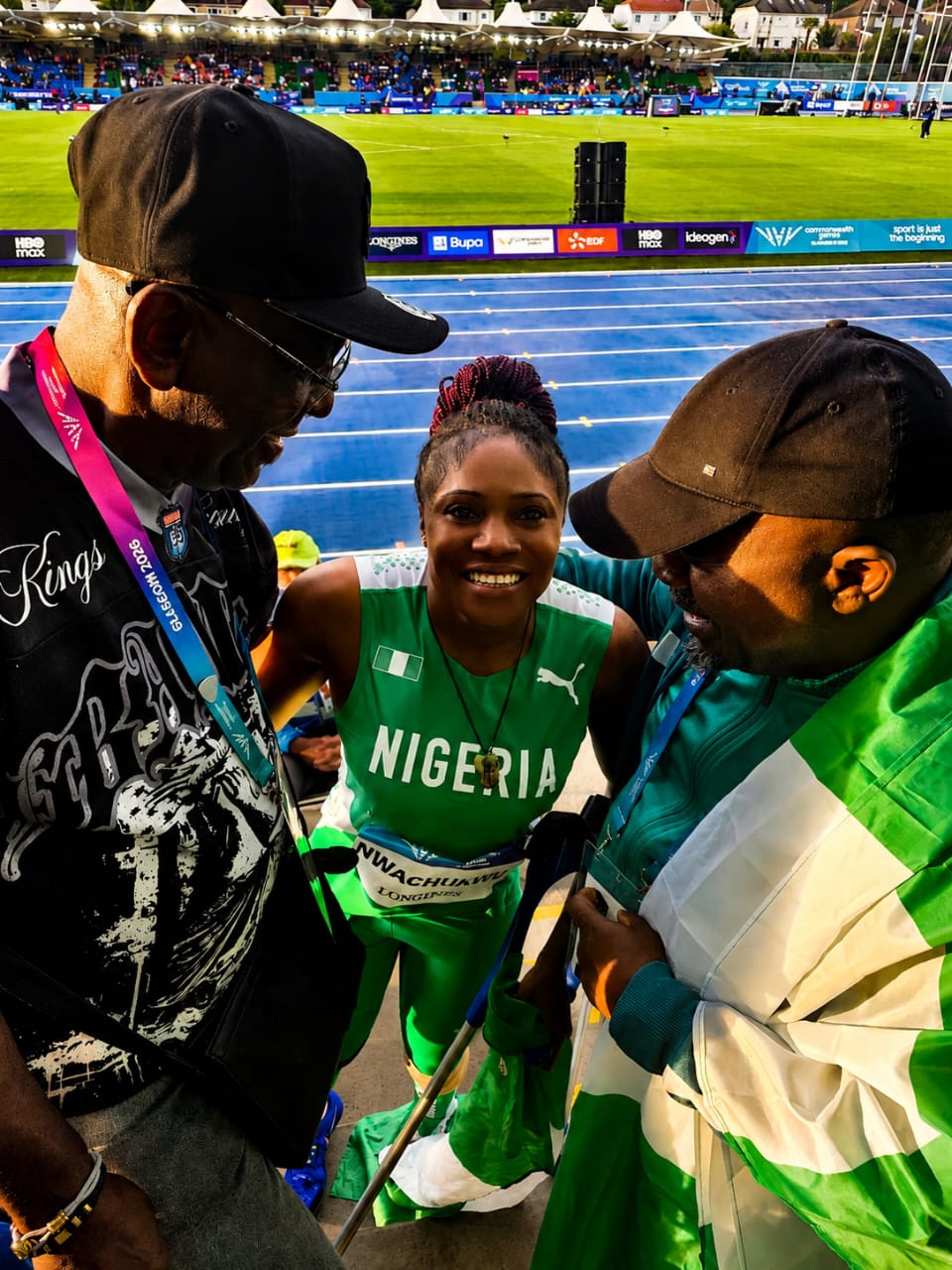
As the curtain draws on the Glasgow 2026 Commonwealth Games, Team Nigeria has every reason to return home with its head held high.
With 10 gold, 7 Silver and 7 Bronze medals, a total haul of 24 medals from a contingent of 75 athletes the country’s representatives have once again demonstrated the resilience, determination and immense talent for which Nigerian sportsmen and women are renowned.
Against the backdrop of stiff competition from some of the strongest sporting nations in the Commonwealth, Nigerian athletes have shown remarkable courage and character.
Many competed under enormous pressure, Illness, yet delivered podium finishes that have once again projected the country’s image positively on the international stage.
The National Sports Commission (NSC) sports federations, coaches and support personnel all deserve recognition for the roles they played in preparing the athletes.
More importantly, the athletes themselves deserve the nation’s gratitude. Their medals were earned through sacrifice, discipline and countless hours of training, often under conditions that fall short of international standards.
However, beyond the excitement of medal celebrations lies a more important conversation.
Glasgow 2026 should not simply be viewed as another successful outing. Rather, it should serve as an opportunity for critical reflection on the future of Nigerian sports.
One of the most encouraging stories from these Games has been the impressive showing by Nigerian swimmers. For decades, swimming has occupied a marginal position in the country’s sporting development. Limited facilities, inadequate coaching and poor investment have combined to prevent the sport from reaching its full potential.
Yet, the performances witnessed in Glasgow suggest that Nigeria possesses talented swimmers capable of competing favourably with the best when given the right support. Even where medals were not won, the athletes displayed courage, improved performances and signs of significant progress. Their outing should convince policymakers that investment in swimming is no longer optional but necessary.
The country’s continued dependence on athletics, wrestling and weightlifting for major medals is understandable because they have consistently produced champions.
Yet, successful sporting nations constantly expand their horizons. Australia, England and Canada continue to dominate because they invest across virtually every Olympic and Commonwealth discipline. Nigeria cannot expect different results while maintaining the same narrow investment pattern.
Perhaps, the greatest lesson from Glasgow is the urgent need to strengthen grassroots sports development.
Every medal won at the Commonwealth Games has its roots in years of systematic training. Champions are not produced a few months before international competitions. They are discovered in schools, nurtured in communities, developed through structured competitions and supported by qualified coaches over many years.
Unfortunately, Nigeria’s grassroots sports system remains weak. Many public schools no longer organise regular inter-house sports competitions with the seriousness they once did
State championships have become irregular, while many local government sports festivals have disappeared completely. Without a functioning talent development structure, the country continues to rely on individual brilliance instead of institutional excellence.This trend must change.
The Federal Government, through the National Sports Commission, should work closely with state governments, educational institutions and private sector partners to revive school sports nationwide.
Equally important is the need to improve sporting infrastructure. Several states still lack standard swimming pools, athletics tracks, indoor sports halls and modern training centres.
Talented athletes cannot develop their full potential without access to world-class facilities. Investment in infrastructure should, therefore, become a national priority rather than an afterthought whenever major competitions approach.
Elite sports require more than passion and patriotism. Competitors need quality nutrition, sports medicine, psychological support, insurance, regular exposure to international competitions and prompt payment of training grants and allowances.
Athletes who enjoy stability off the field are better positioned to deliver outstanding performances on it.
Administrators must embrace long-term planning instead of preparing for competitions only when deadlines approach. Federations should establish clear four-year development programmes with measurable objectives, regular talent identification exercises and performance reviews.
Transparency and accountability in the management of sports funds will also encourage greater confidence among corporate sponsors willing to invest in Nigerian sports.
As Glasgow 2026 ends, Nigerians should celebrate Team Nigeria’s achievements while resisting the temptation to become complacent. The medals represent significant progress, but they should also challenge the nation to aim even higher.
The journey now shifts towards the next Commonwealth Games, the African Games and the 2028 Olympic Games. Preparation for those competitions should begin immediately not months before departure, but now.
Every lesson from Glasgow must be carefully studied, every weakness honestly addressed and every success strategically consolidated.
Nigeria possesses the talent to become one of the world’s leading sporting nations. What has often been lacking is consistency in planning, sustained investment and deliberate talent development.
Glasgow has once again reminded us that the potential exists. The responsibility now rests with policymakers, administrators, corporate organisations and every stakeholder help to transform that potential into sustained excellence.
If the lessons from Glasgow are embraced with sincerity and purpose, Team Nigeria’s 24 medals will not merely be remembered as another successful Commonwealth Games outing. They will stand as the foundation upon which a stronger, broader and more sustainable future for Nigerian sports is built.



