…. Sex workers disguise as masseuses, masseurs
…..Illegal centres illusive of enforcement, says NIHOTOUR
……Social media fueling underground sex economy
BY TONY UDOKA and ODIGIE OKPATAKU
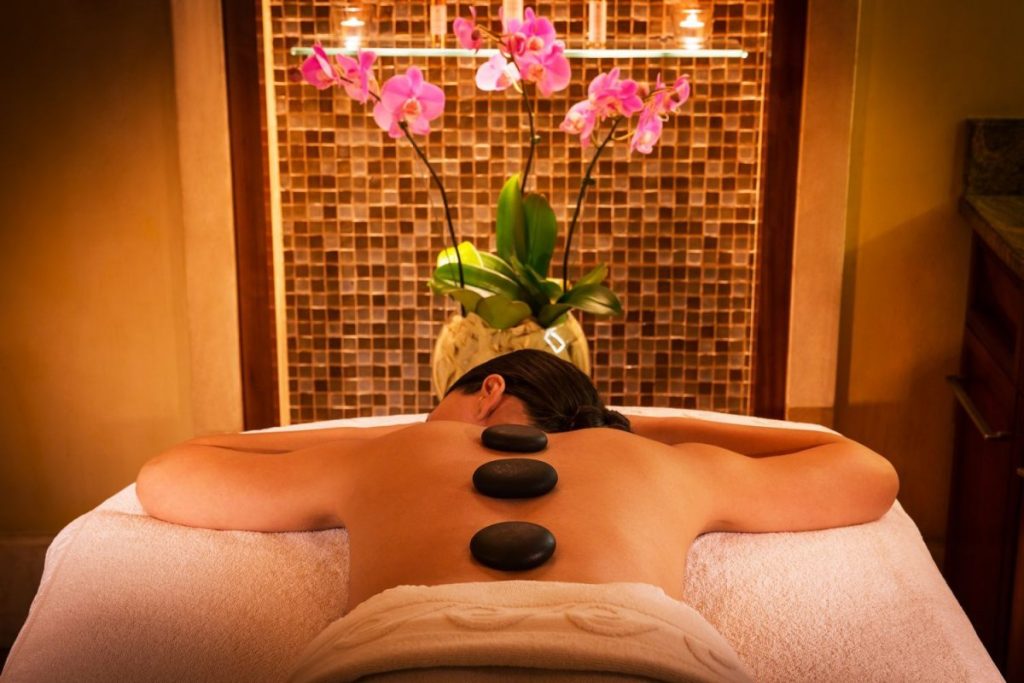
What was once considered a haven of tranquility, a place where one could shed the weight of stress and indulge in the healing hands of professional masseurs, has mutated into something far more sinister.
Across Nigeria’s urban stretch, spa and massage parlours are quietly shedding their therapeutic identity, transforming into covert brothels and, disturbingly, intersections of criminal activity. Beneath the oils and scented candles lies a thriving underworld of prostitution, crime, drug trafficking, and even kidnapping.
This disturbing evolution, laid bare by a recent investigation by the New National Star, reveals how these parlours, once symbols of wellness now serve as facades for a burgeoning vice economy, largely fueled by vulnerable youth, a weak regulatory system, and societal apathy.
At some of the spas visited by this newspaper, the owners agreed to offer ‘happy ending’ to our reporters who pretended to be clients. Some of the areas visited were Apo, Kubwa, Gwarimpa, Wuse and Central Business District in Abuja.
Gone are the days when prostitution in Nigeria was limited to red-light districts or street corners under flickering lamplight. Today’s sex work has donned a more respectable disguise: that of the wellness industry. These days, you’re more likely to find prostitutes dressed in branded robes, offering “full-body therapy” in tastefully lit massage rooms.
This repackaging has birthed a disturbing sub-industry often euphemistically described as “sex massage therapy.” But make no mistake, this is prostitution camouflaged in scented oils and sterile linens. The criminal undercurrent also runs deep. These massage centres are not just fronts for transactional sex; many doubles as drug dens and recruitment hubs for more serious crimes.
A revealing qualitative study by researchers Sunday Chike Achebe and Chinedu Emmanuel Nnatuanya interviewed 42 young prostitutes across Awka, Warri, Owerri, and Benin City. Their findings painted a damning portrait: an alarming number of these sex workers moonlight as drug couriers and, shockingly, some confessed to being involved in kidnapping rings. Even more concerning, about 75% of them are students, a clear signal that financial desperation is driving many into the murky waters of illicit survival.
Prostitution in the digital age isn’t what it used to be. Today’s sex workers no longer wait on roadsides alone; No, that is not for those with demure or steeze. They now build portfolios and post curated images on social media, advertise services with coded languages, and transact business through Facebook, WhatsApp, X and Instagram. For many of these young women, and men posing as massage therapists, this is simply a clever rebrand. They operate out of upscale spas, rented apartments, or even as mobile professionals, offering “in-call” or “out-call” services.
Some parlours go a step further by displaying pictures of their “staff” at hotel receptions or in online directories, complete with contact information. The message is subtle but clear: there’s more on offer than just deep tissue relief.
These are not isolated incidents but a widespread trend. In cities like Lagos, Abuja, Port Harcourt, and Benin, the promise of a “happy ending” has become an open secret. The wellness sector, which should be grounded in ethics and professionalism, has been hijacked by market demand for illicit thrills.
This isn’t just a moral issue, it’s a security and public health crisis. The blurred lines between spa therapy and prostitution make regulation nearly impossible. Most of these illicit parlours aren’t even registered, let alone inspected. They operate underground, protected by anonymity, and often shielded by corrupt officials.
Weak legal frameworks haven’t helped either. Although Articles 296 and 506 of the Penal Code touches on aspects of prostitution and deception, enforcement has proven toothless. Law enforcement officials, overburdened and underfunded, are often unwilling or unable to act. Worse still, there are widespread allegations that some officers accept bribes or act as informants and protectors for these centres.
Even the National Institute for Hospitality and Tourism (NIHOTOUR), which is responsible for regulating and certifying operators in the hospitality industry, admits to being overwhelmed. A senior official, who asked not to be named, lamented that many spa operators deliberately bypass registration, choosing instead to run shadow businesses.
“Yes, NIHOTOUR registers and certifies hospitality practitioners, including spa and wellness providers. But these illegal centres are elusive. The demand for sex services has given rise to spas that are little more than brothels with reception desks. It’s a real problem, and we’re doing what we can, but the system itself is broken.
“Since the beginning of time, the need to buy and sell sex has always been high and many would devise means to perpetrate their business. This is why we now have those who were hitherto standing on the streets soliciting for sex, now repackage their trade as massage parlours. No training, or professionalism is adhered to because they know their goal. A lot of elites go there to do their business because they value their privacy. Recently, the news of assaults has been all over the place but people will still put their lives on line just to get illicit pleasure. The situation is really alarming,” he lamented.
For legitimate massage therapists however, this climate has created a toxic working environment. Mrs. Glory Afangide, a certified therapist and the founder of Glo Spa and Massage in Kubwa, recounted harrowing experiences that illustrate the danger faced by professionals in the field.
“I am a certified professional, and I run a strictly professional outfit. But I still get asked for ‘happy endings’ almost every day. Even though I put disclaimers on all my social media pages and flyers, people assume every massage therapist is secretly a sex worker,” she told New National Star.
Glory shared one particularly disturbing incident: “A man came in saying he saw our flyer online. Midway through the massage, he started trying to turn over repeatedly. When I finally asked him to face up, I noticed he had an erection. He offered me an extra N20,000 if I would ‘finish the job.’ I told him to leave immediately. He got aggressive, and I had to call for help. It was terrifying.”
Her story is not unique. Many licensed therapists, especially women, face similar situations. Some are groped. Others are physically assaulted. A few, fearing for their safety, have quit the profession altogether.
The line between harassment and sexual assault is easily crossed in these settings. Recently, a content creator named Angelica Kelechi sparked social media outrage after accusing a masseur at Sayria Lagos Spa which is owned by former BBNaija star, Khloe Abiri, of sexually assaulting her. According to Angelica, the man inserted his fingers into her private parts during a session.
She said she reported the incident to Khloe, only to be dismissed with a disturbing comment: “These things happen in massage, to be honest.”
Angelica took her story to the police, but the response was equally appalling. Officers reportedly told her she had no business going to a spa as a “small girl.” Instead of investigating the claim, they implied she had invited the assault.
The public response was fierce. Social media platforms exploded with debates about consent, professionalism, and the pervasive culture of victim-blaming. Some sided with Angelica, demanding accountability and regulation. Others, disturbingly, accused her of fabricating the story for clout.
Similarly, another lady on TikTok said she went to a massage parlour and was massaged by a sturdy fellow who kept on touching her erotically. According to her, she was initially taken aback but had to yield to the pleasures the expert masseur was giving her. She concluded in her video that by the time the masseur, who knew exactly what he was doing, had finished arousing her, she was literally begging him to have her. What the guy said shocked her.
“You won’t believe that he demanded N200,000 before he would give me the ‘happy ending’. On hearing the amount, I just packed my things and fled. Those of you like men with biceps at massage parlours are playing with fire. Avoid them totally,” she advised.
This is not just about individual spas or clients with bad intentions. It’s about a systemic problem, one that implicates regulatory failure, youth unemployment, exploitation, and moral decay. These spa centres are fast becoming nodes in a vast criminal network that preys on desperation and fuels addiction, human trafficking, and organised crime.
Many of the young women involved are lured by promises of quick money. Some are trafficked from rural communities, while others are coerced or blackmailed into continuing against their will. In some documented cases, victims were locked in spa buildings for days, forced to entertain clients under threat of violence.