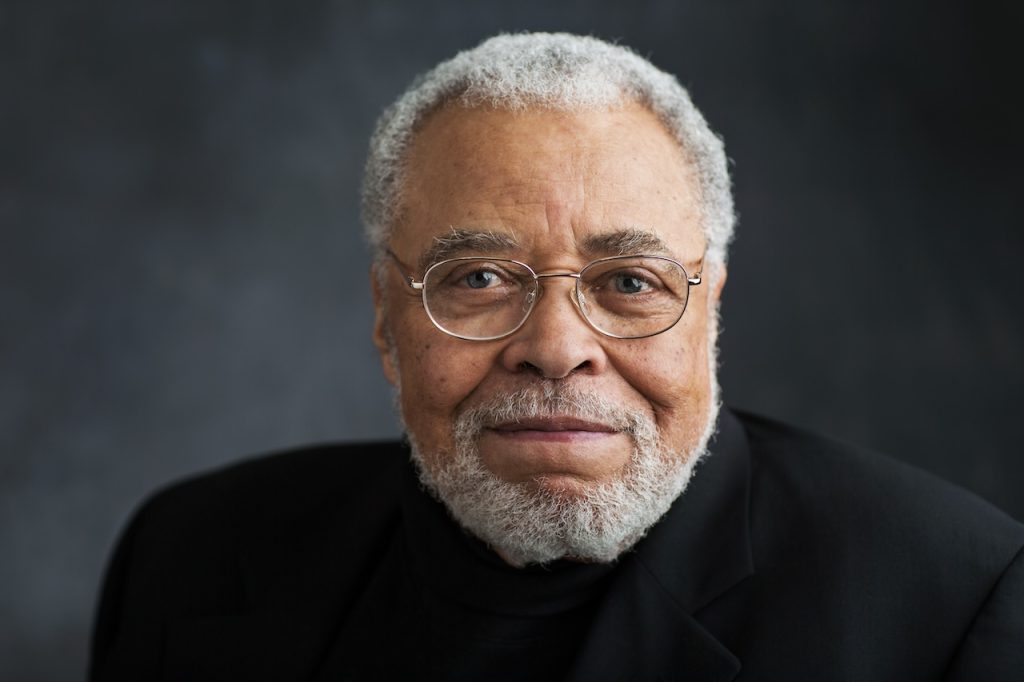
James Earl Jones, an American stage and film actor with versatility and awards, passed away on Monday, according to his reps. Jones was best known for portraying the legendary “Star Wars” villain Darth Vader with his powerful, deep voice. His age was ninety-three.
From his interpretations of August Wilson and Shakespeare’s plays to his unforgettable voiceovers in the popular space saga and as Mufasa in the beloved Disney film “The Lion King,” Jones won over audiences with his ability to represent both the common person and the supernatural.
He received an honorary Oscar for lifetime achievement, two Emmys, a Grammy, and three Tony awards, including a lifetime award.
After Sidney Poitier, he was the only other Black male to receive an Academy Award nomination for best actor in 1971.
All of these honors were earned with difficulty since Jones, who was born on January 17, 1931, in a segregated Mississippi, had to overcome a childhood stutter that frequently prevented him from speaking at all.
“Stuttering hurts.” In 2010, Jones told the Daily Mail, “I used to try to read my lessons in Sunday school, and the kids behind me would just fall on the floor laughing.”
At the encouragement of an English teacher, he began reciting his own poetry in order to develop vocal control. This was important because Darth Vader, who would eventually terrorize millions of people in “Star Wars,” needed this voice.
Although David Prowse donned Vader’s black cape and intimidating face mask, Jones provided the voice, radiating the character’s wicked force. Jones did not physically play the role.
In a crucial battle sequence in “The Empire Strikes Back,” Vader declares to Mark Hamill’s character, Luke Skywalker, “I am your father.” It is a turn that will go down in movie history.
“Star Wars” creator George Lucas praised Jones in 2015 at an event in New York, saying, “He created, with very little dialogue, one of the greatest villains that ever lived.”
Broadway
At the age of five, Jones relocated from Mississippi to Michigan, where his maternal grandparents reared him.
He didn’t consider an acting profession at first; he was studying to be a doctor before switching to drama and graduating from the University of Michigan.
“I considered becoming a soldier even before I started acting classes,” Jones admitted to PBS public television in 1998.
“And only after my service was almost over did the thought of becoming an actor occur to me.”
Jones joined the US Army after graduating from college and then relocated to New York to pursue his acting career. To make ends meet, he worked as a janitor at night.
In 1958, he debuted on Broadway in “Sunrise at Campobello” at the Cort Theatre, which became the James Earl Jones Theatre in 2022.
In addition to taking on well-known Shakespearean roles on stage, like as Othello and King Lear, he also appeared in a number of Wilson pieces that explored Black America’s history.
Jones exuded strength and dominance on stage. Director Kenny Leon remarked of him, “He embodied the elegance and dignity of African American men.”
However, the silver screen ultimately came calling.
– Admirals and kings –
Jones’ film debut came in 1964 as Lieutenant Zogg in Stanley Kubrick’s Cold War satire “Dr Strangelove.”
Military roles would crop up throughout his career, notably Admiral Greer in three films about Tom Clancy’s beloved character Jack Ryan (“The Hunt for Red October,” “Patriot Games,” “Clear and Present Danger”).
As for kings, he has played a few — King Jaffe Joffer in the Eddie Murphy comedy “Coming to America” (1988) and Mufasa, Simba’s father, in “The Lion King” (1994).
His first major award came in 1969, a Tony for best actor in a play for “The Great White Hope”, in which he portrayed troubled but gifted boxer Jack Jefferson — based on the real-life Jack Johnson, the first Black world heavyweight champion.
Jones revived the role in a film adaptation of the play — earning his sole Oscar nomination and a Golden Globe award for the performance. In 2011, he won an honorary Academy Award.
Even into his 80s, Jones was a force on Broadway, starring opposite Angela Lansbury in “The Best Man” in a 2012 revival — earning another Tony nomination in the process — and with Cicely Tyson in “The Gin Game” in 2015.
And for years, he greeted viewers of the cable news network CNN with the simple phrase: “This is CNN.”
– ‘Darker voice’ –
But his most famous role was ultimately the one for which he never appeared on screen.
Lucas eventually chose between Jones and film legend Orson Welles for the role.
“George thought he wanted a — pardon the expression — darker voice. So he hires a guy born in Mississippi, raised in Michigan, who stutters and that’s the voice and that’s me,” Jones told the American Film Institute in 2009.
Jones initially did not want to be credited for the film, as he felt his voiceovers were simply part of the movie’s special effects, but eventually conceded, and went on to voice the character in multiple films, television series and video games.
In his 90s, he stepped back from the role. But he signed over the rights to his voice recordings to a start-up that is working with Lucasfilm to preserve and recreate it for future projects using artificial intelligence.
The technology was used in the Disney+ mini-series “Obi-Wan Kenobi” in 2022, according to Vanity Fair.
Jones’ second wife Cecilia died in 2016. They had one son.