

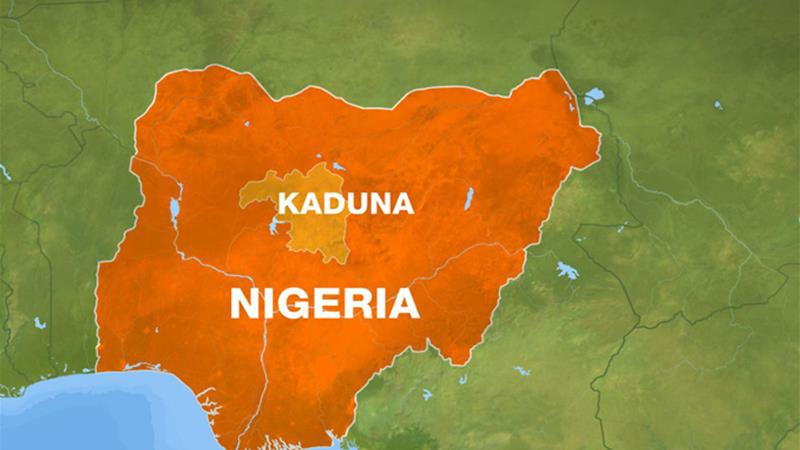
Kaduna State has approved ₦144.55 billion for its Ministry of Health in 2026,
making it the third-largest allocation in the entire state budget — and the most
internationally financed.
A detailed reading of the approved estimates revealed that the state has
successfully assembled a coalition of global lenders and grant-makers, each
funding a distinct layer of the health system, from the village clinic to the
specialist operating theatre.
The headline figure alone places Kaduna among the highest-spending states on
health in Nigeria’s north.
But the composition of the funding is what truly distinguishes this budget from
previous years. Rather than relying solely on state revenues or federal transfers,
Kaduna’s Ministry of Health has structured its 2026 programme around no
fewer than five international financing sources — the World Bank, the Islamic
Development Bank, the Global Fund, the Basic Health Care Provision Fund,
and bilateral grants — each targeted at a specific gap in the health system.
The most eye-catching external financing commitment is a loan from the
Islamic Development Bank for the construction and full equipping of a brand
new 300-bed specialist hospital valued at ₦2.01 billion. The facility, to be built
and fitted to international standards, would significantly expand Kaduna’s
tertiary care capacity and reduce the medical tourism that currently drains
patient spending out of the state.
Running in parallel is the World Bank’s IMPACT Project — Improving Primary
Health Care Accountability and Capacity in Target States — which channels
₦7.14 billion into the Kaduna State Primary Health Care Board. The project
targets systemic reform at the grassroots level: training community health
workers, revamping supply chains for medicines and vaccines, and
strengthening the data systems that tell health managers which clinics are
performing and which are failing.
The Global Fund, which finances disease programmes across low- and middle-
income countries, is present in Kaduna on three separate fronts: ₦435.21
million for a State Malaria Elimination Programme, ₦161.12 million for
tuberculosis, Buruli ulcer, and leprosy control, and ₦135.19 million for
neglected tropical diseases including onchocerciasis — the parasitic infection
that remains endemic in parts of Kaduna’s rural south. The combined Global
Fund envelope of ₦731.5 million targets diseases that still kill and disable
Kaduna citizens in large numbers every year, yet attract little public attention.
A World Bank grant for a dedicated Emergency Medical Services and
Ambulance System — a ₦90.34 million investment under the Ministry of
Health headquarters — rounds out the external financing picture. Kaduna
currently lacks a functional prehospital emergency response system, and the gap
costs lives every time a road accident or obstetric emergency occurs beyond
walking distance of a health facility.
Within the ministry’s ten-agency structure, the Kaduna State Primary Health
Care Board receives the single largest allocation: ₦62.14 billion, or 43 percent
of the entire health budget.
tOf this, ₦53.29 billion is capital expenditure — meaning more than half of all
health capital spending goes to the frontline clinics that most Kaduna residents
will ever actually use.
This is a deliberate political choice: rather than concentrating investment in
flagship hospitals in Kaduna city, the budget pushes resources downward to
wards, health posts, and local government-level facilities.
The Barau Dikko Teaching Hospital in Kaduna, the state’s premier tertiary
referral centre, receives ₦15.19 billion in the 2026 budget — including ₦8.79
billion in capital expenditure for infrastructure and equipment upgrade.
What distinguishes Barau Dikko from every other agency in the health portfolio
is that it is also the ministry’s primary revenue generator: its internally
generated revenue target for 2026 stands at ₦1.01 billion, representing 57
percent of the entire ministry’s IGR target of ₦1.76 billion.
The hospital collects fees, specialist consultation charges, and diagnostic
revenues that partially offset its operating costs — a model that points toward
greater financial sustainability if the capital upgrades planned for 2026 drive
higher patient volumes and service quality.
The Kaduna State Contributory Health Management Authority, KADCHMA,
which administers the state’s health insurance scheme, receives ₦5.73 billion —
including a ₦1.06 billion capital grant and a ₦683.48 million allocation from
the Federal Government’s Basic Health Care Provision Fund.
KADCHMA is the mechanism through which Kaduna intends to move citizens,
particularly informal workers and the urban poor, out of out-of-pocket
healthcare spending and onto a prepayment system.
Its 2026 funding suggests the state is serious about scaling uptake.
The Kaduna State Health Supplies Management Agency, KADHSMA, which
manages procurement and distribution of medicines, vaccines, and medical
consumables across the state, is allocated ₦8.14 billion — including ₦7.65
billion in capital expenditure.
Chronic stock-outs of essential medicines at primary care facilities have long
been identified as one of the biggest single drivers of poor health outcomes in
Kaduna.
The investment in KADHSMA’s supply chain infrastructure is, in effect, an
attempt to address the gap between what clinics are supposed to offer and what
patients actually find when they arrive.
The health budget creates direct commercial opportunities across several
industries. Construction and engineering firms will compete for hospital and
clinic building contracts.
Pharmaceutical distributors, medical equipment suppliers, and cold-chain
logistics operators will pursue KADHSMA procurement.
Health technology companies offering hospital management systems,
ambulance dispatch software, or electronic health records can position
themselves against a ministry actively building digital infrastructure.
And the growing health insurance base managed through KADCHMA will over
time create demand for complementary financial services — wellness products,
supplementary cover, and employer health packages.
The broader story, however, is about what Kaduna’s health budget tells
investors about the state’s governance trajectory.
A government that can simultaneously satisfy the fiduciary requirements of the
World Bank, the Islamic Development Bank, and the Global Fund — all in the
same fiscal year — is a government that has built meaningful institutional
capacity.
For businesses evaluating long-term exposure to Kaduna’s economy, that signal
may matter more than any individual line item.



