

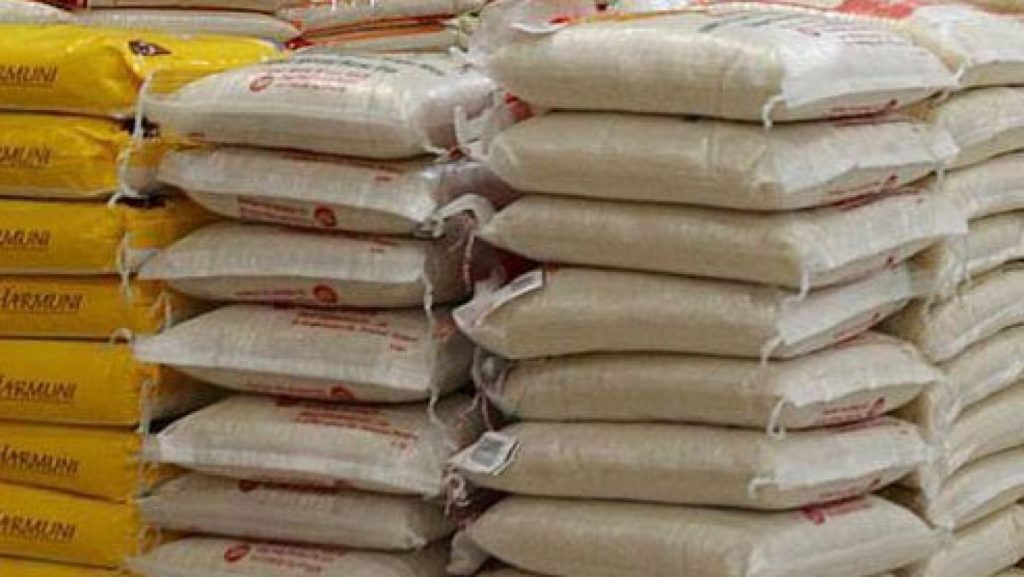
Notably, domestically produced Nigerian rice is more affordable than its international competitors, and it comes in a range of container sizes to satisfy consumer preferences.
Nigerian consumers can choose from a variety of rice package sizes, including 50kg, 25kg, 10kg, and 5kg bags, to suit their specific needs.
Thirteen custard paint rubber buckets, weighing roughly 4 kilogram apiece, are included in a typical 50kg package. Moreover, this size corresponds to 33 mudu or 54 derica, giving customers a way to measure and buy rice according on their need.
The price difference between domestic and foreign brands of rice is substantial. A 50 kg bag of foreign rice costs, on average, N60,000 as of March 20, 2024, whereas a 25 kg half-bag costs N40,000.
In contrast, Nigerian rice reflects the premium on locally sourced grains, with a 50kg bag costing N70,000 and a 25kg bag costing N35,000.
Furthermore, the current market value of a paint bucket is approximately N7,500, while a single derica of rice is valued at N1,800.
There are many different rice brands available in Nigeria, all competing for the favor of consumers. Among the well-known brands are Cap Rice, Uncle Ben’s Rice, My Food, Mama Gold, My Choice, Royal Stallion, and Mama’s Pride.
These brands add to the wide range of options accessible to Nigerian customers by providing varying quality levels and price ranges.
The leading rice-producing states in Nigeria contribute significantly to the changes in the country’s rice market, which are caused by a number of variables.
A staple grain in Nigeria, rice prices vary widely because of factors like market demand, transportation costs, and production volume.
Factors Affecting the Price of Rice
1. Production Volume: A key factor in setting the market price for rice is the yield from states that produce the crop. While scarcity brought on by subpar harvests might raise prices, higher output usually results in lower pricing.
2. Logistics and Transportation: The price of rice is determined by the expense of transporting the grain from farms to markets. Poor road conditions and longer transit routes can greatly raise these expenses.
3. Market Demand: Rice is always in high demand because it is a basic food. Seasonal peaks, like those that occur around holidays, might further deplete the supply and drive up costs.
4. Importation: Costs are impacted by import tariffs and exchange rates when local output of rice is augmented by imports.
5. Government Policies: The price of rice can be influenced by tariffs, subsidies, and assistance for regional producers. The goal of policies encouraging domestic rice production is to stabilize prices and lessen dependency on imports.
States That Produce the Most Rice
Several states dominate Nigeria’s rice producing landscape and are well-known for making significant contributions to the country’s rice supply:
– Kebbi State: Widely regarded as Nigeria’s center for rice production, Kebbi tops the country in output, partly because of public and private sector programs like the Anchor Borrowers’ Program.
– Ebonyi State: renowned for its superior local rice, Ebonyi has made large investments to improve its rice producing capacity, which has benefited its local economy and reduced prices.
– Benue State: Known as the “Food Basket of the Nation,” Benue’s ideal agricultural climate makes a significant contribution to Nigeria’s rice production.
– Anambra State: Anambra has seen an increase in output thanks to attempts to increase rice production, especially with the well-known Anambra Rice brand.
overlay-shrewdcloseNasarawa State’s logo: Thanks to its advantageous location close to important markets like Abuja, Nasarawa is a major player in the rice producing industry.



