

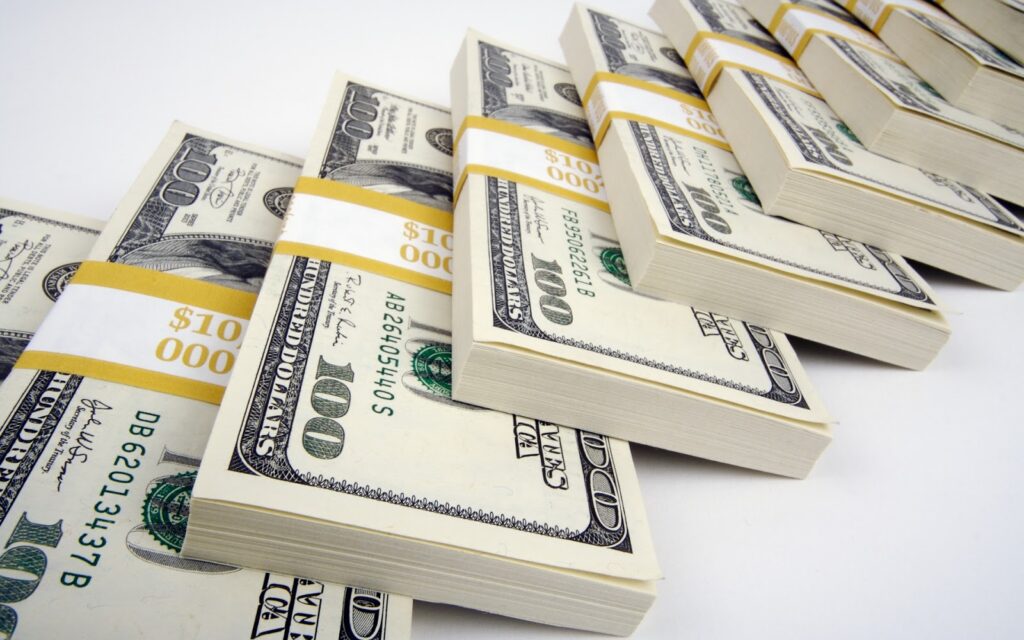
Nigeria’s foreign reserves continue to reduce despite several investor friendly policies put in place by the new government. According to figures obtained by our source, Nigeria’s foreign exchange reserves had fallen by over $658.3 million in the first 18 days of June under President Bola Tinubu.
As of June 16, 2023, the country’s foreign exchange reserves stood at $34.6 billion, compared with $35.25 billion on May 28, 2023, the data showed.
The last time Nigeria’s reserves were at this low level was about two years ago, on Friday, July 9, 2021 when the reserves were at $34.59 billion.
Experts observed that foreign reserves decline under Tinubu’s administration was a fall-out of the downward trend observed since May 2023, at the end of his predecessor, Muhammadu Buhari’s term. According to an expert analysis, in May, the reserves were down by N684.9 million. The month began with reserves at $35.27 billion and ended at $35.09 billion.
Year to date, Nigeria’s foreign reserves had experienced a decline of 6.5 percent, equivalent to $2.4 billion, from $37.08 billion on December 31st, 2022.
However, experts predict that the recent decision of the Central Bank of Nigeria to float the Naira will ease stress on Nigeria’s foreign reserves. This is because the CBN will no longer be under less pressure to pump forex into the market or any obligation to meet importers’ demand as all transactions will now be done through the Investors and Exporters (I&E) window, where the exchange rate will be determined by market forces.
Nigeria’s foreign reserves is made up of foreign banknotes, deposits, bonds, treasury bills and other foreign government securities.



