Joel Ajayi
For millions of smallholder farmers in Nigeria, a single flood can erase a season of hard work in hours. It is this risk that agricultural insurance firm, Pula, has spent the last 12 years trying to solve across Africa.
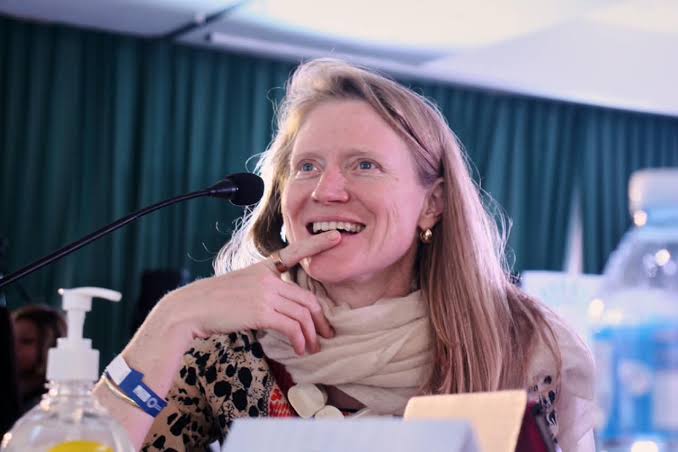
Rose Goslinga, Co-founder and President of Pula, who was in Nigeria this week, says while the company has made inroads, it is barely scratching the surface in a country of over 200 million people.
Speaking in an interview in Abuja, Goslinga traced the genesis of the company to a simple but devastating reality for African farmers.
“So Pula is a company that started about 12 years ago and we started working on a problem of climate risk. So the risk that farmers do plant but at the end of the season, not to any fault of their own, there could be a drought, there could be flooding, like lots of flooding.
And you may have done everything right. You may have planted the seed, you may have worked your farm, but if there is a flood you could lose everything,” she said.
She explained that the company’s model is built on data that allows insurers and reinsurers to underwrite those risks.
“We knew that there was enough data to protect those farmers, to get those risks underwritten by insurers and reinsurance companies. And so we started with that idea to ensure those farms,” she said.
According to her, Pula now operates in 13 African markets, and in Nigeria it partners with leading underwriters including Leadway and AXA Mansard to insure farmers against flood and other climate risks and to pay out when losses occur. The company has recently expanded beyond insurance into using its data to give farmers market access, as seen in its work with cocoa farmers in Cross River State.
On the general apathy towards insurance in Nigeria, Goslinga admitted the perception is a major hurdle.
“Farmers will think that insurance is for rich people with cars, right? That’s how they think about insurance – is for people who own a car, people who are better off. We think about insurance as something that farmers may not necessarily want but that they definitely need,” she said.
To overcome this, she said Pula embeds insurance into services farmers already seek out – credit, seeds and fertilizers – through aggregators.
“So we work together with organizations that reach these farmers, whether they are farm aggregators. In Nigeria we work together with Babban Gona, with AFEX, with Thrive Agriculture, those organisations that are giving them loans and we package insurance together with those loans because when the rains come they want seeds, they want fertilizers, they’ll not necessarily ask for insurance but if they lose their crop later on, the people who gave them seeds and fertilizers on credit will want those investments to be protected and so that is how we reach them,” she stated.
She added: “We might also work with the Bank of Agriculture and with the Bank of Agriculture we embed insurance into the credit that Bank of Agriculture gives to farmers and to the aggregators. So we are very much a partnership oriented organization to partner with farmers to do so.”
When asked about the scale of impact in Nigeria, Goslinga was candid about the challenge of size.
“So I would say in Nigeria we’ve probably, it’s still small because you’re a huge country. So even if you reach a million farmers, we’re still talking about 2-3% of the population, right? It’s a huge country. So I would say we’ve reached about… I think our largest, the most successful year we probably had up to a million farmers or something like that,” she said.