

BY SAM OTUONYE
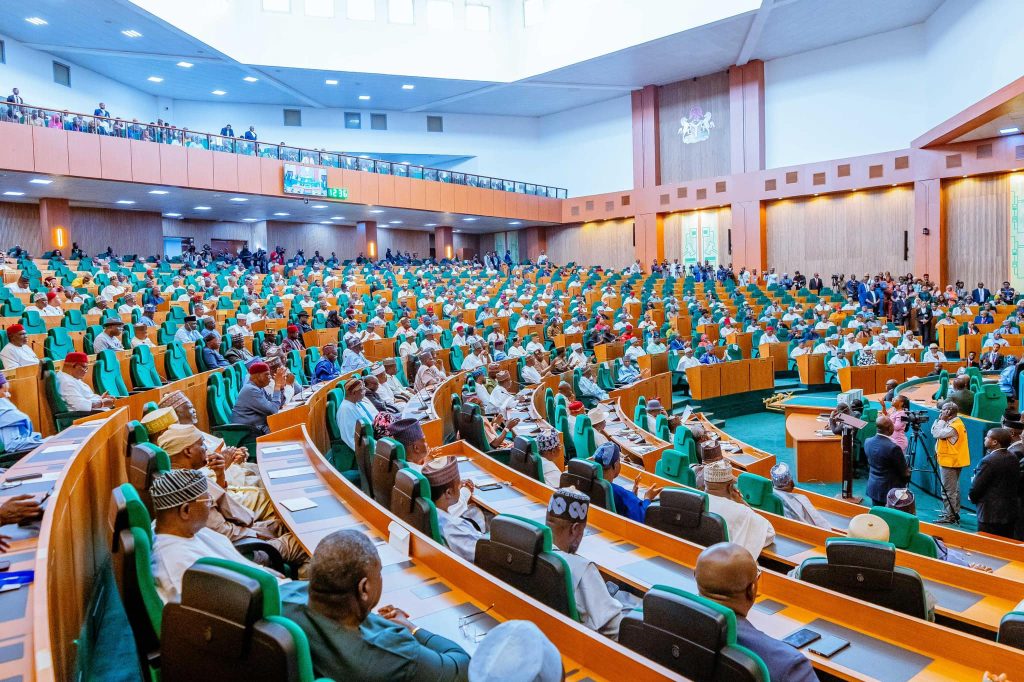
The House of Representatives has stepped down consideration of the reports on the 2026–2028 Medium-Term Expenditure Framework (MTEF) and the Fiscal Strategy Paper (FSP) following extensive debate that exposed disagreements over key macroeconomic assumptions, particularly crude oil benchmark prices and their implications for government revenue.
The reports were presented by the chairperson of the Joint Committees on Finance and National Planning and Economic Development, James Faleke, during Wednesday’s plenary.
Shortly after he laid the documents, the House dissolved into the Committee of Supply to consider the findings and recommendations of the joint committees.
However, confusion over the figures proposed in the framework stalled deliberations.
The joint committee had recommended that the projected crude oil benchmark prices of US$64.85, US$64.30 and US$65.50 per barrel for 2026, 2027 and 2028, respectively, be reviewed downwards to US$60 for 2026, US$65 for 2027 and US$70 for 2028.
The recommendation, according to the committee, was informed by global geopolitical tensions in Europe and the Middle East, as well as the volatility of international oil prices.
This recommendation immediately drew concern from the Speaker of the House, Tajudeen Abbas, who warned that altering the crude oil benchmark would have far-reaching consequences for every other figure contained in the framework.
He questioned whether the committee had sufficiently accounted for how reduced oil prices and possible production adjustments would affect total projected revenue and the overall size of the proposed 2026 budget.



