

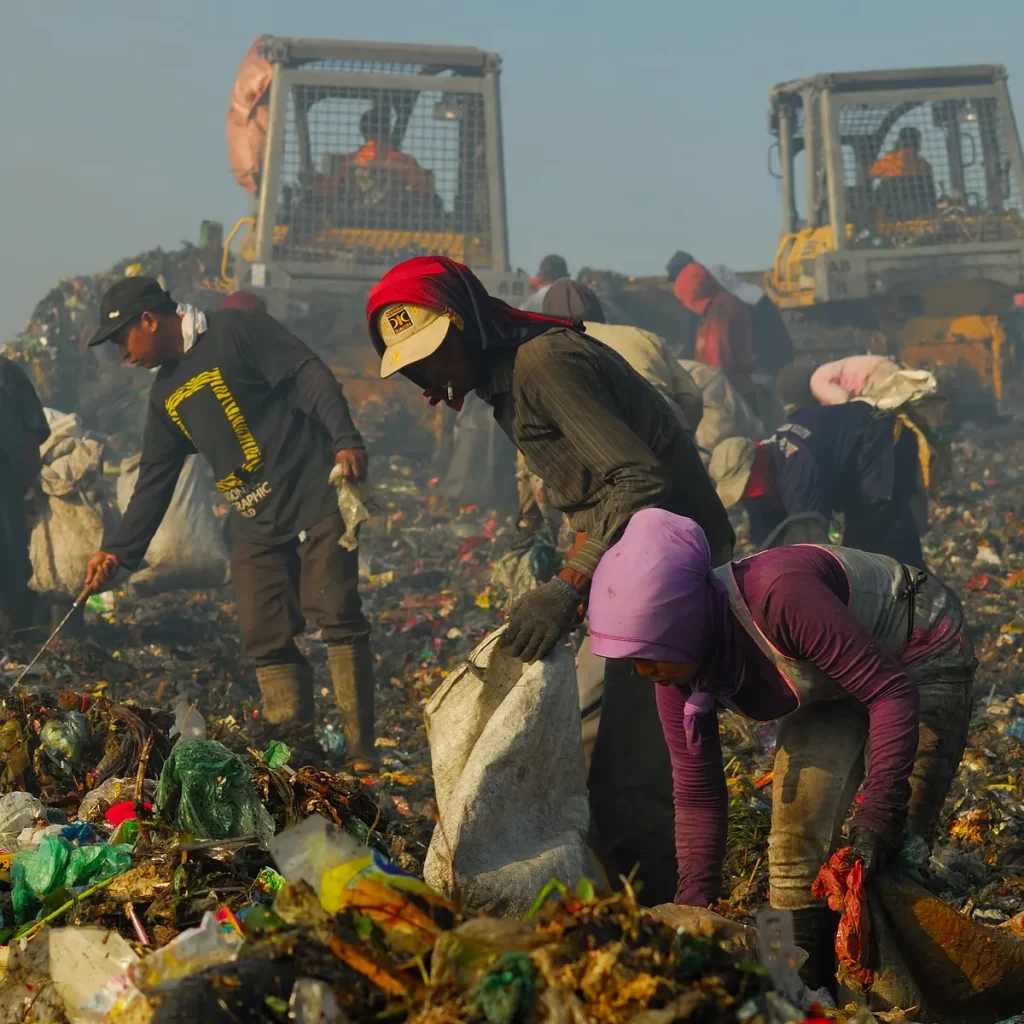
Africa’s seven richest men own more wealth than the 700 million people who make up the poorest half of the continent, according to a report by Oxfam, as powerful figures, political leaders, and global elites gather in Davos, Switzerland, for the annual World Economic Forum (WEF).
The paper, which focused on global power and inequality, also mentioned that billionaires are major shareholders or CEOs of seven out of ten of the largest companies in the world, some of which have a considerable presence in Africa.
According to Oxfam, the aggregate value of these firms is $10.2 trillion, which is over four times the GDP of all of Africa.
Acting Country Director of Oxfam Nigeria, Hamza Tijani, presented the report to media in Abuja yesterday. According to the poll, billionaires’ wealth has increased by $3.3 trillion since 2020, rising at a rate three times faster than inflation.
According to the paper, throughout the last three years, there has been a significant increase in extreme wealth, but the degree of poverty worldwide has not decreased from pre-pandemic levels.
It went on to illustrate how the five richest men in the world have more than quadrupled their wealth to $869 billion since 2020, while the world’s poorest people—roughly five billion people—have lost money.
The research cautioned that the widening wealth disparity will probably worsen and result in the world’s first trillionaire within a decade.
The research also issued a warning, stating that it will take another 229 years to alleviate global poverty if present trends continue.
Oxfam said that since the COVID-19 epidemic, there has been a sharp rise in inequality, with the richest 1% of people on the planet owning 59% of all financial assets worldwide, including stocks, bonds, and shares in privately owned companies.
According to the report, an equitable wealth tax on African millionaires and billionaires, with rates of two percent on net wealth exceeding $5 million, two percent on net wealth exceeding $50 million, and five percent on wealth exceeding $1 billion, could yield an annual income of $11.9 billion, almost sufficient to cover the humanitarian needs of the United Nations for eastern and southern Africa in 2023 ($12.5).
It stated: “The richest person in Africa, Aliko Dangote, has a ‘near-monopoly’ on cement in Nigeria.” Owning Dangote Cement, he has seen the company achieve some of the best cement profit margins globally—45%—while paying 1% in taxes over a 15-year period.
“In Nigeria, Aliko Dangote owns more wealth than the bottom half of Nigerians (109 million people). The richest two men in the nation, Dangote and Abdulsamad Rabiu, have seen their fortunes rise by 29% since 2020, while the other 99 percent have seen theirs decline.
The Nigerian Investment Promotion Commission announced in December 2023 that it has granted tax vacations to 34 businesses that were requesting tax breaks and exemptions under the Industrial Development Income Tax Act of 2023. Among the enterprises that benefited from this decision are Jigawa Rice Limited, Lafarge Africa Plc, Honeywell Flour Mills Nigeria Plc, Dangote Sino Trucks West, Africa Limited, and Stallion Motors Limited.
The research stated that these businesses can enjoy three to five years without paying corporate income taxes because of the tax incentives provided by the pioneer status system, which are intended to encourage and boost their growth.
According to the statement, this program has produced a total of almost five trillion Naira over time, or 18.519 percent of Nigeria’s legally passed 2024 budget.
The primary cause of poverty is not a lack of resources, but rather the 1% who control the majority of the available resources. Furthermore, the government has not made intentional investments in vital industries to narrow the inequality gap. As a result, poverty and inequality have worsened as a result of this circumstance, according to Tijani.
The study urged governments to swiftly and drastically close the wealth gap between the ultra-rich and the general public, but it also contended that the strongest defense against excessive corporate dominance is a vibrant and functional state.
It also emphasized how important it is for the Senate to keep up its efforts to modify the Federal Inland Revenue Service (FIRS) Act to control the procedures involved in awarding business tax breaks.
To reduce revenue loss to corporate incentives, Nigerian firms and investors are offered import duty exemptions and investment incentives.
Incentives must be awarded in a transparent manner that promotes public discussion of opportunity cost factors. Public discussion and parliamentary scrutiny should be applied to tax spending. To increase understanding and confidence, we implore the government to set up a dashboard where the general public may view statistics on tax advantages. The study also stated that to demonstrate a commitment to accountability and openness in incentive management, the National Assembly should immediately urge the Federal Government to release the tax expenditure report.
In response, Auwal Rafsanjani, Executive Director of the Civil Society Legislative Advocacy Center (CISLAC), accused the governing political elite of being to fault for Nigeria’s growing wealth divide.
He claims that the nation’s recent events—particularly the purported scandal at the Ministry of Humanitarian Affairs—are evidence of the governing class’s lack of dedication to and interest in bridging the gap between rich and poor.
Hamzat Lawal, the CEO of Connected Development (CODE), deemed the N5 trillion loss resulting from tax incentives intolerable.


