

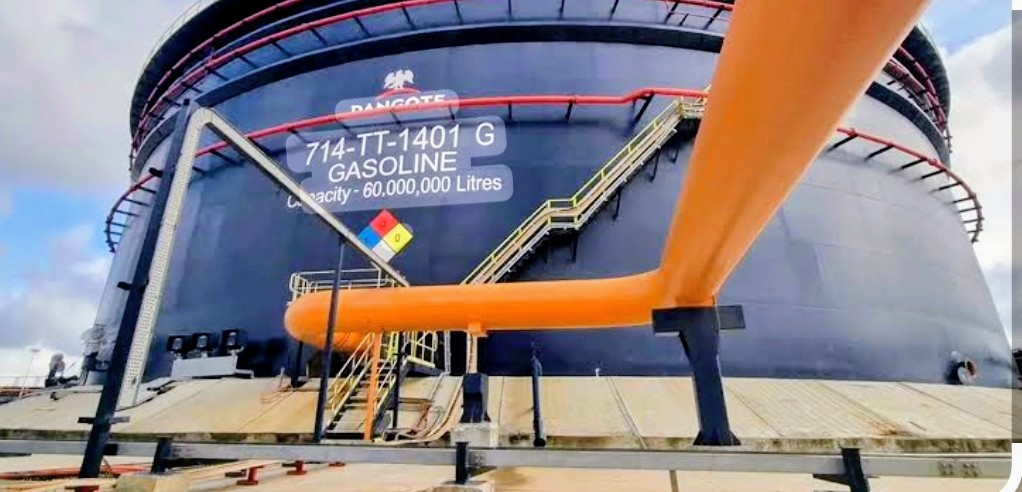
The Securities and Exchange Commission (SEC) has come down hard on individuals or organisations marketing and promoting a purported Initial Public Offering (IPO) by Dangote Petroleum Refinery & Petrochemicals FZE.
SEC, therefore, warned the unsuspecting public that no application for such an offer has been filed with or approved by the Commission as the apex capital market regulator in the country.
In a public notice on Tuesday, the Commission said it had become aware of advertisements, flyers, digital banners and targeted electronic mails circulating on social media platforms and investment channels concerning a supposed securities offering by the refinery.
The SEC expressed concern over the involvement of some registered Capital Market Operators (CMOs) in what it described as an “unwholesome and manipulative exercise” of actively soliciting advance subscriptions for an offering that has not been presented to the Commission.
According to the apex capital market regulator, “No application for the registration of an IPO or public offer of shares of the Refinery has been filed with or approved by the Commission.”
SEC further added that the ongoing pre-marketing activities were “capable of misleading investors, distorting market expectations, creating information asymmetry and generally undermining the integrity of the capital market.”
The Commission stated that the marketing campaign and invitations to create accounts, pre-fund, or secure guaranteed allocations amounted to market manipulation and constituted serious violation of the Investments and Securities Act.
SEC therefore directed all registered capital market operators, particularly stockbrokers and digital platform promoters, to immediately stop all promotional activities.
The Commission further ordered them to “cease with immediate effect from publishing, reposting, or distributing any promotional material, flyer, or commentary relating to the acquisition or allocation of shares in the refinery.”
It also directed operators to “remove or take down all such unauthorised marketing materials from websites, social media handles (including X, LinkedIn, Instagram, Facebook and other social media accounts.), and messaging groups within twenty-four (24) hours of this notice.”
The Commission further directed capital market players to desist from accepting deposits, commitments, account openings or expressions of interest from investors for the purported public offering and to “reverse and refund all funds already collected in connection with this purported offering to clients within twenty-four (24) hours of this notice.”
The Commission warned that defaulters would face sanctions as non-compliance would attract penalties under the Investments and Securities Act, 2025 and the SEC Rules and Regulations.
SEC advised the investing public to exercise caution, warning that members of the public should “rely only on formal, official pronouncements issued directly by the Commission through its official channels.”
It warned that “all such high-pressure marketing tactics, or transfer of funds to any operator for ‘pre-IPO’ placement should be ignored as they did not receive the Commission’s approval.”
The Commission assured that if it eventually receives and clears an application for a public offering by the refinery, an approved prospectus would be made available to investors in line with the provisions of the Investments and Securities Act, 2025.
Port Congestion: NPA, Police Collaborate On Removal Of Illegal Checkpoints
The Nigerian Ports Authority (NPA) and the Nigeria Police Force have joined forces in a determined manner to crack down on unauthorised checkpoints and roadblocks along the Apapa and Tin Can Island port corridors. The move is part of a renewed effort to ease congestion and improve efficiency along Nigeria’s busiest logistics routes.
Rising from a high-level stakeholder meeting in Lagos, where security agencies, freight forwarders and transport unions agreed on measures to eliminate operational bottlenecks affecting port access roads, the Managing Director of the NPA, Dr. Abubakar Dantsoho, noted that investigations revealed multiple challenges along the corridors, including illegal extortion points, jurisdictional overlaps among security agencies, and distortions that have slowed down cargo movement.
Dantsoho claimed that there were problems along the port corridor in Apapa and Tin Can Island, adding that the meeting also identified jurisdictional conflict between security agencies as a major concern. He explained that some of the operational disruptions extend beyond the immediate port environment, noting that activities around Berger and Mile 2 also fall within the affected corridor network.
“The second issue is the issue of overlap, jurisdictional overlap. In our system, what is established is that there is a police command for the port system, Maritime Police, and then there is also the Lagos State Police Command. So, in some instances, there are clashes, overlaps,” Dantsoho said.
He further disclosed that the meeting reached important resolutions aimed at improving coordination among all stakeholders to ensure smoother port corridor operations.
According to him, both the Maritime Police and the Lagos State Police Command have now denied authorising the establishment of checkpoints along the corridors.
“We have achieved a great lot of success in our discussion. The AIG Maritime Police has clearly stated that they do not send anybody to go and form roadblocks or checkpoints on the corridor. Equally, the Lagos Police Command has said the same thing,” he stated.
He described the development as a positive step toward eliminating delays that have long frustrated importers and exporters.
Dantsoho added that all relevant agencies, including security organisations, freight forwarders, and government bodies, have committed to deeper collaboration to enhance efficiency and position Nigeria’s ports as regional leaders.
“Our emphasis will be that we are going to function, and then function better in our practices, so we can do better than our neighboring countries,” he said.
He further noted that Nigeria’s port system has already received global recognition for improvement.
“Our port system inside the ports have recently been confirmed as one of the most improved in the world by the World Bank,” Dantsoho said, attributing the progress to ongoing reforms under the federal government.
He expressed optimism that the latest agreements would significantly reduce congestion and improve cargo flow along the Apapa and Tin Can corridors.
“I want to thank you for coming to support us. We have achieved great success from this meeting. The discussions were of high quality, and the outcome, I believe, is also high quality,” he added.
Speaking earlier, the Assistant Inspector-General of Police in charge of Maritime, Okunade Ronke, denied claims that police officers are deployed to checkpoints along the Lagos port corridors, insisting that any personnel found extorting truckers under such pretenses are acting illegally.
She said the discussions were productive and had produced a consensus on a coordinated way forward to address the challenges affecting port access roads.
Okunade explained that agencies agreed to establish a joint task force comprising the Lagos State Government, the NPA, the police, and other relevant stakeholders to ensure smoother operations around the Apapa and Tin Can Island port corridors, with a focus on eliminating extortion and improving traffic flow.
According to her, there are no officially sanctioned police checkpoints along the port access routes, stressing that any officer found operating under claims of deployment from Zone 2 or the Maritime Police is acting fraudulently and should be reported for disciplinary action.
“We have never posted officers to any checkpoint around the port environment,” she said, adding that complaints of illegal activity would be escalated to the appropriate authorities for investigation and sanction.
She noted that the new collaborative framework would help streamline enforcement and reduce jurisdictional conflicts that have previously complicated operations along the corridor.
Stakeholders at the meeting, including representatives of the Nigerian Ports Authority and the Association of Maritime Truck Owners (AMATO), welcomed the move, describing it as a step toward addressing long-standing concerns about extortion, harassment, and disruption of cargo movement.
They also agreed that a broader committee would be constituted, bringing together government agencies, freight forwarders, and transport operators to develop clear terms of reference for sustained monitoring and enforcement.
The Lagos State Commissioner for Transportation also emphasized the need for inter-agency cooperation, noting that the issue goes beyond transportation alone and involves security and regulatory enforcement across multiple jurisdictions.
He added that while illegal operators are occasionally arrested and prosecuted, sustained collaboration among stakeholders remains key to resolving the challenges permanently.
At the end of the meeting, participants expressed optimism that the coordinated approach would improve security, ease congestion, and enhance the overall efficiency of operations along the Lagos port corridors.
AfCFTA: Fidelity Bank Moves To Empower MSMEs
Fidelity Bank Plc, one of the major financial institutions in the Nigerian banking sector, has reaffirmed its commitment to supporting Nigeria’s economic diversification agenda through capacity building and export development.
Fidelity Bank made the pledge as it played host in the 19th edition of its Export Management Programme (EMP) held at the Lagos Business School (LBS), Ajah, Lagos.
The EMP 19 is an intensive hands-on export management workshop, organised as a partnership between Fidelity Bank, Lagos Business School and Nigerian Export Promotion Council (NEPC) and brought together entrepreneurs, professionals, regulators as well as aspiring exporters.
The intensive training programme was designed to equip participants with the knowledge, skills and networks required to compete successfully in international markets.
Speaking at the closing ceremony, Divisional Head, Export and Agriculture, Fidelity Bank Plc, Isaiah Ndukwe, said the bank remains focused on empowering Nigerian businesses to leverage emerging opportunities under the African Continental Free Trade Area (AfCFTA) and expand the country’s non-oil export base.
Ndukwe stated that Fidelity Bank recognises that capacity building is critical to unlocking Nigeria’s export potential, adding that through the EMP initiative, the bank is “equipping businesses with practical knowledge, market intelligence and strategic insights required to compete successfully in regional and global markets”.
“As AfCFTA continues to open new frontiers for trade across Africa, our goal is to ensure that Nigerian exporters are adequately prepared to seize these opportunities and contribute meaningfully to the country’s economic diversification agenda,” he added.
The Director of the EMP at the LBS, Professor Frank Ojadi, highlighted the need for continuous capacity development as international trade continues to evolve, stressing that as the export market is always evolving, there would always be changes in policies, improvements in processes and increasing interest from businesses.
Ojadi explained that these developments in the export business have made it very imperative to build the capabilities of the people to compete effectively in export markets, pointing out that “this year’s programme placed significant emphasis on AfCFTA, exposing participants to both the fundamentals and practical aspects of leveraging the continental trade agreement for business growth”.
“Many businesses are still learning how to take advantage of AfCFTA. Through this programme, participants gained practical insights that will help them navigate opportunities across African markets and beyond,” he added.
The Export Management Programme is Fidelity Bank’s flagship capacity-building initiative aimed at developing export-ready businesses and professionals capable of driving Nigeria’s non-oil export growth. Through strategic partnerships and targeted interventions, the Bank continues to play a leading role in supporting businesses, facilitating trade and creating pathways for sustainable economic development.
Ranked among the best banks in Nigeria, Fidelity Bank Plc is a full-fledged Commercial Deposit Money Bank serving more than 10 million customers through digital banking channels, its 255 business offices in Nigeria and United Kingdom subsidiary, FidBank UK Limited.
The Bank is a recipient of multiple local and international awards, including the 2025 Development Bank of Nigeria (DBN) Innovation Award for MSME support; Best Retail and SME Bank Award from Independent Newspapers; Best Bank for Export & Trade Finance and Most Innovative Bank of the Year at the 2025 BusinessDay Banks and Financial Institutions (BAFI) Awards; and Nigeria’s Best Private Bank at the 2025 Euromoney Awards. The Bank also received the inaugural Most Improved Commercial Bank of the Year award by Nairametrics, the SME Bank of the Year award by NewsDirect, and the Straight-Through Processing (STP) Excellence Award by Citi Group, in addition to recognition by Global Brands Magazine for Excellence in Community Empowerment.



