

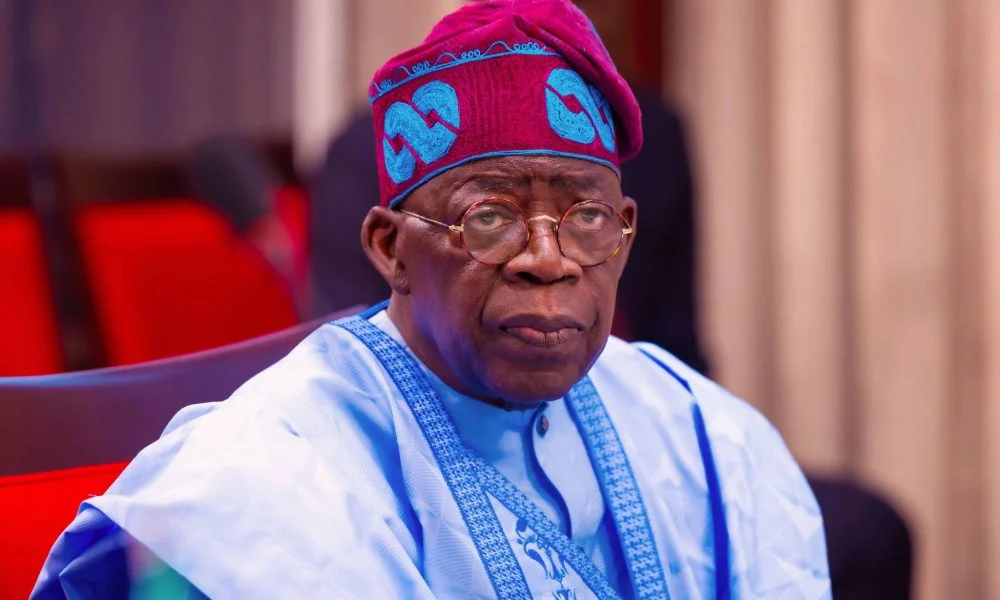
President Bola Tinubu has said Nigeria’s economic reforms are yielding results, citing a new World Bank report indicating that poverty has stabilised for the first time since 2019, economic growth has strengthened and external reserves have risen to $53.8 billion.
Tinubu, in a statement issued on Sunday by his Special Adviser on Information and Strategy, Bayo Onanuga, welcomed the World Bank’s October 2026 Nigeria Development Update, titled Beyond the Federal Purse: How Higher Revenues Reshaped State Priorities, describing its findings as evidence that the administration’s economic policies were placing the country on a stronger footing.
According to the report, Nigeria’s economy grew by 4.2 per cent in the first half of 2026, compared with 3.9 per cent in the corresponding period of 2025. The World Bank projects average growth of at least 4.4 per cent between 2026 and 2028.
The report also found that inflation declined from 27.6 per cent in January 2025 to 15.2 per cent in December 2025, although rising global fuel prices linked to the Middle East conflict have slowed further reductions. Inflation is projected to ease to about 12 per cent by 2028.
Nigeria’s external position also improved, with the current account surplus rising to $12 billion, representing 7 per cent of gross domestic product, in the first half of 2026, from $8.6 billion a year earlier. External reserves increased from $45.5 billion at the end of 2025 to $53.8 billion by the end of August 2026.
Tinubu attributed the developments to reforms introduced since 2023, including the removal of petrol subsidies, foreign exchange market unification and efforts to strengthen fiscal discipline.
“The dividends of reform are becoming visible. But more work remains to ensure they fully translate into better living standards for every household, starting with lower food prices and decent jobs for our young people,” the President said.
The World Bank report stated that federation revenues rose by 69 per cent in real terms between 2023 and 2025, with state governments emerging as the largest beneficiaries. States increased capital expenditure by 151 per cent in real terms during the period, directing much of the additional spending towards roads and transport, agriculture, energy and housing.
According to the report, 29 of 33 states shifted spending towards economic infrastructure, while real social spending per person increased in all but one state. Internally generated revenue also grew in real terms in 31 of 35 states, while 21 states reduced their debt-to-GDP ratios between 2021 and 2025.
Nigeria’s overall public debt is projected to decline from 40 per cent of GDP in 2025 to 38.1 per cent in 2026, the report added.
Despite the positive indicators, Tinubu acknowledged that more work was needed to ensure economic gains translated into improved living conditions, particularly through lower food prices, job creation and better access to essential services.
He said the administration would expand targeted cash transfers, which he stated had reached more than 10 million households, accelerate the deployment of compressed natural gas, boost agricultural productivity and improve access to affordable healthcare and quality education.
The President also urged state governments to manage their increased revenues prudently and prioritise projects that improve living standards, healthcare and education.
Tinubu commended the Economic Management Team, led by the Minister of Finance and Coordinating Minister of the Economy, state governors and other stakeholders for their role in implementing the reforms.
He reaffirmed his administration’s commitment to sustaining the Renewed Hope Agenda, saying its next phase would focus on accelerating inclusive growth and ensuring that economic progress benefits Nigerians more broadly.



