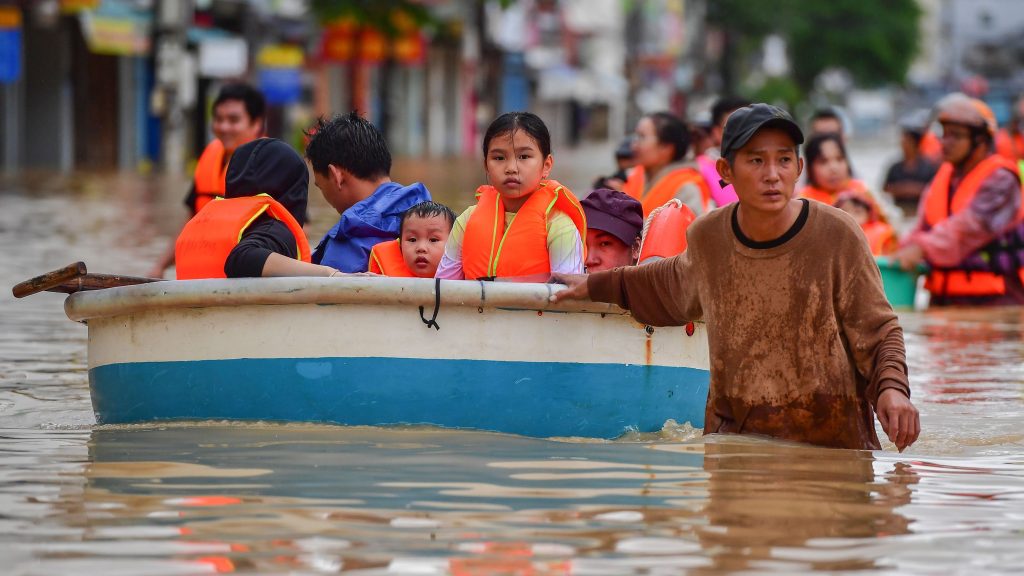
Vietnam’s flood death toll climbed to 90 on Sunday, with authorities reporting 12 people still missing after days of relentless rain and landslides battered several central and highland provinces.
South-central regions have been hit by repeated rounds of flooding since late October, submerging holiday destinations and triggering deadly landslides along mountain roads near Da Lat. Large parts of coastal Nha Trang were underwater last week.
Dak Lak province has seen the worst damage. More than 60 deaths have been recorded there since November 16, and tens of thousands of homes were flooded as the downpour intensified. Farmer Mach Van Si, 61, described how he and his wife spent two nights on their roof as water rose around their village.
“Our neighbourhood was completely destroyed. Nothing was left. Everything was covered in mud,” he told reporters, saying that he had accepted they might not survive once they climbed to the rooftop to escape the flood.
Four communes in Dak Lak remained inundated on Sunday, the environment ministry said. Across Dak Lak and four neighbouring provinces, more than 80,000 hectares of rice and other crops were damaged, and over 3.2 million livestock and poultry were reported dead or swept away.
Authorities have deployed helicopters to deliver food, clothing and purification tablets to isolated communities, while tens of thousands of personnel have been mobilised to distribute aid, according to state media.
In Khanh Hoa province, severe flooding washed away two suspension bridges last week, cutting off households in rural areas. Sections of national highways remain blocked by flooding or landslides, and parts of the railway network are still suspended.
More than 129,000 customers were without electricity on Sunday, days after more than a million people temporarily lost power at the height of the flooding.
The environment ministry estimated losses of around $343 million across five provinces. Vietnam has recorded 279 people dead or missing in natural disasters from January to October, with damages exceeding $2 billion, according to official statistics.
Scientists have warned that human-driven climate change is increasing the severity and frequency of extreme weather across the region.